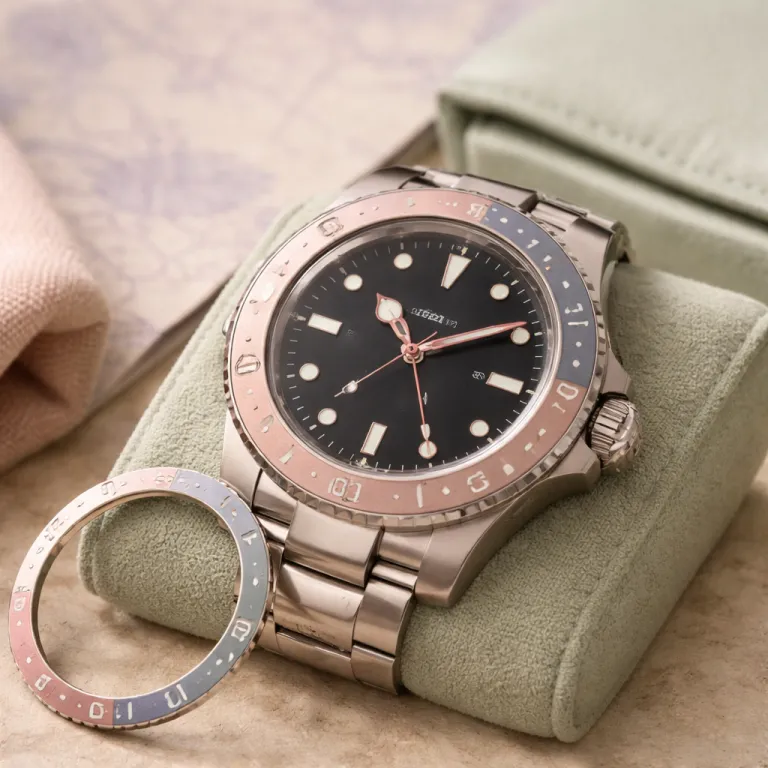
Rolex pepsi gmt discontinued 2026 – the real story behind the farewell
The announcement that the Rolex Pepsi GMT is discontinued has been framed as a sentimental full stop, yet the production calendar tells a cooler story. For the Rolex GMT Master II reference 126710BLRO in stainless steel and its white gold sibling 126719BLRO, the end of the blue and red bezel run aligns neatly with Rolex’s ongoing ceramic research and a published patent for bi colour red and black ceramic. That patent, recorded in the European Patent Office database under grant number EP1688807B1 and related filings, is widely interpreted by industry analysts as a technical foundation for a future Coke revival rather than a design verdict on the Pepsi itself. Collectors following every comment thread about the Rolex Pepsi GMT discontinued 2026 narrative should focus less on nostalgia and more on how Rolex manages steel sports watches as a portfolio, from the long running Submariner to short lived nicknamed pieces such as the blue bezel “Cookie Monster” Submariner and beyond.
Rolex has long treated its GMT Master line as a live laboratory for bezel technology, moving from aluminium to Cerachrom ceramic bezel executions and now to more complex dual tone formulations documented in patent filings such as EP1688807B1 and later colour specific applications. The current Pepsi GMT, with its red blue ceramic bezel and black dial, was never meant as a permanent fixture; it was a phase in a longer experiment that also gave us the black blue “Batman” and the more discreet black bezel variants. When you see a discontinued Rolex reference like the BLRO exit just as retail prices on gold and two tone watches rise and steel allocations tighten, you are looking at allocation politics and margin management rather than a sudden loss of faith in a red bezel icon. Auction data from Phillips and Christie’s early 2026 catalogues, together with dealer trading sheets shared by platforms such as WatchCharts and Chrono24, show steel 126710BLRO examples with full box and papers clearing roughly 10–20 percent above late 2025 levels, while white gold 126719BLRO meteorite dial pieces have pushed closer to 25 percent premiums over their pre announcement averages, supporting the view that the market is reacting to constrained supply rather than a collapse in confidence.
On the secondary market, the Rolex GMT Pepsi story is already shifting from hype to stratification between pre owned pieces with hard wearing stainless steel bracelets and rarer white gold meteorite dial executions. Aggregated sales results from early 2026 auctions at houses including Sotheby’s and Phillips, alongside dealer reported transaction ranges compiled by WatchCharts, indicate that well documented steel Pepsi GMT watches with original warranty cards and service history are clustering in that 10–20 percent uplift band, while low mileage white gold meteorite dial 126719BLRO examples are consistently recorded at around a quarter above their late 2025 averages. For a refined professional who already owns two or three Rolex watches, the rational move is to treat the Pepsi as one sports watch within a broader collection that might also include a Patek Philippe Aquanaut or even a high demand Submariner reference, not as a single asset whose value lives or dies with forum comments or short term resale spikes.
From Pepsi to Coke – what the red and black ceramic patent really signals
Rolex does not retire a steel Pepsi GMT and a white gold Pepsi GMT without a successor in mind, and the bi colour red and black ceramic patent is the clearest roadmap we have. The technology required to fuse stable red and black pigments in a single ceramic bezel insert is non trivial, which explains why the brand perfected red blue ceramic first and only now appears ready to translate that know how into a Coke style GMT Master. In the European Patent Office database, filings describing two colour ceramic bezels with contrasting pigments underpin both the blue red BLRO and any future red black execution, giving collectors a concrete technical basis for expecting a follow on model rather than relying purely on rumour. While Rolex itself has not confirmed a Coke revival, the combination of patent protection, the timing of the Pepsi exit and the brand’s historical pattern of rotating bezel colours is widely cited by specialist journalists and auction house research teams as strong circumstantial evidence that a red black GMT Master II is in development.
Rolex has form here; the black blue GMT Master II quietly took pressure off the Pepsi by offering a more office friendly watch that still delivered the full GMT complication in Oystersteel. A Coke coloured GMT Master in steel or even in white gold would play a similar role, absorbing demand from clients who might otherwise chase every remaining Pepsi GMT and distort the market. This is the same playbook Patek Philippe used when it retired the steel Nautilus 5711 and redirected attention to more nuanced references, a strategy explored in depth by auction house reports and brand interviews that track how modern icons are rotated to protect long term desirability. In both cases, the documented facts are the discontinuation notices, the subsequent catalogue shifts and the recorded auction results, while the interpretation that these moves are designed to manage hype and preserve long term equity remains informed conjecture based on those data points.
For authorised dealer clients, the practical move between now and summer is to state clear preferences on case metal, dial colour and bezel tone rather than simply asking for “any GMT”, because the next wave of allocations will likely prioritise red black ceramic and black blue variants over the outgoing red blue. If you already hold a Pepsi GMT in steel, resist the urge to flip immediately into the secondary market, where short term spikes after a discontinued Rolex announcement often fade once new allocations of alternative GMT Master models arrive and trading platforms publish updated transaction data. As one European authorised dealer put it in a January 2026 client newsletter, “the strongest long term results tend to go to collectors who buy with a ten year horizon and keep their best pieces in top condition.” Treat the Rolex Pepsi GMT discontinued 2026 event as a pivot point in a long running bezel story, not as a binary before and after moment.
Oyster centenary priorities – why dress pieces, not sports icons, are the headline
While social media fixates on the Rolex Pepsi GMT discontinued 2026 storyline, the brand itself is using the Oyster centenary to push attention toward dressier watches. The grand feu enamel Daytona, the refreshed Yacht Master II and the two tone Oyster Perpetual 41 highlighted in the 2026 catalogue show a deliberate tilt toward precious metal and white gold artistry rather than another steel sports watch frenzy. In that context, the quiet removal of the blue bezel Submariner nicknamed “Cookie Monster”, certain diamond Yacht Master variants and the steel Pepsi GMT looks less like a tragedy and more like a rebalancing of steel versus gold in the catalogue, consistent with Rolex’s own price list and press material. Internal price lists reviewed by several European authorised dealers in January and February 2026, and summarised in trade press coverage, confirm that gold and two tone watches saw increases of up to around 10 percent, while steel models rose by roughly 2 to 6 percent, reinforcing the impression that Rolex is nudging attention toward higher margin Oyster references during the centenary year.
For collectors who care about long term wear, the question is how a Pepsi GMT in stainless steel or white gold will sit alongside more formal pieces over a decade of use. A 40 millimetre GMT Master II with a red blue bezel wears flatter than many expect, and pairing it with a slim dress watch is easier once you understand Rolex sizes and how lug geometry affects comfort. That is why seasoned owners often rotate a Pepsi GMT with a white dial Day Date or even a Patek Philippe Calatrava, using the sportier watch for travel while reserving gold or enamel heavy pieces for the office and evening, a pattern echoed in many collector interviews and auction catalogues that document how mixed collections evolve over time.
On the pre owned market, we are already seeing a split between daily wear Pepsi GMT examples with honest scratches on the steel bracelet and safe kept BLRO pieces in white gold with meteorite dial configurations that command a premium. The Rolex Pepsi GMT discontinued 2026 news will likely widen that gap, as refined professionals hold onto their best preserved master Pepsi watches and let more worn examples circulate to first time buyers. In ten years, the story that matters will not be the press release but the wrist presence after a decade of red blue ceramic, black blue alternatives and whatever red black Coke bezel Rolex finally sends into the world, supported by auction hammer prices and dealer records rather than forum speculation. The documented facts will be the realised prices, the service histories and the surviving condition of each reference, while today’s conjecture about brand strategy will simply form the background noise to a much longer, data driven market narrative.
Key figures shaping the Rolex Pepsi GMT landscape
- Rolex price increases on gold and two tone watches reached up to around 10 percent at the start of the year, while steel models saw rises between roughly 2 and 6 percent according to authorised dealer price lists reviewed in January and February 2026, reshaping relative value between stainless steel and white gold GMT references and encouraging collectors to reassess where the Pepsi GMT sits in their overall portfolio.
- The exit of the steel 126710BLRO and white gold 126719BLRO coincides with the Oyster case centenary collection, where headline pieces include a grand feu enamel Daytona and a revised Yacht Master II rather than new steel sports watches, as outlined in Rolex’s own model launch communications and echoed in auction house season previews that highlight a shift toward precious metal showpieces.
- Discontinuation of the blue bezel Submariner known colloquially as the Cookie Monster, selected Yacht Master diamond variants and the Pepsi GMT concentrates demand onto remaining GMT Master II and Submariner references in both primary and secondary markets, a trend already visible in dealer waiting list feedback, early 2026 auction consignments and trading platform datasets that track rising enquiry volumes for surviving steel sports models.
Questions collectors are asking about the Rolex Pepsi GMT exit
Will the Rolex Pepsi GMT discontinuation cause permanent price spikes ?
Short term volatility is likely as news driven buyers rush into the secondary market, but past discontinued Rolex patterns documented by major auction houses and trading platforms suggest prices stabilise once alternative GMT Master II models, such as black blue or future red black ceramic bezel versions, absorb some of the excess demand. Historical data from the retirement of earlier GMT Master and Submariner references show that while there can be a step change in pricing, long term trajectories tend to follow broader market conditions and the relative rarity of specific configurations rather than the initial announcement alone.
Is it better to keep or sell a steel Pepsi GMT now ?
For most refined professionals with stable collections, holding a well preserved stainless steel Pepsi GMT makes sense, because the watch remains a versatile travel companion and its long term value will depend more on condition, completeness of box and papers, and provenance than on the initial Rolex Pepsi GMT discontinued 2026 reaction. Auction catalogues and dealer reports consistently show that top prices go to examples with original accessories, minimal polishing and documented ownership history, so any decision to sell should weigh those factors alongside your broader collecting goals and time horizon.
How does the Pepsi GMT compare to other travel watches from Patek Philippe or similar brands ?
The Rolex GMT Master II offers a robust, user friendly jumping hour GMT function in steel or white gold, while Patek Philippe travel time models lean more toward dress watch aesthetics and thinner profiles, so the choice depends on whether you prioritise durability, water resistance and service network coverage or discretion under a cuff. Comparative reviews in specialist watch publications and auction house thematic sales underline that the GMT Master II is often the default choice for frequent flyers who want a resilient sports watch, whereas Patek Philippe travel watches tend to appeal to collectors seeking a more understated, haute horlogerie interpretation of the dual time concept.
What should I ask my authorised dealer for after the Pepsi GMT exit ?
Clarify your interest in specific bezel colours such as black blue or future red black ceramic, state preferences for stainless steel versus white gold, and be explicit about whether you want a daily wear watch or a more collectible configuration like a meteorite dial, because this helps the dealer match you to upcoming allocations and document your profile in their internal client notes. Several large authorised dealer groups have confirmed in internal briefings, later summarised in trade press, that clear, consistent client preferences and a demonstrated purchase history are key factors when they allocate high demand GMT Master II models after a headline discontinuation.
Does the Oyster centenary shift mean Rolex is abandoning sports watches ?
No; the focus on enamel Daytona models, refined Yacht Master II updates and two tone Oyster Perpetual pieces signals a temporary emphasis on dressier or more luxurious expressions, while core sports lines like the GMT Master and Submariner remain central to the catalogue even as specific references are rotated out in line with Rolex’s historical pattern of incremental evolution. The documented changes in the 2026 catalogue, combined with long term production data analysed by auction houses and market researchers, support the view that Rolex is rebalancing its mix rather than walking away from the sports watch segment that underpins much of its modern identity.