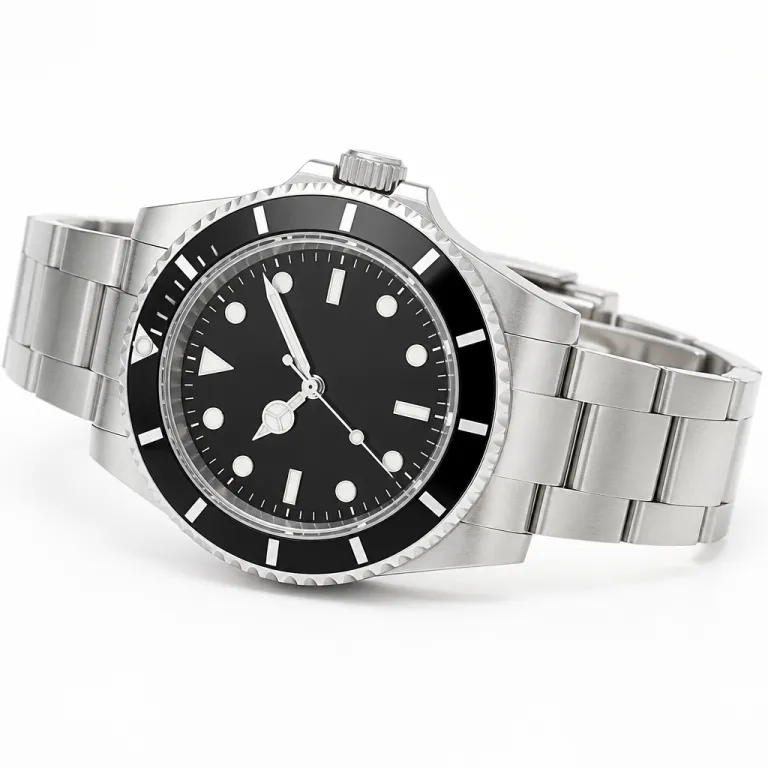
The Submariner in the 2026 Rolex ecosystem
The modern Rolex Submariner sits at a strange crossroads today. It remains the most recognisable dive watch on the planet, yet the brand’s own catalogue and the wider field of mechanical watches have caught up in ways that force a more honest rolex submariner review. On the tray next to a GMT Master II or a Daytona, the classic submariner watch still feels like the purest expression of the Rolex sport idea.
In the current lineup, the reference 124060 and the 126610LN are the steel entry points into the professional range, and that single fact shapes how people perceive value. When a watch will cost around 9 100 USD at retail price in the United States, every millimetre of the 41 mm case and every click of the bezel must justify itself. For many watch enthusiasts who remember buying a Submariner years ago at far lower figures, the mental adjustment is harder than the wrist adjustment.
Rolex uses Oystersteel 904L for the case and bracelet, a corrosion resistant alloy that shrugs off salt water better than the 316L steel used by many dive watches. The ceramic Cerachrom bezel insert resists scratches and fading, and the Chromalight lume glows with a blue tone that remains legible through a long night dive. On the wrist, the watch well balances its 41 mm diameter and roughly 12.5 mm thickness, wearing flatter and more compact than the numbers suggest on a smaller watch wrist.
Inside, the calibre 3230 (no date) and 3235 (date) bring a 70 hour power reserve, a Chronergy escapement and Rolex’s Superlative Chronometer standard of −2 / +2 seconds per day. That is rock solid performance for a tool watch that many owners wear as their only watch, from desk to pool. For an aspiring diver or office bound lawyer, the Submariner will run quietly, accurately and a bit boring in the best possible way, day after day.
How the Submariner stacks up against modern rivals
Any honest rolex submariner review in 2026 must set the watch against its closest peers. The Tudor Pelagos 39, Omega Seamaster 300M and Blancpain Fifty Fathoms all target the same buyer who loves a capable dive watch but also cares about design, heritage and long term value. For a first serious watch, people now compare spec sheets as much as they compare logos.
The Pelagos 39 brings a titanium case, in house MT5400 calibre and 200 m water resistance for roughly 4 400 USD, which means this Tudor undercuts the Submariner’s retail price by more than half. The Omega Seamaster 300M offers a ceramic bezel, laser etched wave dial and the co axial calibre 8800 with METAS certification at around 5 400 USD, making any omega seamaster comparison part of every watch review in this segment. Blancpain’s Fifty Fathoms, by contrast, lives in a different price stratosphere at 14 500 USD and above, which pushes it into a niche for seasoned collectors rather than a first dive watch.
For an aspiring collector reading a rolex submariner review and weighing options, the harder comparison is often inside the Rolex Group itself. A Tudor Black Bay 58 at about 3 950 USD gives you a smaller case, a vintage leaning design and a movement that runs well enough for most watch enthusiasts. When a Black Bay 58 or a Pelagos 39 delivers 90 percent of the daily experience, the Submariner must justify the extra cost in ways that go beyond a logo on the dial.
Rolex still wins on bracelet and clasp execution, where the Glidelock system allows tool free micro adjustments that make the watch well suited to both hot summer days and wetsuit use. The Pelagos 39 bracelet is excellent, but the on the fly adjustment is not as refined, while the Omega Seamaster bracelet has improved yet still divides opinion on comfort. For a buyer who wants one diver to do everything, that small detail can turn a lucky day at the authorised dealer into a long term commitment to the submariner watch rather than to its rivals, as discussed in many Tudor versus TAG Heuer comparisons such as how two modern icons redefine the luxury watch landscape.
Design, wearability and the "bit boring" question
Spend time with the current Submariner on the wrist and a pattern emerges. The design is so refined and so familiar that some watch enthusiasts call it a bit boring, yet they keep coming back to it after trying louder dive watches. That tension between emotional love and clinical respect sits at the heart of any serious rolex submariner review.
The 41 mm case wears closer to 40 mm thanks to short lugs and a balanced profile, which means the watch will suit a wide range of wrists from about 16 cm upward. The black dial and black bezel combination on the 124060 and 126610LN gives a neutral canvas that works with a navy suit, a T shirt or a wetsuit without shouting for attention. When paired with a steel bracelet, the Submariner becomes the archetypal steel sports watch that many style guides now accept even with tailoring, a point explored in depth in discussions about when the rules bend and when they break.
Rolex has slowly evolved the models Submariner over the years, trimming the so called maxi case of the previous generation and refining the bracelet taper. The result is a watch that feels less blocky than the older 116610, while still projecting the rock solid presence people expect from a Rolex diver. On a smaller watch wrist, the current case and bracelet combination finally hits the sweet spot between comfort and presence that many felt was missing years ago.
Calling the Submariner a bit boring misses the point, because this is a design built for decades, not for Instagram cycles. The clean dial, simple Mercedes hands and unidirectional bezel form a language that other dive watches still copy, consciously or not. If you want fireworks, the Omega Seamaster or a colourful GMT Master will scratch that itch, but if you want a watch that disappears until you need it, the Submariner remains hard to beat.
Movement, durability and the reality of daily use
Under the hood, the modern Submariner is less about novelty and more about incremental refinement. The calibre 3230 and 3235 are not exotic movements, but they are engineered as rock solid engines for a tool watch that may never see a watchmaker for a decade. For many owners, that reliability matters more than an exhibition case back or a silicon escapement.
The 70 hour power reserve means you can take the watch off on Friday night, wear something else for the weekend and strap the Submariner back on Monday without needing to reset it. Rolex’s Superlative Chronometer standard of −2 / +2 seconds per day is stricter than the COSC baseline, and in real life many examples run even closer, which is why a rolex submariner review often reads like a reliability report. This level of accuracy, combined with robust shock resistance and anti magnetic components, makes the Submariner a genuine tool for divers and desk divers alike.
Water resistance remains rated at 300 m, more than enough for recreational diving and far beyond what most people will ever need. The Triplock crown system, screw down case back and thick sapphire crystal all contribute to a case that feels carved rather than assembled, which is why the watch well survives everything from pool chlorine to office door frames. Owners who bought their first Submariner years ago often report that the case and bracelet still look remarkably fresh after hard use, with only light surface scratches to show for daily wear.
On the wrist, the Glidelock clasp allows micro adjustments in 2 mm increments up to 20 mm, which transforms comfort on hot days when your wrist swells. That same system lets a diver extend the bracelet over a thin wetsuit without tools, preserving the original idea of the Submariner as a professional dive watch rather than just a luxury accessory. In a world where many mechanical watches chase complexity for its own sake, the Submariner’s focus on functional durability feels almost radical.
Market reality, grey premiums and value for the aspiring collector
For an early career collector, the hardest part of any rolex submariner review is not the spec sheet but the price and availability story. The good news in mid 2026 is that grey market premiums on the Submariner have compressed significantly compared with the frenzy a few years ago. In many major markets, a 124060 now trades close to its official retail price, which changes the value equation for a first serious watch.
That shift means your lucky day at an authorised dealer is no longer the only path to ownership, although buying at retail still offers the cleanest provenance and warranty. The flip side is that a watch will now tie up close to five figures in a single piece, which is a serious decision for someone also considering a Pelagos 39, a Black Bay 58 or even an Omega Seamaster 300M. When you can assemble a small rotation of two strong dive watches for the cost of one Submariner, the rational calculus becomes more complex.
From a value retention perspective, the Submariner remains one of the safest places to park money in modern watches. Historical auction data and secondary market listings show that steel Submariners tend to hold value better than most competitors, especially compared with less iconic dive watches from brands without the same global recognition. That does not mean the watch is an investment product, but it does mean that depreciation risk is lower than with many similarly priced mechanical watches.
For the aspiring collector, the key question is whether the Submariner should be the first big purchase or a later consolidation piece. If you want one watch to do everything for the next ten years, the Submariner makes sense as a daily tool watch that can handle work, travel and the occasional dive. If you prefer variety and enjoy rotating between different designs, a combination of a Tudor diver and another piece, perhaps even something like the Audemars Piguet Safari explored in why the AP Safari still captivates serious collectors, may offer more fun for the same budget.
Is the Submariner still the rational first luxury watch in 2026 ?
When you strip away the marketing and the mythology, a rolex submariner review in 2026 comes down to one practical question. For around 9 100 USD, is this still the smartest way to enter the world of Rolex and serious dive watches. Or has the market moved to a point where the Submariner is better seen as a second or third step for a maturing collection.
If you are the type of person who wants a single watch that can handle every situation, from a client meeting to a reef dive, the Submariner remains a compelling answer. The combination of a 41 mm Oystersteel case, Chromalight lume, Glidelock clasp and the 3230 or 3235 calibre delivers a package that few other dive watches match as a complete system. In that context, the watch will feel less like a luxury toy and more like a long term piece of equipment that quietly earns its keep.
On the other hand, if you enjoy variety and want to explore different designs and complications, starting with a Tudor Black Bay 58, a Pelagos 39 or an Omega Seamaster 300M may be wiser. Those watches give you most of the functional capability of a submariner watch at a fraction of the cost, leaving room in the budget for a dress watch or a chronograph. Years ago, the Submariner was the default first serious watch ; in 2026, it is a deliberate choice rather than an automatic reply to the question of what to buy.
Ultimately, the Submariner still earns its place in the Rolex catalogue and on the wrists of serious collectors, but not because it is the only great dive watch anymore. It earns that place because, when judged as a whole object rather than a list of features, it remains one of the few watches that can genuinely be worn every day for decades without feeling out of place or out of date. This is not the press release, but the wrist presence after ten years.
Keyword focused nuances for seasoned enthusiasts
For readers who live on forums and dissect every watch review, a few nuanced points about the Submariner’s role among mechanical watches are worth highlighting. The watch sits alongside icons like the GMT Master II and the Daytona as part of a trio that defines modern Rolex sport design, yet it remains the most versatile of the three. Where the GMT Master leans into travel and the Daytona into motorsport, the Submariner stays closest to the original idea of a pure tool watch for divers.
Some collectors argue that the Submariner has become too refined, that the polished centre links and glossy ceramic bezel have moved it away from its roots. They remember the matte dials and aluminium inserts of models Submariner from decades past and feel that the current generation is a bit boring by comparison, even if it performs better as a dive watch. That tension between nostalgia and progress is a recurring theme in any rolex submariner review written by people who have handled both vintage and modern references.
On a practical level, the current case proportions and bracelet design mean the watch will sit securely and comfortably on most wrists, whether you wear it loose or snug. The watch wrist profile is low enough to slide under a cuff, yet the bezel and crown guards still give the watch a purposeful stance that reminds you this is not a dress piece. For many watch enthusiasts, that balance between discretion and presence is exactly why they fall in love with the Submariner after living with louder pieces.
In online discussions, you will often see phrases like "cancel reply" or "don’t overthink it" when someone asks whether to buy a Submariner or keep chasing alternatives. That shorthand reflects a collective sense that, while there are many great dive watches today, few combine history, design coherence and daily usability as completely as the submariner watch. If you buy one now, you may still end up exploring Pelagos models, Omega Seamaster variants or even more exotic pieces years later, but the Submariner will likely remain the baseline against which you measure everything else.
Key figures and market statistics for the Submariner
- Rolex produces an estimated 1.2 million watches per year across all models, with the Submariner representing a significant share of steel sports production according to industry analysts who track authorised dealer allocations.
- Secondary market data from major platforms show that the Submariner 124060 trades within roughly 5 to 10 percent of its official retail price in mid 2026, a sharp contrast to premiums exceeding 50 percent during the peak hype period a few years earlier.
- Water resistance of 300 m on the Submariner exceeds the 200 m rating of the Tudor Pelagos 39 but matches or slightly trails some specialist dive watches rated at 600 m or more, underscoring its role as an all rounder rather than an extreme depth instrument.
- The 70 hour power reserve of the calibre 3230 and 3235 places the Submariner above many older three hand movements that offered around 40 hours, aligning it with modern standards set by brands like Omega and Tudor.
- Average authorised dealer wait times for a steel Submariner have shortened to months rather than years in many regions, reflecting both increased production and a cooling of speculative demand compared with the peak of the recent watch boom.
FAQ
Is the Rolex Submariner still worth buying in 2026 ?
Yes, the Rolex Submariner remains worth buying in 2026 if you want a single, versatile dive watch that combines strong engineering, proven durability and exceptional value retention. While competition from Tudor and Omega has intensified, the Submariner still offers one of the most complete packages in the 9 000 to 10 000 USD range. The key is to buy it because you will wear it, not as a speculative asset.
How does the Submariner compare to the Tudor Black Bay 58 for a first luxury watch ?
The Tudor Black Bay 58 delivers much of the functional capability of a Submariner at roughly 3 950 USD, making it a strong choice for a first luxury watch on a tighter budget. The Submariner offers a more refined bracelet, the Glidelock clasp, a stricter accuracy standard and stronger long term value retention. If you can comfortably afford the Submariner and want one watch for the next decade, it makes sense ; if you prefer variety, the Black Bay 58 leaves room for additional pieces.
Has the Submariner’s grey market premium disappeared completely ?
The extreme grey market premiums of the recent boom have largely disappeared for the steel Submariner, but small premiums or slight discounts still exist depending on region and configuration. In many markets, the no date 124060 trades very close to its official retail price, while some two tone or less popular variants can be found below retail. Buying from an authorised dealer remains the safest route, but the secondary market is no longer as punishing as it once was.
Is the Submariner still a true tool watch or just a luxury item now ?
The modern Submariner is both a true tool watch and a luxury item. Its 300 m water resistance, robust Oystersteel case, reliable 3230 or 3235 movement and functional Glidelock clasp make it fully capable as a professional dive instrument. At the same time, its finishing, brand prestige and price place it firmly in the luxury category, which means many owners will use it more at desks than on dives.
Should I choose the date or no date Submariner ?
The choice between the date equipped 126610LN and the no date 124060 comes down to aesthetics and practicality. The date model adds everyday convenience and the iconic Cyclops lens, while the no date version offers a cleaner, more symmetrical dial that many purists prefer. From a technical standpoint they are nearly identical, so you should pick the one you will enjoy seeing on your wrist every day.