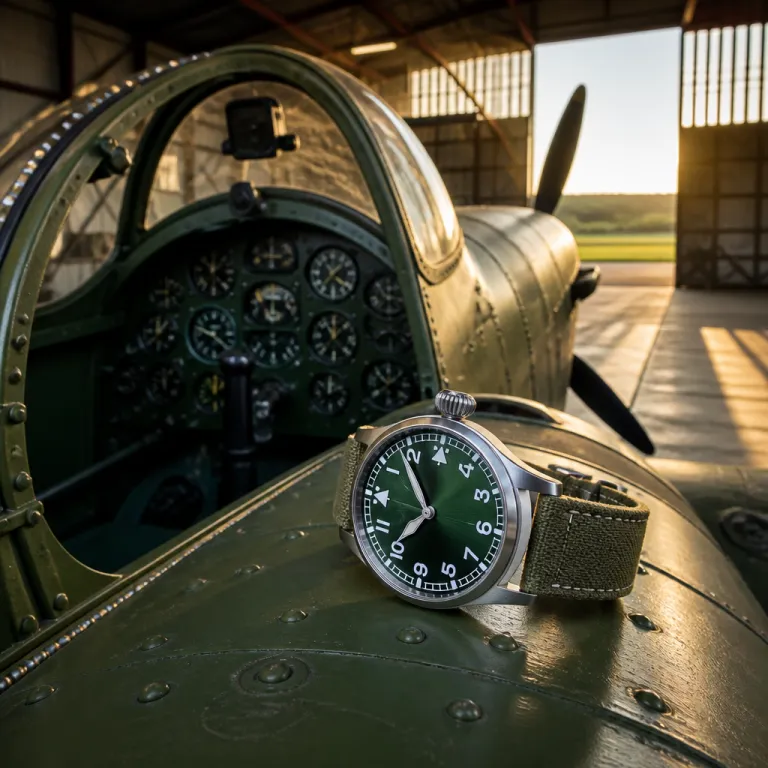
The ww2 pilot watch as a tool of survival in the cockpit
The essence of any ww2 pilot watch is functional clarity under stress. In the confined cockpit of a bomber or fighter aircraft, aircrew needed a timekeeper that translated chaotic war conditions into legible time at a glance. That requirement still defines the best modern pilot watch designs for enthusiasts who appreciate authentic military history.
During the global conflict, both German and Allied forces specified strict standards for every military watch issued to aircrew. Oversized crowns, high contrast dials, and precise movement regulation were not aesthetic choices but essential tools for navigation and bombing plan execution. When collectors evaluate these wrist watches today, they are really assessing how well each reference met those unforgiving operational demands.
Period documents from air ministries and ordnance departments show that procurement offices classified each watch by type, from simple field watch patterns to complex navigation instruments. A typical WWII pilot watch featured a large steel case, luminous Arabic numerals, and a central second hand for timing maneuvers. Water resistance was usually basic by modern standards, yet the robust stainless steel construction and reliable mechanical movement allowed these watches to endure harsh water spray, oil, and vibration exposure in service.
From military specification to luxury icon in modern collections
What began as a purely military watch specification has evolved into a cornerstone of luxury design. Collectors now pay a significant purchase price for original ww2 pilot watch pieces that once sat unnoticed on the wrists of young aircrew in training squadrons. The transformation from expendable equipment to coveted field watch treasure reflects a broader fascination with military watches and their documented stories.
Brands such as Longines, IWC, and Omega supplied pilot watches to Allied forces, Axis powers, and neutral markets, creating a rich tapestry of references. A Longines pilot watch with a classic steel case and blued second hand can now command a price that rivals complicated dress watches, especially when provenance links it to a specific squadron or theater of war. For instance, Longines 6B/159 navigator’s watches from the early 1940s and IWC Mark XI pieces delivered to the RAF in the late 1940s have achieved strong auction results when accompanied by service papers and decommission records. For enthusiasts exploring vintage icons, resources that analyze historic pieces, such as this guide to the timeless allure of notable vintage watches, provide useful context for evaluating a WWII era pilot watch.
Modern watch company reissues reinterpret the original military watch language with contemporary materials and upgraded water resistance. While the original wrist watches were often delivered on simple canvas or leather strap options, current pilot watches may feature interchangeable watch straps, from stitched calfskin to stainless steel bracelets. The best designs respect the original cockpit readability and movement architecture while offering a product that suits daily wear far from the realities of war.
Key design codes of the ww2 pilot watch
Several design elements define an authentic ww2 pilot watch and distinguish it from other military watches. First comes legibility, with matte black or occasionally silver dials, large Arabic numerals, and a bold minute track that allows precise reading of time in low light. The second crucial feature is a large, often onion shaped crown that pilots could operate while wearing gloves during air force missions.
Many German and Allied specifications required a hacking movement, meaning the second hand stopped when the crown was pulled out. This allowed synchronized time setting across an entire squadron, a detail that remains relevant for collectors who value precise time control and may study advanced techniques such as those explained in guides to mastering watch hacking for precise time. Another recurring code is the use of a robust steel case with an inner soft iron cage to protect the movement from magnetic fields generated by aircraft instruments, a feature documented in period technical manuals.
Strap configuration also tells a story about the original product purpose. Many ww2 pilot watches were delivered on long leather strap systems that wrapped around a flight jacket sleeve, while simpler field watch models used straightforward two piece leather strap or canvas watch straps. Collectors today sometimes replace fragile originals with modern leather strap reproductions, yet the best restorations respect the original lug width, water resistance limitations, and overall military watch proportions, as seen in curated pieces that echo the enduring elegance of historic timekeepers.
Mechanical versus quartz movement in aviation inspired watches
When enthusiasts compare a historic ww2 pilot watch with a modern aviation inspired piece, the movement becomes a central topic. Original military watches used hand wound mechanical calibres, prized for their robustness and ease of field servicing by watch company technicians. These movements offered a sweeping second hand that allowed pilots to time intervals with intuitive precision.
The arrival of the quartz movement in the late 1960s and 1970s changed the landscape of pilot watches and field watch models for civilian use. Quartz technology delivered superior accuracy, low maintenance, and a lower purchase price, making quartz pilot watches accessible to a broader audience of collectors who admired military history but did not need traditional mechanical complexity. Yet many specialists still prefer a mechanical movement in a WWII style pilot watch because it preserves the tactile ritual of winding and connects directly to the experience of air force crews during the war.
High end brands now offer both quartz and mechanical pilot watch options, each with distinct advantages. A quartz pilot watch in a stainless steel or titanium steel case can provide excellent water resistance and durability for everyday wear, while a hand wound movement in a historically accurate ww2 pilot watch reissue prioritizes authenticity over convenience. Serious collectors often own both types of watches, using quartz models for rough conditions involving water and impact, and reserving delicate vintage wrist watches for occasions where military history and refined aesthetics take center stage.
Evaluating price, condition, and originality for collectors
Assessing the price of a ww2 pilot watch requires more than a quick glance at auction results. Condition, originality, and documented military history can shift the purchase price dramatically, even between two watches that appear similar at first sight. A seemingly modest field watch with clear links to a decorated air force unit may command a premium over a pristine but anonymous pilot watch.
Collectors scrutinize the movement for matching serial numbers, correct period finishing, and absence of corrosion from water ingress or poor storage. The dial and hands must be checked for original luminous material, appropriate patina, and a second hand that matches factory specifications, since many military watches were serviced with replacement parts during and after the war. Watch straps and leather strap components are often replaced, so the focus usually rests on the integrity of the steel case, case back engravings, and any markings that tie the watch to German or Allied forces contracts.
Modern reissues inspired by the ww2 pilot watch aesthetic offer a different value equation. Here, buyers weigh water resistance ratings, movement type, and overall product finishing against the retail price, often comparing options across several watch company catalogs. Many brands now include benefits such as extended warranties or free shipping, which can influence the final purchase decision for collectors who want a pilot watch that evokes wartime functionality while delivering contemporary reliability.
How ww2 pilot watch DNA lives on in contemporary luxury design
The design language of the ww2 pilot watch continues to shape contemporary luxury watches in subtle yet powerful ways. High contrast dials, oversized numerals, and clear minute tracks have migrated from pure military watch tools into everyday wrist watches for people who value instant readability. Even dressier pieces sometimes borrow the bold second hand and luminous markers that once guided pilots through night missions during the war.
Brands such as Longines have built entire collections around their historic pilot watches, often referencing specific air force contracts or navigation systems like the Weems method. A modern Longines Weems model may feature advanced water resistance, a refined stainless steel or bicolor steel case, and a precise automatic movement, yet its rotating inner bezel still echoes the original plan for celestial navigation timing. Other watch company portfolios include field watch lines that reinterpret WWII era military watches with contemporary case sizes, upgraded watch straps, and options ranging from quartz movement calibres to high grade mechanical engines.
For the seasoned enthusiast, wearing a modern pilot watch with clear ww2 pilot watch DNA is a way to connect daily life with aviation and military history. The product on the wrist becomes more than a simple watch; it is a compact archive of design decisions forged in war and refined in peace. Whether paired with a rugged leather strap for weekend wear or a polished stainless steel bracelet for the office, these pilot watches remind their owners that precise timekeeping once meant the difference between mission success and failure.
Key figures and market statistics for ww2 pilot watch collectors
- According to data from major auction houses such as Phillips and Christie’s, prices for historically significant ww2 pilot watch models have increased by roughly 8 to 10 percent per year over the past decade, outpacing many contemporary luxury watches in the same price segment. These figures are drawn from published sale results and annual review reports, including documented sales of Longines, IWC, and Omega military references between 2010 and 2020.
- Specialist dealers and museum curators estimate that fewer than 20 percent of surviving WWII era military watches retain fully original dials, hands, and movement components, which explains the substantial premium paid for untouched examples with documented military history. This estimate is based on condition surveys of large collections.
- Market surveys of vintage watch collectors indicate that aviation and military watch themes account for approximately one third of all vintage wrist watches traded in the mid range to high end segment, reflecting sustained interest in war related provenance and air force history.
- Modern pilot watch reissues inspired by ww2 designs typically offer water resistance ratings between 50 and 100 metres, a significant improvement over original models that often had only basic protection against water and dust ingress and were not intended for swimming or diving.
- Industry reports show that quartz movement pilot watches still represent a large share of aviation themed product sales by volume, yet mechanical movement versions generate a higher share of total revenue due to their elevated purchase price and perceived prestige among collectors.
FAQ about ww2 pilot watch collecting and ownership
How can I verify that a ww2 pilot watch is authentic ?
Authenticity starts with matching movement and case numbers to known production ranges and verifying that the dial, hands, and steel case details align with documented military watch specifications. Collectors often consult brand archives, specialist literature, and experienced dealers who focus on WWII era pilot watches. Provenance documents linking the watch to a specific air force unit or pilot further strengthen authenticity.
Is a quartz movement acceptable in a ww2 style pilot watch ?
For strict historical purists, only a hand wound or automatic mechanical movement truly reflects the original ww2 pilot watch experience. However, a quartz movement offers superior accuracy, lower maintenance, and a more accessible purchase price, making quartz pilot watches practical for daily wear. Many enthusiasts own both quartz and mechanical aviation inspired watches, using each type according to occasion and lifestyle.
What level of water resistance should I expect from an original ww2 pilot watch ?
Most original WWII era pilot watches and field watch models were not designed for significant water exposure and often lack modern water resistance gaskets. Collectors usually avoid immersing these vintage wrist watches and instead reserve them for dry, low risk environments. If water resistance is a priority, a modern pilot watch reissue with upgraded seals and a tested rating is the safer choice.
Why do some ww2 pilot watch models command much higher prices than others ?
Price differences often reflect a combination of rarity, condition, and documented military history. A well preserved pilot watch linked to a notable air force squadron or specific war campaign can achieve a far higher purchase price than a similar watch without provenance. Brand prestige, such as Longines or other renowned watch company names, also plays a significant role in determining market value.
Should I replace the original leather strap or watch straps on a vintage pilot watch ?
Original leather strap components are often fragile and may fail during wear, risking damage to the watch. Many collectors store the original strap separately and fit a high quality modern leather or canvas replacement that respects the period correct style and lug width. This approach preserves historical integrity while ensuring that the ww2 pilot watch remains safe and comfortable on the wrist.
References
- Phillips Watch Department – auction catalogues and market reports on vintage military watches, including annual reviews of WWII pilot watch results and documented sales of Longines, IWC, and Omega air force contracts.
- Christie’s Watches – specialist essays on aviation and WWII era pilot watch history, with documented case studies of notable air force timepieces and their sale prices.
- Omega Museum and Longines Museum publications – archival material on military watch contracts, technical specifications, and air force timekeeping instruments used during the Second World War, including period correspondence from procurement officers and watch company engineers.