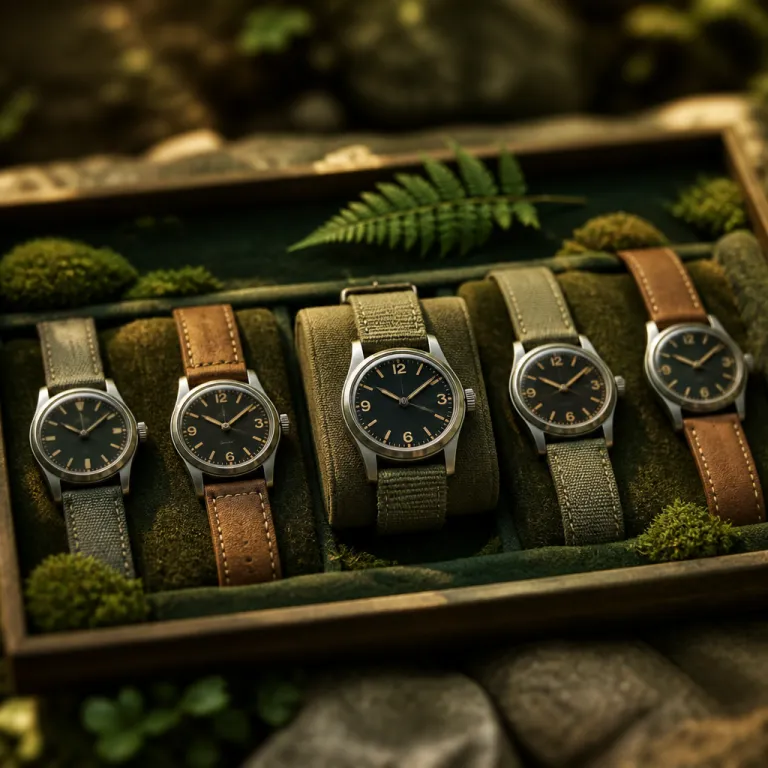
Why vintage military watches define authentic tool watch heritage
Among serious collectors, vintage military watches remain the purest expression of the functional tool watch. Their appeal lies in how each service watch links engineering, history, and human stories in a compact steel case. When you handle original pieces, you immediately sense how well they were built for harsh campaigns rather than for social media exposure or casual likes.
These vintage military watches were issued instruments, not fashion accessories, and every watch that saw service carries traces of its working life on the dial, case back, and lugs. Collectors often compare decades of wear and years of field maintenance, treating each scratch as a footnote in a living record of military equipment and personal sacrifice. That is why a cheap modern homage rarely satisfies anyone who has studied an original issued piece under a loupe and compared it with period photographs.
Omega, Longines, IWC, and other historic watch brands supplied many of the most respected military watches, and their archives still document specific contracts. An Omega military watch with matching case back engravings, correct hands, and period crown will always generate strong viewing figures and detailed replies on any serious enthusiast forum. In that context, a well preserved vintage Omega service watch becomes more than a timekeeper; it becomes a compact archive of military logistics, industrial capacity, and evolving battlefield requirements.
Key design codes that separate true service pieces from civilian lookalikes
Collectors of vintage military watches quickly learn that authenticity lives in the details. The case shape, lug geometry, and dial typography of a genuine military watch were dictated by procurement specifications rather than by marketing teams. When you compare several watches side by side, the functional logic behind every crown guard, bezel profile, and luminous index becomes obvious.
Most issued watches share certain traits: matte dials for low reflections, oversized numerals for legibility, and robust movements designed for easy field servicing. A good example is the family of Omega military watches with broad arrow markings, where the combination of fixed bars, screw down case backs, and simple Arabic numerals reflects a pure vintage military design language. Collectors often engage in open discussion about whether a specific issued watch still retains all its original parts or whether some components were replaced during later civilian servicing.
On specialist forums such as the Military Watch Resource (MWR) or the vintage sections of OmegaForums, long threads often dissect the smallest details of military watches, from hand shapes to engraving fonts. Discussions that attract many likes and high view counts usually focus on borderline cases where a watch seems original but may hide a refinished dial or a substituted crown. For anyone entering this field, reading those archived posts in depth is as important as studying any printed reference guide, because they show how expertise evolves through collective scrutiny.
For readers interested in how modern tool watches reinterpret this heritage, the analysis of the Seiko SPB333 as a contemporary field piece in a detailed review of a modern military inspired diver offers a useful counterpoint to the stripped back pragmatism of true service watches.
How provenance, archives, and literature shape market value
In the market for vintage military watches, provenance often matters as much as condition. A military watch with clear documentation, matching serial numbers, and verifiable unit history will command a premium over a cleaner but anonymous example. Collectors treat each watch as a chapter in a broader narrative of military history, and they value any supporting literature that confirms its story.
Specialist authors such as Zaf Basha have elevated the field by publishing detailed reference works on military watches and by running platforms where watches he has handled are archived with photographs and serial data. When a collector cites a Zaf Basha reference in a forum discussion, it usually signals that the case has been researched beyond casual comments and superficial views. A well known example is the long running MWR discussion of British WWW contracts, where members compare individual case back engravings with extracts from manufacturer archives and Basha’s tables to confirm which watches were actually issued to specific units.
Because prices for rare vintage military pieces have risen steadily over the past years, buyers now expect more than a seller’s word. They want movement photographs, macro shots of the dial, and scans from relevant reference books that confirm the correct configuration for that specific issued watch. On OmegaForums, for instance, several detailed threads on Omega 6B/159 and HS8 pilot’s watches walk through the process of matching serial ranges, broad arrow markings, and period catalogues, giving newer collectors a concrete model for how to build a provenance case. For enthusiasts who also collect pocket timepieces, the detailed perspective on provenance in a guide to old silver pocket watches offers useful parallels with how military issued wristwatches are evaluated.
French, British, and American contracts : contrasting military cultures on the wrist
Different nations approached military watches in distinct ways, and those choices still shape collecting patterns. French military issued pieces, British service watches, and American field watches each reflect their own doctrines, supply chains, and industrial bases. When you compare these watches directly, you see how military priorities translated into specific case sizes, dial layouts, and movement choices.
French military watches often combined domestic ébauches with robust cases sourced from specialized suppliers, resulting in compact, highly legible designs that suited both pilots and infantry. British contracts, especially the famous WWW series, demanded strict interchangeability and clear broad arrow markings, which created a coherent family of vintage military watches across multiple watch brands. American issued watch models, by contrast, leaned heavily on mass production techniques, which makes them more accessible and sometimes relatively cheap compared with scarcer European counterparts.
Collectors who track these differences closely often maintain detailed logs where they record serial ranges, unit markings, and service stamps for each national group. Over the years, such shared databases and forum threads have helped identify previously unknown French contracts and clarified which equipment was actually supplied to which branches. When those logs are carefully edited and cross referenced with period manuals, they become a living body of transnational military watch history that no single printed volume can match.
Condition, restoration, and the ethics of preserving service history
Every collector of vintage military watches eventually faces the question of how far to go with restoration. A military watch that has survived decades of service, storage, and sometimes neglect will rarely look pristine, yet those imperfections often carry its deepest charm. The challenge lies in deciding which interventions protect the watch and which erase irreplaceable traces of its past.
Most experts agree that preserving original dials, hands, and engravings should take priority over chasing cosmetic perfection, especially on rare issued references. Replacing a dial may create a superficially good looking watch, but it also severs the link between that specific case and the missions it once timed. On many enthusiast platforms, you will find older posts and later updates where owners reverse earlier over polishing or incorrect reluming after learning more about the long term impact on value.
Thoughtful collectors document every service in their watch records, attaching invoices, movement photographs, and notes about replaced parts, so that future owners can judge the integrity of the watch. This habit turns individual watches into transparent case studies of best practice in conservation rather than into edited objects with uncertain histories. For those managing larger collections of military watches and civilian pieces, investing in a high quality winder, such as the options discussed in a guide to four piece automatic watch winders, helps reduce wear from constant manual setting while keeping movements exercised.
Communities, forums, and the evolving scholarship around service timepieces
The modern understanding of vintage military watches owes as much to online communities as to traditional scholarship. On dedicated sites like MWR, Watchuseek’s military section, or OmegaForums, long running threads compile decades of observations, corrections, and new findings about specific service references. These communities function as collective archives where every new photograph, serial number, or unit marking adds another data point.
Typical posts might introduce a newly found issued watch with unusual engravings, prompting members to compare it with earlier threads that documented similar pieces. Over time, those replies often lead to revised production estimates, clarified contract dates, or the identification of previously unknown suppliers of cases and dials. A notable example is the series of OmegaForums discussions on RAF pilot’s watches, where contributors pooled case back photos, movement numbers, and extracts from the Omega archives to refine accepted serial ranges for certain references.
Some of the most respected contributors are dealers and authors who have handled thousands of military watches, including specialists associated with Zaf Basha’s platforms and other niche dealers. Their posts often run into the tens of thousands of views, because collectors trust their eye for original details and their willingness to call out over polished or incorrectly restored examples. In this ecosystem, every good faith open discussion about a single vintage military watch helps refine the shared standards that protect both new and seasoned enthusiasts from costly mistakes.
Key figures and market statistics for vintage military watches
- Reports from major auction houses such as Phillips, Christie’s, and Sotheby’s show that prices for sought after vintage military watches, including early Omega and Longines service pieces, have generally trended upward over the past five years, based on repeat sales data and thematic auction results. Exact percentages vary by reference and condition, but the overall direction has been clearly positive.
- Market surveys by specialist dealers and insurance brokers consistently indicate that fully documented issued watches with matching archival extracts can sell for a substantial premium over comparable examples without provenance, underscoring the financial value of proper documentation even if the precise uplift differs from sale to sale.
- Analysis of activity on forums like MWR and OmegaForums suggests that threads dedicated to military watches regularly attract significantly more views and replies than discussions on equivalent civilian models, highlighting the intense engagement around this niche and the appetite for detailed research.
- Condition reports from leading auction houses frequently note replaced dials, hands, and crowns on vintage military watches, and cataloguers often emphasize when a piece appears largely untouched, which helps explain the strong premiums paid for examples that retain their original components.
- Insurance data from specialist brokers such as Hiscox and Marsh indicates that collections focused on vintage military pieces now represent a meaningful share of high value watch portfolios, with individual policies sometimes covering six figure sums for concentrated holdings of rare service watches.
FAQ about vintage military watches
How can I verify that a vintage military watch was truly issued ?
Verification starts with matching case back engravings, movement numbers, and dial details against known references from books, auction archives, and trusted forum threads. When possible, request archival extracts from the manufacturer and compare them with unit markings or service numbers on the watch. Any inconsistencies between these elements should prompt deeper research before you commit to a purchase.
Why do some vintage military watches look relatively cheap compared with others ?
Price differences usually reflect rarity, condition, and brand recognition rather than pure age. An obscure but heavily worn field watch from a minor supplier may cost far less than a well preserved Omega or IWC with clear issued documentation. For many collectors, the best value lies in honest, mid tier pieces that retain original parts but have not yet attracted speculative attention.
Is it acceptable to relume the dial and hands on a military watch ?
Reluming can improve legibility, but it almost always reduces originality and long term value, especially on rare references. Most serious collectors prefer stable, aged lume over fresh material that breaks the visual coherence of a vintage military watch. If safety or functionality requires reluming, it should be documented carefully and executed by a specialist who respects the original design.
What is the best way to store and maintain a collection of military watches ?
Store watches in a dry, temperature stable environment, ideally in individual pouches or slots that protect cases and crystals from scratches. Regular but not excessive servicing by a watchmaker familiar with vintage movements helps prevent wear while preserving original components. For automatic pieces that you wear frequently, a quality multi watch winder can reduce repeated setting and winding, which in turn limits crown and stem stress.
Are online forums reliable sources of information about vintage military watches ?
Specialist forums can be extremely valuable, because they gather decades of collective experience and thousands of documented examples. However, you should always cross check any claim against multiple posts, published references, and, when possible, manufacturer archives. Treat forums as starting points for research rather than as final authorities, especially when significant money is involved.