Why long term watch storage matters for every collection
Knowing how to store watches correctly separates casual owners from true custodians. When you treat each luxury watch as a mechanical artwork, storage becomes a daily discipline that protects value, precision, and heritage over time. Thoughtful watch storage also keeps your favorite timepieces ready to wear without last minute adjustments or avoidable servicing.
Every watch collection contains different movements, materials, and complications, so one generic storage solution never suits all watches equally well. A vintage Longines dress watch with a delicate manual movement needs a calmer environment than a modern Rolex sports model, while automatic watches demand specific conditions to keep movement parts lubricated and stable. Understanding these nuances lets you store watches in ways that help keep each case, dial, and bracelet in good condition for decades.
Collectors who ignore proper storage often see premature aging on cases, erratic movement performance, and degraded straps long before their time. Poorly chosen watch boxes, damp safes, or aggressive watch winder settings can quietly damage automatic watch components while the owner believes the storage solutions are protective. Learning how to store a watch or several watches with museum level care is therefore not optional for serious enthusiasts who want to keep watches as both wearable art and financial assets.
Core principles of proper storage for luxury timepieces
Start by controlling the environment where you store watch pieces, because temperature and humidity shape how movements age. Aim to keep watches in a stable room between about 18 and 22 degrees Celsius, with relative humidity around 40 to 55 percent to protect both metal and leather over time. These figures broadly align with guidance from conservation departments at major museums that care for mechanical objects and horological collections, which favor cool, dry, and stable conditions.
Light and magnetism are the next silent enemies of any luxury watch collection, especially for vintage watches with less resistant alloys. Avoid storing watches in direct sunlight, because ultraviolet exposure can fade dials, dry gaskets, and discolor lume, while strong magnetic fields near speakers or laptops can disturb the movement of both quartz and automatic watches. A closed watch box placed away from electronics offers proper storage that keeps watches shielded from these invisible threats during long periods of non wear.
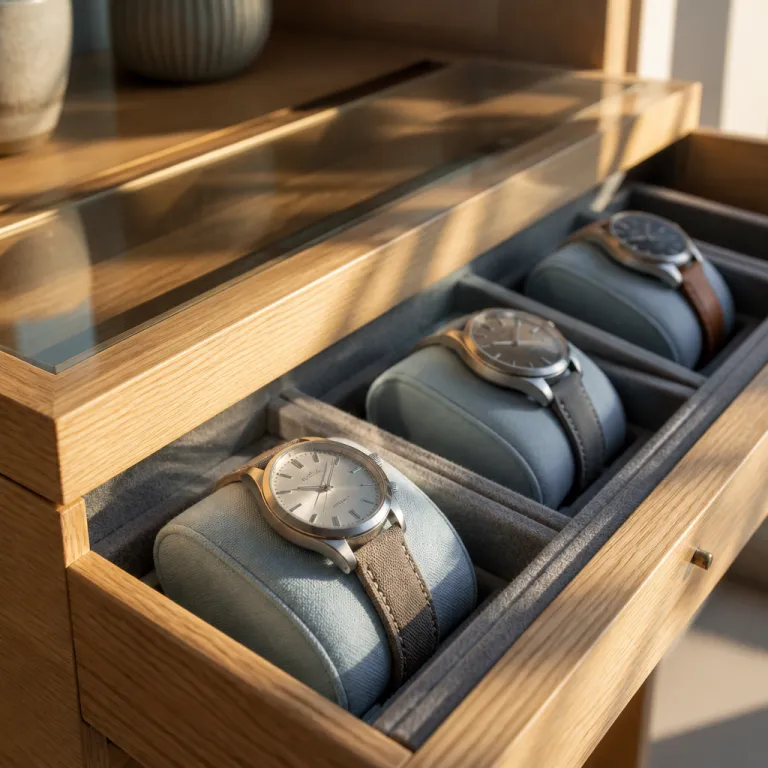
Inside the box, each watch case should rest on a properly sized cushion that does not stretch the bracelet or strap. Lining made from a soft cloth such as microfiber or Alcantara will help keep polished surfaces free from hairline scratches when you store watches side by side. For daily pieces, a compact watch storage tray near your dressing area can keep watch choices visible and watch ready, while long term storing belongs in a safer, more controlled cabinet or safe.
For collectors considering a dedicated device, a quiet single watch winder for automatic watches can be a refined solution. A well calibrated watch winder keeps movement components in gentle motion, which can help keep automatic watch lubricants evenly distributed without excessive wear. Use such a winder only for automatic watches you rotate frequently, and always match the turns per day and direction to the specific movement inside each luxury watch. As a broad guide, many modern calibres from brands such as Rolex, Longines, and Omega are commonly specified by watchmakers and specialist databases in the 500 to 900 turns per day range, but you should always confirm the exact recommendation in the manufacturer’s technical documentation or owner’s manual.
How to store watches in boxes, cases, and winders
Choosing the right watch box is the foundation of safe storage for any serious watch collection. A high quality watch box with solid hinges, a firm lock, and individual padded slots lets you store watch pieces without them touching or scratching each other. For larger collections, modular watch boxes can grow with your storage needs while keeping a consistent aesthetic across your cabinet or safe.
When you place watches into a box, follow a simple three step routine: first, wipe each watch case and bracelet with a clean soft cloth; second, check that the crown is fully pushed in or screwed down; third, seat the watch on a cushion that matches your wrist size. This quick habit removes skin oils, dust, and moisture that would otherwise sit on the metal during storing and slowly attack gaskets, pushers, and clasps over time. It also helps keep leather straps in good condition, because trapped sweat and dirt are the main reasons straps crack prematurely in storage.
Collectors who rely on a watch winder should treat it as a precision tool rather than a decorative accessory. A premium automatic watch winder case for two watches allows you to keep movement parts active on selected automatic watches while the rest of the collection rests. Set each winder program to the manufacturer’s recommended turns per day, because too much motion can wear the movement, while too little fails to keep watch functions fully wound. For example, many Rolex automatic movements are typically specified by independent winder charts around the mid range of common settings, while some Longines calibres require different directions of rotation, so always check the brand’s official guidance.
For travel, a compact watch case or roll offers a different type of storage solution that prioritizes impact protection. Choose a case with firm exterior walls and a soft cloth interior, so your timepieces remain safe in luggage yet emerge watch ready at your destination. Whether you use watch boxes, rolls, or winders, the goal is always the same, to help keep each luxury watch secure, clean, and mechanically healthy between moments of wear.
Balancing access and preservation in a growing watch collection
As your watch collection grows beyond a handful of pieces, the challenge shifts from simple storage to intelligent rotation. You want to keep watches accessible enough to enjoy, yet protected enough that time, dust, and humidity do not erode their condition. The art lies in deciding which timepieces stay in a primary watch box and which move into deeper storage solutions such as a safe or bank vault.
Daily wear watches, such as a steel Rolex sports model or a versatile Longines Spirit, belong in a central watch storage area where you can reach them quickly. These watches benefit from frequent wear, which naturally keeps movement parts lubricated and helps keep watch gaskets flexible, provided you clean them with a soft cloth after each day. Less worn pieces, especially dress watches on leather straps, should be stored watch by watch in cooler, darker spaces to slow aging of both dials and straps.
For collectors who aim for a tightly curated set of timepieces, this balance becomes even more strategic. An insightful perspective on how a smart watch collection looks at eight pieces can be found in this analysis of the case for stopping where you should, which indirectly shapes how you plan storage. Fewer watches mean you can invest in higher quality watch boxes, better environmental control, and perhaps a single well chosen watch winder, all of which help keep movement performance and case finishing closer to factory fresh condition.
When you store watches for very long periods, consider loosening bracelets slightly and unbuckling straps to reduce tension. This small detail helps keep watches free from permanent creases in leather and stretch in metal links, especially on heavier automatic watches. Over time, such thoughtful storing habits preserve both comfort on the wrist and the crisp visual lines that define a luxury watch at its best.
Special care for automatic movements, vintage pieces, and brand icons
Automatic watches introduce specific storage questions, because their movements are designed to stay in motion during regular wear. When you store an automatic watch for several days, letting it stop is not harmful, but you must wind it fully before the next wear to keep movement accuracy stable. For longer intervals, a carefully programmed watch winder can keep automatic movements running without the repeated setting of calendars and moon phases.
Vintage timepieces, whether an early Longines chronograph or a gilt dial Rolex Submariner, demand gentler storage conditions than modern sports watches. Their older gaskets, fragile lume, and sometimes uncoated dials are more sensitive to humidity and light, so proper storage means cooler rooms, minimal light exposure, and very soft cloth linings in every box or case. Many seasoned collectors keep watches of this age in separate watch boxes, away from dehumidifiers or heating vents that might accelerate drying and cracking.
Brand icons with complex movements, such as annual calendars or split second chronographs, also benefit from tailored storage solutions. If you rarely wear such a luxury watch, storing it fully unwound in a stable environment can be safer than constant motion on a watch winder, which adds wear to already intricate components. For pieces you wear monthly, a low intensity winder program can help keep movement parts lubricated while still limiting unnecessary rotation.
Leather straps on these watches deserve equal attention, because they often carry as much heritage as the case itself. Always keep watches with leather away from direct heat sources, and never store watch pieces in sealed plastic bags where moisture can build and mold can form. A breathable watch box with a soft cloth interior will help keep both strap and lining in good condition, ensuring the watch is watch ready whenever you choose to bring that history back to your wrist.
Practical routines to keep watches in good condition over time
Daily and weekly routines matter more than any single storage solution when you want to keep watches pristine. Before you store watch pieces each evening, give every case and bracelet a brief wipe with a dedicated soft cloth kept near your main watch box. This habit removes salt, dust, and cosmetics that would otherwise sit on the metal during storing and slowly attack both finishing and gaskets.
Once a week, open your primary watch storage to inspect each timepiece for condensation, magnetization, or timing drift. Rotate which watches you wear, so every automatic watch in the collection sees some wrist time, which helps keep movement components active and distributes lubricants more evenly. For watches that remain unworn, manually wind them once a month before returning them to their case, which can help keep internal parts from seizing during long periods of rest. If you suspect magnetization, a simple demagnetizer designed for mechanical watches can often restore accuracy within seconds, but always follow the device instructions and consult a watchmaker if in doubt.
Security should integrate seamlessly with these care routines, especially for high value timepieces from houses such as Rolex and Longines. Many collectors keep watches in a fire rated safe with internal watch boxes, combining physical protection with proper storage conditions and discreet access. When you store watches this way, place silica gel packs inside the safe to regulate humidity, and replace them regularly to help keep the microclimate stable.
Finally, schedule professional servicing based on actual wear and storage conditions rather than a rigid calendar. A luxury watch that spends most of its time in a controlled watch storage environment may safely extend intervals between services, while a daily automatic watch exposed to heat, water, and shocks might need attention sooner. Official guidance from major Swiss brands often suggests service windows of roughly five to ten years for modern mechanical movements, but your own pattern of use, storage quality, and water resistance checks should ultimately guide when you book maintenance with an authorized service center or trusted independent watchmaker.
Advanced storage strategies for serious collectors and future heirs
For collectors who view each watch as part of a broader heritage plan, storage becomes a bridge between personal enjoyment and future generations. Documenting your watch collection with detailed records of purchases, services, and storage conditions helps heirs understand both the financial and emotional value of each piece over time. Keep these records in a secure digital archive and a physical folder stored alongside your main watch boxes or safe.
Climate controlled cabinets offer an elevated storage solution for large collections, combining stable temperature, filtered air, and integrated watch boxes behind lockable glass. Such systems help keep movement performance consistent across dozens of timepieces, while also presenting the collection as a curated gallery rather than a hidden asset. When configured correctly, they allow you to store watches in a way that balances security, preservation, and daily inspiration.
Some collectors integrate multiple watch winder modules into these cabinets, dedicating them to specific automatic watches that feature complex calendars or world time functions. By tailoring each winder’s program to the movement, you keep watch complications synchronized without overworking the mechanisms, which is especially valuable for perpetual calendars and dual timepieces. The rest of the watches rest quietly in static watch boxes, where proper storage and occasional manual winding help keep movement parts healthy without unnecessary motion.
Estate planning should also address how to store watches during transitions, such as relocations or inheritances. Use individual travel cases with soft cloth linings for each watch case, and avoid stacking timepieces in generic jewelry boxes where they can collide and scratch. When you help keep both the physical watches and their documentation organized, you pass on not only objects but a coherent story of taste, care, and connoisseurship that defines a truly thoughtful luxury watch legacy.
Key figures on watch storage, servicing, and preservation
- Service centers and independent watchmakers frequently report that corrosion and moisture related damage are often linked to poor storage, particularly high humidity and rapid temperature changes, both of which can be mitigated with controlled environments.
- Watchmakers also observe that timepieces kept in safes or dedicated watch boxes with desiccant packs tend to show fewer moisture related dial and hand defects than watches stored in open drawers, bathrooms, or near kitchen sinks.
- Brand documentation from leading Swiss manufacturers commonly recommends full maintenance intervals measured in several year cycles, with the upper end of those ranges generally achievable when watches are stored in stable environments and worn moderately.
- Independent specialists note that magnetization issues, frequently caused by storing watches near speakers, phones, or laptops, now represent one of the most common quick fixes, with simple demagnetization often restoring accuracy within a short appointment.
- Market analyses from major auction houses consistently show that vintage timepieces with original, well preserved dials and cases can command substantial price premiums over similar references that exhibit moisture damage or aggressive polishing, underscoring the financial impact of careful storage.
FAQ about how to store watches
How should I store watches I wear every day ?
Keep daily wear watches in an easily accessible watch box placed away from direct sunlight and strong magnets. Wipe each watch with a soft cloth before storing it, then rest the case on a properly sized cushion so the bracelet or strap is not under tension. This routine keeps watches clean, watch ready, and protected from unnecessary knocks on bedside tables or desks.
Is a watch winder necessary for automatic watches ?
A watch winder is not strictly necessary for an automatic watch, but it can be convenient for pieces with complex calendars or frequent rotation. If you choose a winder, select a quality model with adjustable turns per day and direction, then match the settings to each movement’s specifications. Use it for a few automatic watches you wear regularly, while storing other timepieces in static watch boxes with occasional manual winding. As a rule of thumb, consult the brand’s website or owner’s manual for the exact turns per day and rotation direction recommended for your calibre.
What humidity and temperature are best for long term watch storage ?
The ideal environment to store watches long term is a cool, dry room with stable conditions. Aim for temperatures around 18 to 22 degrees Celsius and relative humidity between 40 and 55 percent, which protect both metal components and leather straps. Using silica gel packs inside safes or cabinets can help keep this microclimate consistent throughout the year.
How do I store watches with leather straps ?
Watches on leather straps should be stored away from heat sources, direct sunlight, and excessive humidity, all of which accelerate drying and cracking. Loosen or unbuckle the strap before placing the watch in its box, and avoid sealed plastic bags that trap moisture. A breathable watch box with a soft cloth interior will help keep both the strap and lining in good condition between wears.
Is it better to let a watch stop or keep it running in storage ?
For most mechanical watches, allowing them to stop during longer storage is safe, provided they are fully wound and set before the next wear. Constant running on a watch winder adds some wear to the movement, so reserve winders for automatic watches with complex calendars or frequent use. For the rest of your collection, proper storage, monthly manual winding, and periodic servicing offer a balanced way to keep movement health and longevity aligned.