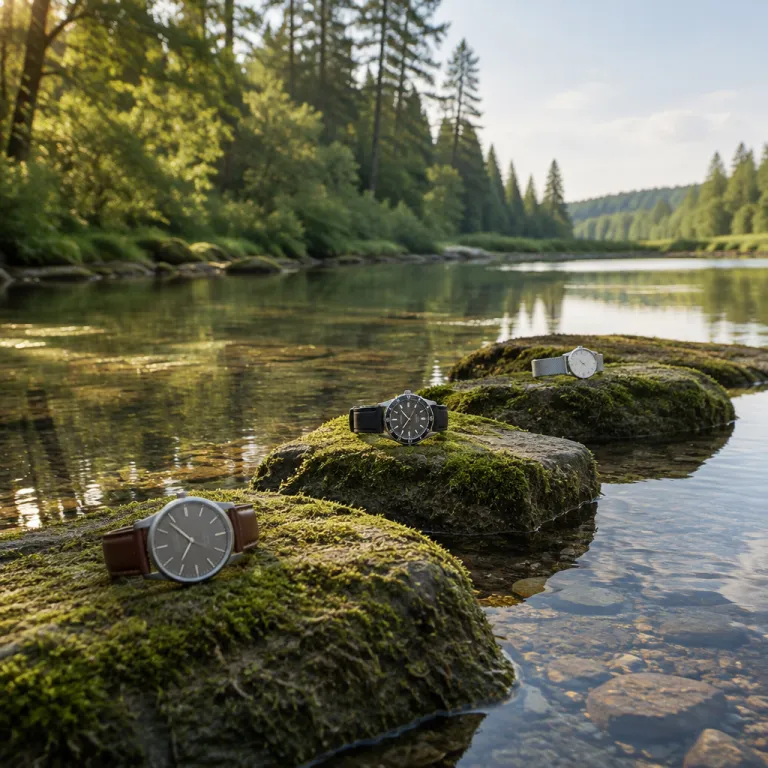
Start with the watch you will actually wear
Learning how to start a watch collection begins with brutal honesty. You are not buying a spreadsheet of references ; you are buying a watch that will sit on your wrist during real time, from Monday meetings to a weekend watch on the beach. If you start by collecting watches that you rarely wear, the collection will feel like a cart of random objects rather than a coherent story.
The first rule is simple ; buy the one everyday watch you will reach for at least twice a week. That starting watch should match your lifestyle, your office dress code, and your tolerance for scratches over time, not a forum ranking of the best investment pieces. When you start watch planning this way, every later watch you add to the collection has a clear role instead of being another redundant casual watch that gathers dust.
Think in use cases, not hype, when you start collection building. One luxury watch for the office, one casual watch for weekends, one tougher tool watch for travel and sport — that is a better framework than chasing every new release. When aspiring collectors start watches start journeys with clear roles, they avoid the trap of collecting watches that look great in photos but feel wrong on the wrist.
Case size and design matter more than any theoretical future price. Try on the watch, check how the lugs sit on your 16 to 18 cm wrist, and see whether the dial remains legible in low light over time. If you do not enjoy the design every day, no potential upside will compensate for the irritation of a luxury watch that never quite feels right.
For a first serious mechanical piece, a clean three hander is usually the best option. A hand wound dress watch can be charming, but many early collectors will prefer an automatic everyday watch that they can grab and go. When you buy that first watch, think about how it will look after ten years of real wear, not just how it photographs under boutique lights.
Do not ignore quartz entirely when you start watch collecting. A well chosen Casio or similar can be the perfect beater, a casual watch for the gym or travel that protects your more fragile pieces. The point is not snobbery ; the point is to build a watch collection that fits your actual time, your real days, and your real budget.
Budget tiers, use cases and the first serious buy
Once you know what you will wear, the next step in how to start a watch collection is defining a realistic budget. Think in tiers tied to use, not in vague labels like entry level luxury watch or high horology. Your budget should reflect what you can spend without stress while still leaving room for service costs over time.
At the most accessible tier, under roughly 500 dollars, you can start collection planning with robust field watches, simple dive watches and honest pilot watches. This is where Casio, Seiko and Citizen give you reliable everyday watch options that you can buy without fear of overpaying. A Casio G Shock, for example, is a classic tool watch for the gym, travel and rough weekends, and it often becomes the default weekend watch even after you add more expensive pieces.
Move up to the mid tier, roughly 1 000 to 3 000 dollars, and you enter the territory where a first mechanical luxury watch starts to make sense. Here you will find strong value in micro brands, Longines, Oris and some pre owned pieces from larger brands. If you are looking for investment grade watches within a modest budget, resources like the guide to investment grade watches within 1 000 euros can help you find references that balance price, design and long term appeal.
From roughly 3 000 to 10 000 dollars, you are in the core zone for many readers who are starting watch collecting with a first serious mechanical piece. This is where brands like Omega, Tudor and TAG Heuer compete for your wrist with everyday watch designs that can handle both office and casual settings. A TAG Heuer Carrera or Aquaracer, for instance, can serve as a watch sporty enough for weekends yet refined enough for client meetings.
Above that, you enter the realm where each buy should be slow, deliberate and grounded in deep research. At these prices, you are not just building watch variety ; you are allocating capital that could sit in index funds instead. The more money involved, the more you must treat every watch in the collection as a long term commitment rather than an impulse add to cart moment.
Whatever tier you occupy, match each purchase to a clear role. One everyday watch, one casual watch, one tougher tool watch, and only then a more delicate hand wound dress piece — that sequence keeps your budget aligned with reality. The goal is not to own the best watches on paper, but to own the right watches for your time.
If you lean toward sportier aesthetics, study curated lists of top luxury sport watches for men to understand how case design, bezel geometry and bracelet construction affect real world comfort. Use those references as benchmarks when you compare price, finishing and long term service costs. Over time, this habit will sharpen your eye and protect your budget.
New versus pre owned and reading real market prices
Learning how to start a watch collection without overpaying means accepting that boutique prices are only one data point. The real market for watches lives on platforms like Chrono24, WatchCharts and major auction houses, where you can see what people actually pay over time. Before you buy anything, you should know both the retail price and the current secondary market range for that reference.
When you compare new and pre owned options, think in terms of risk, warranty and long term service. A new watch from an authorized dealer will cost more, but you get a full factory warranty, a clean service history and the comfort of knowing the watch has not been polished into oblivion. A pre owned watch, by contrast, can save you 20 to 30 percent or more, but only if you are disciplined about condition, papers and the reputation of the seller.
For a first serious starting watch, many collectors feel safer buying new, especially if they are not yet comfortable judging case refinishing or movement health. Others prefer to start collection building with pre owned pieces, accepting a few hairline scratches in exchange for a lower entry price and less immediate depreciation. Both paths can work, but you must be honest about your own expertise and your tolerance for risk.
Use the secondary market as a reality check, not as a casino. If a watch trades consistently below retail, that does not make it a bad watch ; it simply means you should probably buy it pre owned rather than paying full boutique price. If a reference trades far above retail, ask yourself whether you want the watch itself or the feeling of owning something scarce.
For investment minded readers, structured guides to investment grade watches within 1 000 euros can illustrate how certain designs, brands and complications hold value better than others. Study why some dive watches and pilot watches remain liquid on the secondary market while others languish. Over time, you will see patterns in case proportions, movement families and dial layouts that the market consistently rewards.
When you evaluate a pre owned luxury watch, inspect the case flanks, lug chamfers and bracelet stretch. A heavily polished watch may look shiny in photos but will have lost its original design lines, which hurts both aesthetics and long term value. Ask for movement photos, timekeeping data and service receipts, and be prepared to walk away if anything feels off.
Remember that every watch you add to the collection will eventually need service. Factor in the cost and downtime of a full overhaul when you compare the price of new versus pre owned pieces. A slightly higher purchase price for a fresh, warrantied watch can be cheaper over ten years than a bargain that needs immediate work.
Waitlists, grey market and why patience usually wins
Anyone learning how to start a watch collection in this market runs into the same wall. The pieces you see on social media are often the hardest to buy at retail, which pushes new collectors toward grey market dealers and inflated prices. Navigating that landscape calmly is one of the most important skills in watch collecting.
Authorized dealer waitlists exist because demand for certain watches exceeds the supply that brands allocate to each boutique. When you put your name down for a hyped dive watch or luxury watch with a steel bracelet, you are entering a queue that may or may not move quickly. The temptation is to skip the wait and buy from a grey market dealer at a premium, but that decision can haunt your collection for years.
Grey market dealers acquire watches through various channels and resell them, often brand new, without being authorized by the brands themselves. You might find the best price on an unpopular reference, but for hot models the grey market price can be 20, 30 or even 50 percent above retail. Paying that premium for your starting watch locks in a loss the moment you strap it on, because the secondary market will not necessarily support that inflated number over time.
Patience, by contrast, lets you build a relationship with an authorized dealer, which can pay dividends across your whole collection. If you buy a less hyped everyday watch or a classic TAG Heuer from the same boutique, you show that you are not just chasing the latest flip. Over time, that can move you up the list for more coveted dive watches or pilot watches without paying grey market tax.
There are exceptions, of course, where a grey market price dips below retail for slower moving models. In those cases, a reputable dealer with a clear return policy can be a smart way to start collection building at a discount. The key is to compare the grey price not only to retail, but also to the broader pre owned market, so you know whether you are actually getting value.
Whatever route you choose, never let fear of missing out drive you to add a watch to your cart at a price that feels wrong. There will always be another release, another color, another limited edition, but your capital is finite. A calm, patient approach to buying watches will protect both your budget and your enjoyment over time.
Remember that the goal is not to own every hyped watch, but to assemble a watch collection that reflects your taste, your lifestyle and your discipline. The market will swing, waitlists will open and close, but a well chosen everyday watch or weekend watch will keep delivering pleasure long after the hype cycle has moved on. That is how serious collectors quietly win.
Building a coherent collection: roles, rotation and storage
Once you own one or two pieces, how to start a watch collection becomes a question of structure. You are no longer just buying a watch ; you are building watch coherence, deciding which roles are filled and which gaps remain. This is where many collectors either create a focused, satisfying collection or slide into chaotic impulse buying.
Think of your watches as a small team, each with a job. One everyday watch handles office duty, one casual watch covers jeans and T shirts, one tougher tool watch takes care of sport, travel and rough weekends. Only when those roles are covered should you add a more fragile hand wound dress piece or a quirky design that you will wear less often.
For example, you might start collection planning with a versatile 38 millimetre steel three hander on a bracelet. Your next buy could be a 40 millimetre dive watch with 200 metres of water resistance for swimming and holidays. After that, a clean pilot watch with strong legibility and a leather strap can round out the core trio, giving you options for almost any situation.
Rotation discipline matters as much as what you buy. If you find that one watch hogs all the wrist time while others sit untouched, that is a signal to adjust the collection. Either sell the underused pieces or accept that you prefer a smaller, tighter watch collection with fewer but better loved watches.
Storage is not an afterthought ; it is part of collecting watches responsibly. A good watch box protects your pieces from dust, scratches and accidental drops, and it also forces you to see the collection as a whole when you choose what to wear. If you own several automatic watches, a quiet, reliable winder — such as those reviewed in guides to top quiet motor watch winders — can keep your everyday watch and weekend watch ready without constant resetting.
As your collection grows, you may find yourself drawn to specific themes. Some collectors focus on dive watches from different brands and eras, others on pilot watches with various complications, and some on hand wound chronographs with historically important movements. Whatever your theme, let it emerge naturally from what you actually wear and enjoy, not from what you think will impress other collectors.
Remember that every watch you add should either fill a new role or significantly upgrade an existing one. If a potential buy does neither, it is probably just noise. Over time, this simple filter will keep your cart, your watch box and your budget under control.
Avoiding common mistakes when collecting watches
Most painful lessons in how to start a watch collection are predictable. New collectors chase what flippers hype, ignore case size and lug to lug length, and buy without trying watches on the wrist. The result is a drawer full of expensive mistakes that feel wrong every time you check the time.
First, never buy a watch purely because someone online calls it the best. Your wrist, your wardrobe and your budget are different from theirs, and what works as an everyday watch for a desk diver may be useless for someone who actually swims. Always ask whether a given watch will improve your daily life or just your social media feed.
Second, respect proportions. A 44 millimetre watch sporty chronograph might look fantastic in macro shots, but on a 16 centimetre wrist it can wear like a dinner plate. When you start watch shopping, measure your wrist, learn your preferred lug to lug range and pay attention to how the case design distributes weight.
Third, do not ignore comfort and practicality. A hand wound movement can be romantic, but if you resent winding it every morning, it will not get wrist time. A beautifully finished leather strap that cannot handle sweat will not survive as an everyday watch in a humid climate, no matter how attractive the price.
Fourth, avoid the fast rotation trap. Constantly adding and flipping watches start patterns that feel exciting at first but usually end in fatigue and financial loss. A one in one out rule, where you sell something before you add a new piece to the collection, forces you to compare each potential buy against what you already own.
Fifth, be wary of impulse buys driven by discounts. A watch that is 40 percent off but does not fit your collection, your wrist or your lifestyle is still expensive. Before you add to cart, ask whether you would buy the same watch at full price if it were the only piece you could own for a year.
Finally, remember that brands and marketing departments will always push the next big thing. Your job, as someone serious about watch collecting, is to filter that noise through your own taste, your own budget and your own experience. The best collections are not built in a weekend ; they are built over time, with patience and a clear sense of purpose.
From first piece to long term collecting strategy
Once the first watch is on your wrist, how to start a watch collection becomes a question of long term strategy. You are no longer just choosing a single object ; you are shaping a hobby that will intersect with your finances, your travel and your daily routines. A clear plan keeps the pleasure high and the regret low.
Begin by writing down what you want your collection to look like in five to ten years. Maybe you aim for three core watches — an everyday watch, a weekend watch and a dressier hand wound piece — plus one or two more specialized tool watches. That vision will guide which brands, designs and complications you prioritize as you buy over time.
Next, decide how much of your annual budget you are willing to allocate to watches. Treat it like any other asset class, with a clear ceiling that you will not cross, no matter how tempting the latest release. This discipline is what separates sustainable watch collecting from impulsive spending that quietly erodes your savings.
As your knowledge grows, you may gravitate toward specific brands such as TAG Heuer for motorsport inspired chronographs, or toward categories like vintage dive watches and pilot watches. Let those preferences inform your next purchases, but do not let them trap you into buying every variation. Focus on references that offer distinct design, technical interest or historical significance, not just another dial color.
Over time, you will also refine your sense of value. You will see which watches in your box you reach for without thinking, and which ones you rationalize but rarely wear. The former should shape your future buys ; the latter should probably be sold to fund pieces that better fit your life.
When you eventually look back at ten years of collecting watches, the pieces that stand out will not be the ones that spiked briefly in price. They will be the watches that marked promotions, trips, relationships and quiet mornings, the ones that aged gracefully with you. That is the real ROI of a thoughtful watch collection — not the press release, but the wrist presence after ten years.
Key figures for starting a watch collection
- Market data from Morgan Stanley and LuxeConsult show that the top five Swiss watch brands account for over 50 percent of industry revenue, which means most hyped models come from a very small group of brands.
- Reports from Chrono24 indicate that pre owned watches represent a market roughly comparable in size to the new retail market, highlighting how important secondary prices are when deciding whether to buy new or pre owned.
- Industry surveys suggest that mechanical watches typically require a full service every five to ten years, and that service can cost between 10 and 20 percent of the original retail price depending on the brand and complication.
- Data from WatchCharts and similar platforms show that many mainstream steel sports watches trade within plus or minus 10 percent of retail after the initial hype fades, underlining why patience often beats paying early grey market premiums.
- Consumer research from Deloitte indicates that a significant share of younger collectors, especially in the 25 to 40 age bracket, now start their watch collecting journey with a budget between 1 000 and 5 000 dollars, aligning with the mid tier strategy outlined above.
FAQ about starting a watch collection
How many watches should I own when I am just starting ?
For most new collectors, a focused set of two to three watches is ideal. One everyday watch, one tougher tool watch and optionally one dressier piece will cover almost every situation. You can always expand later once you understand your real wearing habits.
Is it better to buy one expensive watch or several cheaper ones ?
If you have a clear idea of your taste and lifestyle, one well chosen luxury watch can be more satisfying than several compromises. However, if you are still exploring styles, a couple of more affordable watches from reputable brands can help you learn what you actually enjoy. The key is to avoid stretching your budget so far that you cannot afford service or other priorities.
Should my first serious watch be new or pre owned ?
Buying new from an authorized dealer offers maximum security, with full warranty and a known history, which many first time buyers appreciate. Buying pre owned can save significant money, but it requires more knowledge about condition, authenticity and servicing. Choose the path that matches your current expertise and your comfort with risk.
How do I know if a watch is the right size for my wrist ?
Measure your wrist circumference and pay attention to both case diameter and lug to lug length. Try the watch on if possible, checking that the lugs do not overhang and that the watch feels balanced, not top heavy. Photos can mislead, so real wrist time is the best test.
Are watch winders necessary for a small collection ?
Watch winders are not strictly necessary, but they can be convenient if you own several automatic watches that you rotate frequently. A quality, quiet winder helps keep complications like date and moon phase running, so you do not need to reset them each time. For one or two simple watches, manual winding and occasional resetting are usually enough.