From tool to icon: how the Tudor Black Bay watch reframed Tudor’s heritage
The modern Tudor Black Bay watch sits at the crossroads of no‑nonsense tool watch pragmatism and refined luxury appeal. Tudor used the Black Bay collection to reconnect its contemporary dive watches with the rugged steel instruments it supplied to professional divers and military units from the 1950s onward. That strategic move turned a once utilitarian dive watch concept into a flagship product that now anchors the entire Black Bay collection.
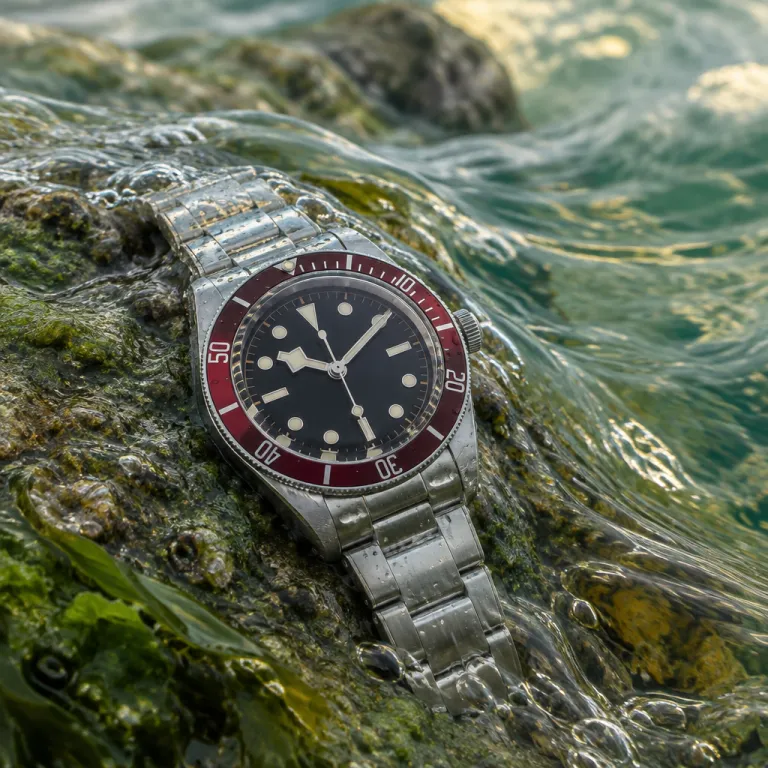
At the heart of this success lies a clear design language built around a robust stainless steel case, a highly legible black dial, and a wide unidirectional bezel that recalls early Tudor Submariner references without copying them. The brand deliberately chose a slightly oversized screw‑down crown, bold snowflake hands, and generous Super‑LumiNova to fill the dial surface, so that every sweep of the seconds hand feels purposeful and historically grounded. This balance between vintage‑inspired cues and modern manufacturing standards allowed the Tudor Black Bay line to speak simultaneously to purists and first‑time luxury buyers.
Collectors quickly realized that the original burgundy‑colored bezel variant of the Tudor Black Bay (introduced in 2012 as reference 79220R) offered a rare mix of character and versatility. The solid‑link stainless steel bracelet with folding clasp and safety catch gave the watch a reassuring heft on the wrist, while optional leather or fabric straps softened the aesthetic for more casual wear. As the Tudor Black Bay narrative expanded, the watches evolved from a single retro‑styled dive model into a coherent product family that still respects the core idea of a dependable steel dive watch.
Design codes of the Tudor Black Bay watch and their historical roots
Every serious enthusiast knows that the Tudor Black Bay watch is more than a fashionable dive piece. Its design codes trace directly back to mid‑century Tudor dive watches that shared cases, bracelets, and movements with Rolex while maintaining a distinct brand identity. When you examine a current Black Bay steel reference next to a vintage Tudor Submariner such as the ref. 7016 or 9401, the lineage of the steel case, crown profile, and bezel proportions becomes immediately clear.
The snowflake hands that dominate the black dial of many Tudor Black Bay models first appeared on professional dive watches supplied to the French Navy (Marine Nationale) in the late 1960s. Those hands maximized legibility under low‑visibility conditions, allowing divers to read hours, minutes, and running seconds at a glance, even when the dial was partially obscured by equipment. Tudor revived this vintage‑inspired handset for the modern Black Bay collection, turning a once purely functional detail into a powerful aesthetic signature that now defines the entire product line.
Case architecture also plays a crucial role in the heritage‑driven story. The slightly domed sapphire crystal, the polished bevels along the lugs, and the brushed flanks of the stainless steel case echo the finishing found on historic tool watches while remaining resolutely modern in execution. For a deeper exploration of how such functional design codes migrate into contemporary luxury, the evolution of the Reverso in this origin story of a 1931 design that still works offers a compelling parallel to the way Tudor Black Bay models reinterpret their own past.
Movements, power reserve and the rise of in house Tudor Black Bay calibres
The transformation of the Tudor Black Bay watch from a charming heritage piece into a serious horological contender coincided with Tudor’s adoption of in‑house movements. Early Black Bay models relied on outsourced ETA calibres, but the shift in 2015–2016 to proprietary MT56xx movements with extended power reserve fundamentally changed how collectors perceived the brand. A modern Tudor Black Bay with a manufacture calibre such as the COSC‑certified MT5602 now stands as a fully fledged alternative to many higher‑priced Swiss dive watches.
These movements typically offer a power reserve of around seventy hours, allowing the watch to run comfortably through a weekend off the wrist without losing time. That specification matters for owners rotating between several watches, because it reduces the need to reset the time and date every time the piece returns to the wrist. The smooth sweep of the seconds hand, combined with chronometer‑grade accuracy in many references, reinforces the sense that each stainless steel case houses a serious mechanical engine rather than a nostalgic prop.
Specialized variants such as the Black Bay GMT and Black Bay Chrono extend this technical narrative into travel and motorsport territories while preserving the core dive identity. The Black Bay GMT integrates a robust movement (calibre MT5652) with an independently adjustable local hour hand, making it a practical travel watch Tudor enthusiasts can rely on during long‑haul flights. The Black Bay Chrono uses the MT5813 chronograph calibre, developed with Breitling, to deliver column‑wheel timing performance. For readers interested in how such technical evolutions compare across the broader market of dive watches, the analysis of a standout Seiko reference in this review of why the SPB333 stands out in the world of luxury watches provides useful context on value, finishing, and movement performance.
Bracelets, straps and the tactile identity of the Tudor Black Bay watch
The way a Tudor Black Bay watch feels on the wrist is as critical to its appeal as the dial or movement. Tudor invested heavily in refining the steel bracelet, ensuring that the taper, link articulation, and clasp micro‑adjustment work together to create a secure yet comfortable fit. Many collectors consider the latest stainless steel bracelet designs, especially on current Black Bay 41 and Black Bay 58 references, to be among the most satisfying in the mid‑luxury segment.
For those who prefer a more relaxed aesthetic, Tudor offers a wide range of strap options that dramatically change the character of the same watch. A supple leather strap can emphasize the vintage‑inspired side of a heritage‑leaning Black Bay model, while a textured rubber strap underlines its role as a serious dive instrument with high water resistance. Switching between bracelet and strap effectively gives the owner several watches in one, allowing the piece to move seamlessly from office to weekend to coastal travel.
Details such as the chamfered edges of the steel case, the polished sides of the bezel, and the finishing of the end links all contribute to the tactile identity of the Tudor Black Bay line. On some references, a two‑tone combination of stainless steel and yellow gold on the bracelet and bezel injects a subtle dressy note without sacrificing the robust dive‑watch DNA. This interplay between metal, strap material, and case geometry ensures that Tudor Black Bay watches remain versatile companions rather than single‑purpose tools.
Color, materials and the emotional language of the Tudor Black Bay collection
Color has always played a decisive role in the emotional pull of the Tudor Black Bay watch. The original burgundy‑colored bezel variant quickly became a cult favorite because it offered warmth and individuality compared with the more conservative black bezel models. Over time, Tudor expanded the Black Bay collection with blue, green, and gilt‑accented black dial options, each designed to fill a specific niche in the enthusiast’s mental palette.
Material experimentation further broadened the appeal of the Tudor Black Bay family. Beyond traditional stainless steel, the brand introduced bronze, ceramic, and two‑tone yellow gold combinations that changed how the same core case and dial architecture felt on the wrist. A bronze Black Bay case paired with a fabric strap, for example, leans heavily into the vintage‑inspired narrative, while a ceramic case with a matching rubber strap projects a stealthy, modern tool‑watch personality.
Even within classic stainless steel executions, subtle shifts in dial texture, bezel color, and bracelet finishing create distinct sub‑identities. A matte black dial with gilt printing and a rivet‑style steel bracelet speaks directly to heritage‑focused enthusiasts who prize historical nuance. By contrast, a glossy black dial with applied markers, a polished bezel edge, and a sleek steel bracelet will appeal to buyers seeking a more contemporary, urban expression of the Tudor Black Bay aesthetic.
From military decks to modern wrists: the Tudor Black Bay watch in the wider history of dive watches
The Tudor Black Bay watch does not exist in isolation; it occupies a specific chapter in the broader history of dive watches. Tudor supplied robust steel dive instruments to various military and professional units, and those early watches established the reliability credentials that the modern Black Bay collection now leverages. When collectors strap on a current Tudor Black Bay, they are engaging with a lineage that once served on cold, wet decks rather than in climate‑controlled boutiques.
That historical continuity explains why details such as water‑resistance ratings, bezel grip, and legible black dial layouts remain central to the design, even as the product moves deeper into the luxury segment. A well‑executed stainless steel case with a secure screw‑down crown and a clearly indexed bezel is not merely an aesthetic choice; it is a direct reference to the functional demands of saturation diving and military operations. For a broader look at how professional requirements shaped modern luxury sports watches, the analysis of aviation pieces in this article on how pilot watch designs shaped modern luxury aviation timepieces offers a useful parallel to the Tudor Black Bay story.
Today, Tudor Black Bay watches stand alongside icons from other brands as fully recognized members of the modern dive‑watch canon. Variants such as the Black Bay GMT and Black Bay Chrono extend the family into travel and timing roles while still referencing the core dive DNA through case shapes, bezel designs, and bracelet architecture. For passionate collectors, owning a Tudor Black Bay watch means participating in an evolving narrative where steel, movement, dial, and strap choices all reflect a carefully curated blend of history and contemporary taste.
Key figures and market context for the Tudor Black Bay watch
- According to Tudor’s own communications at Baselworld 2015 and subsequent press releases, the introduction of in‑house MT56xx movements with approximately seventy‑hour power reserve in the Tudor Black Bay collection significantly increased perceived value among enthusiasts, because many competing dive watches at similar prices still offer shorter autonomy.
- Market analyses from major auction houses such as Phillips and Christie’s show that early burgundy‑colored bezel Tudor Black Bay models (notably ref. 79220R) often achieve resale prices close to or above original retail, indicating strong long‑term demand for these heritage‑inspired references.
- Industry reports on stainless steel sports watches from organizations like Morgan Stanley and LuxeConsult highlight that steel case and steel bracelet models remain the most requested configurations in authorized dealers, and the Tudor Black Bay family is frequently cited as a key alternative when waitlists for other brands become prohibitive.
- Surveys of luxury watch buyers consistently rank water resistance, movement reliability, and bracelet comfort as top three functional priorities, all areas where the Tudor Black Bay line scores highly due to its robust construction, COSC‑certified calibres in many models, and refined ergonomics.
FAQ about the Tudor Black Bay watch and its place in dive watch history
How does the Tudor Black Bay watch differ from Tudor’s historical dive models?
The modern Tudor Black Bay watch borrows key elements such as snowflake hands, black dial layouts, and robust steel case proportions from historical Tudor dive watches, but it integrates contemporary movements with extended power reserve and improved water resistance. Finishing standards on the bracelet, bezel, and case are higher, and the product range is broader, with options like the Black Bay GMT and Black Bay Chrono that did not exist in the original tool‑watch era. In short, it preserves the functional DNA while elevating comfort, reliability, and aesthetic refinement.
Is the Tudor Black Bay watch a good entry point into luxury dive watches?
For many enthusiasts, a Tudor Black Bay watch on a stainless steel bracelet represents an ideal first serious dive watch because it combines proven movement technology, strong water resistance, and versatile styling at a relatively accessible price point. The Black Bay collection offers multiple sizes, colors, and strap options, allowing buyers to choose between more vintage‑inspired or modern executions. Compared with many competitors, the value proposition of a steel‑case Tudor Black Bay remains particularly compelling.
What are the main differences between the Black Bay GMT and Black Bay Chrono models?
The Black Bay GMT adds a second time‑zone function through a dedicated hand and a 24‑hour bezel, making it ideal for frequent travelers who still want the robustness of a dive‑oriented Tudor design. The Black Bay Chrono, by contrast, integrates chronograph pushers and sub‑dials to measure elapsed seconds and minutes, giving it a sportier, motorsport‑inspired character. Both share the core Tudor Black Bay aesthetic, but they fill distinct functional roles within the wider collection.
How important is bracelet and strap choice on a Tudor Black Bay watch?
Bracelet and strap choice dramatically affects how a Tudor Black Bay watch wears and looks, often making the difference between a dress‑capable piece and a pure tool watch. A steel bracelet emphasizes the stainless steel case and bezel, projecting a classic sports‑watch presence, while a leather strap or rubber strap can highlight either the vintage‑inspired or technical side of the design. Many collectors rotate between several options to adapt the same watch to different environments and seasons.
Does the use of yellow gold or bronze change the character of the Tudor Black Bay collection?
Two‑tone yellow gold and bronze variants introduce warmer hues and patina potential that shift the emotional tone of Tudor Black Bay watches away from purely functional steel instruments. A bronze Tudor Black Bay case on a fabric strap, for example, leans heavily into the heritage‑driven narrative, while a stainless steel and yellow gold bracelet combination feels more luxurious and urban. These material choices allow the brand to fill additional style niches without abandoning the core dive‑watch identity.