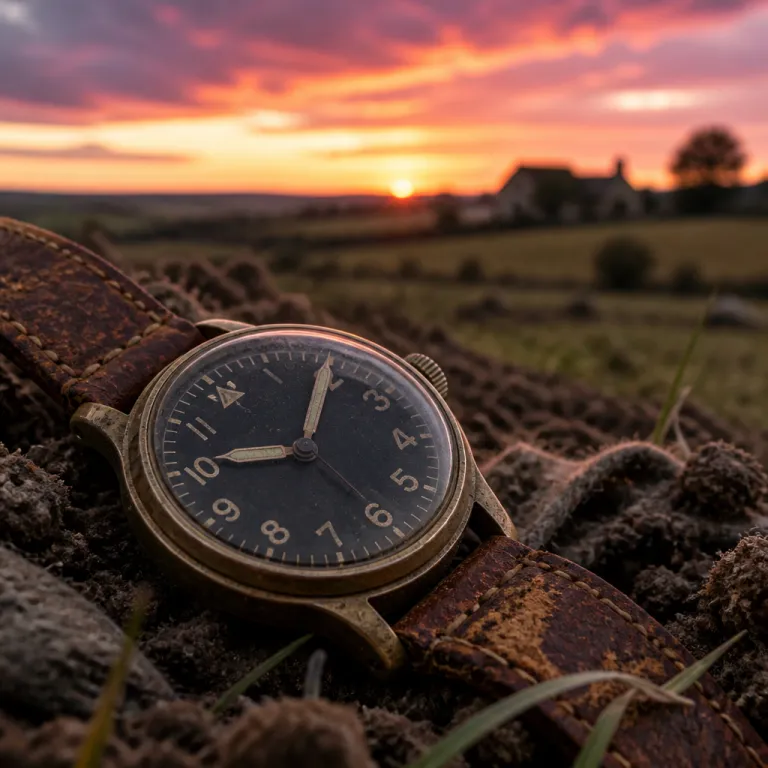

Why the ww2 german watch still captivates serious collectors
The ww2 german watch occupies a singular place in military horology. Each piece carries layered messages about technology, ideology, and the brutal efficiency of the german armed forces during war. For many collectors of vintage pieces, these wartime wristwatches remain stark tools first, and historical artefacts second.
When you handle an original military watch from germany, the utilitarian design feels almost austere. Officer and enlisted watches were usually compact, often around 32 to 36 millimetres, while dedicated navigation models such as the Beobachtungsuhr (B-Uhr) from IWC, Laco, Stowa, Wempe, or Lange reached an imposing 55 millimetres. Watch dials were stripped to essential information that a german military officer or pilot could read in a fraction of a second. On the wrist, such military watches contrast sharply with a modern swiss watch or contemporary service watch that often emphasises finishing and luxury over pure legibility.
Collectors who focus on every ww2 german watch often compare them with contemporary swiss watches supplied to other allied armed forces, such as British WWW “Dirty Dozen” models or U.S. A-11 specification pieces. The difference between a swiss army specification and a german military specification reveals how each army prioritised robustness, cost, and ease of log register within their equipment systems. Over time, these comparisons have generated countless posts and views in specialist forums, where each post can shift market perceptions in a single day.
Key military contracts and how to read a german service watch
Understanding a ww2 german watch begins with the contract codes and the serial number structure. On many military watch case backs, you will see engravings that indicate the branch of the german armed forces, the issue sequence, and sometimes the country of manufacture. Luftwaffe B-Uhr pieces, for example, typically carry “FL 23883” flight navigation markings, while Kriegsmarine watches may show anchor symbols or “K.M.” stamps. These markings separate a true service watch from civilian watches in germany that were merely worn during the war.
Collectors often start their research journey as a kind of thread starter in online discussion spaces dedicated to military watches. They post detailed photographs of watch dials, top and bottom case engravings, and movement bridges, then wait for messages from more experienced members who joined earlier and registered rare references from makers such as A. Lange & Söhne, Hanhart, or Tutima. Over time, these posts accumulate into a living archive, where each new post adds context to how a specific military watch moved through the army supply chain.
When you compare a ww2 german watch to a contemporary aviation icon such as the early Santos Dumont wrist models, described in depth in this article on the timeless elegance of the Santos Dumont wrist watch, the contrast is striking. The Santos Dumont story centres on personal style and pioneering flight, while the german military narrative focuses on standardisation, legibility, and rapid replacement documented through meticulous log register entries. This difference explains why some collectors specialise exclusively in the stark functionality of the ww2 german watch rather than more romantic aviation pieces.
Movement quality, swiss influence, and the role of neutral suppliers
Behind every ww2 german watch lies a movement that reflects both national industry and international dependence. While germany had a strong watchmaking base, many movements or components came from neutral swiss manufacturers that supplied calibres to multiple country clients during war. IWC, for instance, delivered large pocket-watch based movements for Luftwaffe B-Uhr contracts, while smaller suppliers provided ébauches for field watches. This is why you sometimes find a swiss watch calibre inside a german-made case that still carries german military engravings.
For the modern collector, this blend of german and swiss expertise raises nuanced questions about provenance and value. Some prefer a ww2 german watch with a fully domestic movement from firms such as A. Lange & Söhne or Hanhart, arguing that it better represents the industrial capacity of germany under pressure from the armed forces. Others appreciate the reliability of swiss movements, noting that a swiss watch calibre from makers like IWC or Longines often ensured better long term service watch performance in harsh field conditions.
These debates echo similar discussions around other vintage classics, such as the silver pocket pieces explored in this study of the enduring elegance of the silver fob watch. Just as that article traces how a fob watch moved from functional tool to refined accessory, collectors trace how the ww2 german watch evolved from pure military watch to coveted vintage object. In both cases, the interplay between swiss and national production shapes how connoisseurs read movements, serial number ranges, and subtle differences in watch dials.
Dial design, legibility, and the aesthetics of necessity
The dial of a ww2 german watch tells you almost everything about its intended role. Early pieces for the german military often used matte black watch dials with luminous Arabic numerals, thick minute tracks, and bold hands that a soldier could read in low light. This design language prioritised clarity over decoration, which is why many military watches from this era still feel modern today.
On some wartime german watches, you will notice subtle differences between the top and bottom halves of the dial layout. Certain aviation models emphasise a large minute scale around the outer ring, while the inner circle carries smaller hour numerals that help pilots calculate timing during complex manoeuvres. Ground troops, by contrast, usually received a simpler military watch with balanced proportions, where the watches top priority was quick reading during stressful field operations.
Collectors who analyse every ww2 german watch often keep detailed posts and private log register notes about lume composition, font variations, and serial number clusters. These records help them separate original watch dials from later service watch replacements that may have been installed during post war maintenance. Over years of careful comparison, such documentation becomes a form of collective help for the community, allowing new members who joined recently to avoid costly mistakes.
From battlefield tool to collectible asset in the modern market
The market for the ww2 german watch has matured into a sophisticated niche within vintage collecting. Early on, many military watches from germany were treated as surplus, with little attention paid to matching serial number ranges or verifying whether a german-issued piece had correct period parts. As scholarship improved through reference books and online archives, collectors began to value originality, complete provenance, and even the specific army branch that first issued the watch.
Today, serious buyers often maintain a personal log register of acquisitions, sales, and service watch interventions. They track each ww2 german watch by serial number, movement calibre, and dial variant, much like curators managing a museum collection in this specialised country segment. This disciplined approach helps them compare watches from germany across different auctions, private sales, and forum posts, leading to more informed decisions and stronger long term portfolios.
In parallel, the broader luxury community has renewed interest in historically grounded designs, as seen in analyses of icons such as the Reverso in this article on the origin story of a 1931 design that still works. While that piece explores how a reversible case moved from polo fields to dress watch status, the ww2 german watch narrative charts a path from battlefield to safe deposit box. Both stories show how function driven design can later command significant premiums when collectors recognise its authenticity and historical weight.
Digital communities, forum culture, and how collectors share knowledge
The modern understanding of the ww2 german watch owes much to online communities. On specialist forums, a single thread starter can launch a detailed discussion about a newly found military watch, complete with high resolution photographs and careful measurements. Members who joined years earlier and registered rare examples often provide crucial help by comparing serial number ranges and movement details.
These spaces function almost like an informal archive, where posts accumulate into a searchable history of wartime german watches and their variations. Collectors log register their observations, upload images of watch dials from top and bottom angles, and debate whether a specific service watch received a period correct replacement crown during post war servicing. Over time, the number of views on a particular ww2 german watch thread can signal how important that reference has become within the community.
Many enthusiasts now use mobile tools to stay engaged with this ongoing discussion throughout the day. They might install app versions of their favourite forums, then use built in share link functions to send interesting posts via email share or whatsapp email to fellow collectors. Some platforms even integrate tumblr whatsapp or pinterest tumblr style buttons, encouraging users to spread images of rare military watches across social networks while still crediting the original thread starter.
Ethics, provenance, and responsible collecting of wartime pieces
Owning a ww2 german watch means engaging with a complex and often uncomfortable history. These military watches were issued to members of the german armed forces, and some pieces may have seen active service in theatres of war that left deep scars across every affected country. Serious collectors acknowledge this context openly, rather than treating each military watch as a neutral design object.
Responsible buyers prioritise clear provenance, careful documentation, and transparent communication when they post german-issued watches for sale or trade. They maintain detailed log register records that note when a watch german piece surfaced, how its serial number fits known production ranges, and whether any service watch work altered original components. This level of rigour helps ensure that the market rewards historically honest examples rather than questionable assemblies built from mismatched watch dials and movements.
Digital communication tools can either help or hinder this ethical approach, depending on how collectors use them. When someone chooses to share link details of a suspicious ww2 german watch via email share, whatsapp email, tumblr whatsapp, or pinterest tumblr, they give the community a chance to scrutinise the piece and protect less experienced buyers. In this way, the same messages that once coordinated army logistics now echo in a different form, as enthusiasts work together across posts and views to preserve the integrity of this demanding field.
Key figures and market statistics for ww2 german watch collecting
- According to major auction houses such as Phillips and Christie’s, prices for well documented ww2 german watch pieces have risen by roughly 25–35 % over the past five years, with notable B-Uhr and Kriegsmarine examples setting record results in 2019–2023 sales.
- Specialist dealers and researchers, including contributors to the Military Watch Resource (MWR) forum, estimate that fewer than 20 % of surviving ww2 german watch examples retain fully original watch dials, hands, and movements, which explains the substantial premium paid for untouched service watch specimens. These figures are based on published catalogues, dealer archives, and comparative surveys of known collections.
- Market surveys compiled from dealer inventories and online platforms suggest that more than half of active collectors of ww2 german watch models also collect at least one swiss watch brand, highlighting the close relationship between german and swiss production in this vintage segment.
- Online forum analytics reported by several large communities show that threads focused on ww2 german watch identification routinely attract thousands of views within a single day, underscoring the importance of community messages and shared research.
FAQ about ww2 german watch collecting
How can I verify that a ww2 german watch is authentic ?
Start by checking the serial number, movement calibre, and case back engravings against documented references for that specific branch of the german armed forces. Compare watch dials, hand shapes, and case dimensions with verified examples published by recognised military watch researchers and auction catalogues. When in doubt, seek help from established experts who regularly post detailed analyses of ww2 german watch models.
Why do some ww2 german watch pieces contain swiss movements ?
During the war, germany relied on neutral swiss suppliers for certain movements and components, especially for aviation and navy contracts. As a result, you may find a swiss watch calibre inside a watch german case that still carries german military markings. This combination is historically correct in many instances and does not automatically reduce the value of the military watch.
What makes a ww2 german watch more valuable to collectors ?
Value depends on originality, condition, and documented provenance, with untouched examples commanding the highest premiums. A ww2 german watch that retains its original watch dials, matching serial number components, and period correct service watch records will usually outperform restored or heavily polished pieces. Rarity of the specific contract or unit issue, such as certain Luftwaffe or Kriegsmarine runs, can further elevate prices among specialists in military watches.
Is it ethical to collect ww2 german watch models linked to the armed forces ?
Many collectors believe it is acceptable to collect these watches german as long as they acknowledge the historical context and avoid glorifying the regime. Responsible owners document provenance carefully, share link information about questionable pieces, and use posts and messages to educate others about the broader history of war and its impact on every country involved. Treating each military watch as a historical document rather than a trophy helps maintain an ethical approach.
How should I care for a vintage ww2 german watch ?
Have the watch serviced by a specialist who understands military watches and will preserve original components whenever possible. Ask the watchmaker to record any changes in a log register, including replaced parts and lubrication dates, so future collectors can trace the service watch history. Store the ww2 german watch in a dry environment, avoid magnetic fields, and wear it sparingly to reduce mechanical wear on irreplaceable movements.