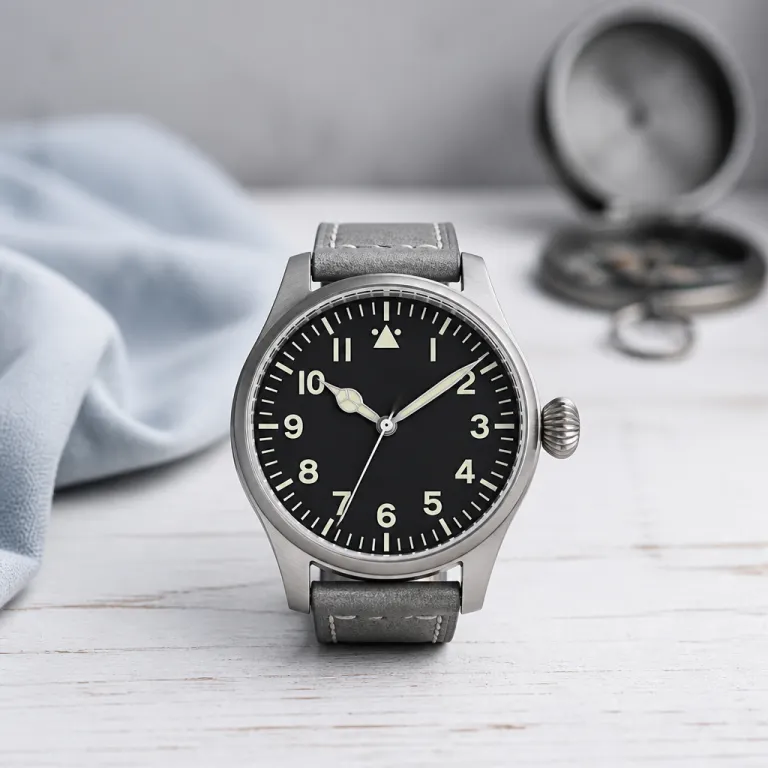

From battlefield instrument to coveted ww2 german watch collectible
The modern fascination with a ww2 German watch begins with its original purpose as a precise battlefield instrument. Collectors of vintage military watches study how each watch German manufacturers delivered to the armed forces balanced legibility, robustness, and low cost, while still reflecting the industrial strength of a country at war. A serious luxury watch enthusiast quickly sees that these service pieces, though utilitarian, laid the groundwork for many of the tool watches top brands still refine today, from pilot chronographs to modern field watches.
Period documents and surviving watches in German archives show that the German military specified strict standards for each issued military watch, including luminous dials, hacking seconds, and clear serial number engravings on the case back. Luftwaffe regulations for Beobachtungsuhren (B-Uhr navigator’s watches) from makers such as A. Lange & Söhne, Laco, Stowa, Wempe, and IWC, for example, defined exact dial layouts and movement tolerances. These serial number markings, often combined with a log register in unit records, now help historians and collectors trace how a specific ww2 German watch moved through different branches of the army or air force. When you examine such a piece from crystal to case back, you read not only the time but also layered messages about logistics, strategy, and the realities of war.
Many Swiss watch manufacturers supplied movements or complete watches to Germany, blurring the line between a pure Swiss watch and a fully German-made product. Longines, Omega, and Zenith calibres, for instance, appear in German-issued Flieger watches and Kriegsmarine deck chronometers, while smaller firms provided ebauches for field watches. This collaboration between Swiss and German industry created hybrid military watches that today sit alongside pure German military designs in serious collections, offering contrasting views on finishing, accuracy, and durability. For the luxury buyer, understanding how these watches joined the wider European supply chain during the war transforms a simple military watch into a tangible document of economic and political history.
Dial codes, engravings, and the language of authenticity
Authenticating a ww2 German watch starts with the dial, where typography, lume, and layout reveal whether a piece is a genuine service watch or a later assembly. Collectors scrutinize dials for period-correct fonts, radium lume aging, and the subtle differences between watches German factories produced for the army, the navy, and the air force, because each branch of the armed forces demanded specific legibility standards. On B-Uhr pilot’s watches, for example, the “Type A” and “Type B” dial configurations follow strict patterns that are well documented in specialist literature. A careful comparison of multiple top references, ideally side by side under magnification, often exposes repainted dials or incorrect hands that would otherwise pass casual inspection.
Case back engravings on a military watch usually include a serial number, a contract code, and sometimes a unit marking, and these details must align with known German military procurement records. Luftwaffe “FL” codes, Kriegsmarine issue numbers, and Heer property marks all follow recognizable formats that experienced researchers have compiled into reference tables. When a ww2 German watch shows mismatched engravings, or when the serial number range does not correspond to the supposed year of issue, experienced collectors treat the piece with caution and seek help from specialized forums or archival services. Many enthusiasts keep a personal log register of their watches, recording every post-purchase service, every change of strap, and every new insight gained from discussion with other experts.
Online communities dedicated to vintage German and Swiss watch history have become invaluable, where each new thread starter often posts detailed photos and requests views from seasoned members. These posts sometimes include a share link to high-resolution images, allowing others to examine details that might not be visible on a phone screen. As one long-time moderator on a leading military watch forum wrote in 2022, “good macro shots of the dial and engravings are worth more than any sales pitch.” For those building a historically coherent collection of ww2 German watch pieces as future heirlooms, such as those highlighted in curated guides to vintage references that still earn their place on the wrist, mastering this language of engravings and dial codes is non-negotiable.
From field issue to luxury asset in the vintage market
The market for an authentic ww2 German watch has shifted dramatically, with prices reflecting both rarity and condition rather than original cost. What once was a simple service watch on the wrist of a conscript in Germany has become a sought-after vintage object, often competing with a high-grade Swiss watch for space in a luxury safe. Collectors now evaluate these military watches using the same criteria applied to complicated dress watches, weighing originality, provenance, and the integrity of every component.
In auction catalogues, a well-documented military watch with a clear serial number trail and wartime photographs can command a premium over a cleaner but undocumented example. In 2018, for instance, a Luftwaffe B-Uhr by A. Lange & Söhne with matching papers sold at a major Geneva auction for several times its high estimate, largely because its history was fully traceable. Buyers appreciate when a seller provides a detailed log register of servicing, including which watchmaker handled the movement and whether any parts were replaced, because such transparency builds trust in a market where restoration can blur authenticity. A ww2 German watch that retains its original dial, crown, and case finish, even with honest wear, often outperforms an over-polished example that looks newer but has lost its historical character.
High-end dealers now present curated selections of watches of German and Swiss origin, arranging them in display cases to show the evolution from pure military tool to post-war civilian adaptation. Articles that explore the timeless allure of important vintage watches often place a ww2 German watch alongside later chronographs and divers, illustrating how functional design migrated into peacetime luxury. For the passionate collector, this context clarifies why certain military watches have become blue-chip assets, while others remain affordable entry points into serious historical collecting.
Technical traits that define a ww2 german watch
Beyond history, the enduring appeal of each ww2 German watch lies in its technical traits, which still resonate with modern enthusiasts. Movements inside these military watches were usually simple hand-wound calibres, but German and Swiss watchmakers prioritized reliability, shock resistance, and ease of service over decorative finishing. Beobachtungsuhren used large pocket-watch-derived movements with hacking seconds and oversized balance wheels for stable timekeeping, while smaller field watches relied on robust three-hand calibres. When you open such a German case today, you often find a robust architecture that can still be maintained by a competent watchmaker with access to generic parts.
Case sizes typically ranged from about 32 to 38 millimetres, modest by current standards yet perfectly wearable for a refined wrist, and this proportion contributes to their versatility as daily watches. Many service watch models used nickel or chrome-plated brass cases, which have often suffered from wear, while higher-grade military references employed stainless steel that has aged more gracefully. Collectors who appreciate subtle patina often prefer watches made in steel, where the surfaces show consistent aging without deep corrosion or aggressive refinishing.
Dial design on a ww2 German watch focused on clarity, with Arabic numerals, railroad minute tracks, and generous luminous plots that allowed soldiers to read the time in low light. These dials, when original, show characteristic aging of radium lume, and experts can read such messages in the texture and colour of the material. For those who rotate several vintage pieces, including both military watches and civilian classics, investing in a high-quality winder as explained in this guide to choosing a four watch winder for serious automatic collections helps maintain mechanical health, even though most ww2 era field watches remain manually wound.
Digital communities, messages, and the modern collector’s toolkit
The way enthusiasts study each ww2 German watch today is deeply shaped by digital communities and the constant flow of messages between collectors. On specialist forums, a new member who just joined often becomes a thread starter by posting photos of a recently inherited military watch and asking for help with identification. These posts usually attract many views in a single day, as registered experts from different time zones share opinions on originality, serial number ranges, and correct period straps.
Modern platforms encourage quick sharing, with options to share link previews, send an email share, or forward images through WhatsApp–email combinations that blend messaging and mail services. Some collectors even use integrations that mimic Tumblr–WhatsApp or Pinterest–Tumblr style layouts, pinning images of a favourite ww2 German watch to digital boards for later comparison. While such tools may seem far removed from the trenches where these watches once served, they create a living archive that preserves knowledge for the next generation.
Many serious enthusiasts now install app-based catalogues on their phones, using them to log register details of every watch, from purchase price to last service date. These apps allow sorting by brand, country, or period, making it easy to compare a German military piece with a contemporary Swiss watch or a later post-war civilian model. Over time, this disciplined record keeping transforms a scattered group of military watches into a coherent collection, where each ww2 German watch tells a clearly documented story.
Ethics, provenance, and the responsibility of owning war objects
Owning a ww2 German watch means engaging with complex history, because these objects were created for a military machine that left deep scars across Europe. Many collectors focus on the technical and aesthetic qualities of military watches, yet they also acknowledge that each watch German soldiers wore on campaign is tied to real human experiences, both tragic and heroic. This awareness shapes how responsible enthusiasts talk about their collections, emphasizing respect for victims and a commitment to historical accuracy rather than glorification.
Provenance plays a crucial role, especially when a military watch comes with documents linking it to specific units of the German military or to captured equipment brought home by Allied soldiers after the war. Some families in every affected country still hold service watch pieces that passed from one generation to the next, and when these surface in the market, careful documentation helps avoid disputes and misrepresentation. Collectors often prefer watches with clear civilian post-war histories, such as those sold through jewellers in Germany or neighbouring states, because these stories feel less directly tied to frontline atrocities.
Ethical collecting also involves transparency when sharing pieces online, whether through posts on forums, email share messages, or curated Pinterest–Tumblr style galleries. Many communities encourage members to include contextual notes about the war and the broader role of the armed forces, framing each ww2 German watch as a teaching tool rather than a trophy. By maintaining this balance, luxury watch enthusiasts can appreciate the craftsmanship of both German and Swiss watch industries while honouring the memory of those whose lives were shaped by the conflict.
Key figures in the ww2 german watch and military watch market
- According to major auction houses, prices for historically important military watches, including a well-documented ww2 German watch, have increased significantly over the past decade, reflecting growing demand for authentic vintage pieces.
- Market surveys of vintage dealers indicate that military watches now represent a notable share of total vintage watch turnover in Europe, with German and Swiss examples dominating this segment.
- Condition reports show that fewer than half of surviving service watch examples from the war era retain fully original dials, which explains the strong premium paid for untouched specimens.
- Specialist forums dedicated to watches of German and Allied origin often record tens of thousands of views per month on threads about authentication, underlining how much collectors rely on shared expertise.
- Insurance data from European brokers suggests that high-value military watch collections, including multiple ww2 German watch references, are increasingly being scheduled separately, with declared values sometimes exceeding six figures in euros per collection.
FAQ about ww2 german watch collecting
How can I tell if a ww2 german watch is authentic ?
Authenticity starts with examining the movement, case engravings, and dial printing to see whether they match known German military specifications and serial number ranges. Comparing your watch with documented examples in reference books and reputable forums helps reveal inconsistencies in fonts, logos, or case construction. When in doubt, consult a specialist who regularly handles military watches and can provide a written assessment.
Are ww2 german watch models safe to wear daily ?
Many ww2 era military watches remain mechanically robust if they have been properly serviced by a qualified watchmaker. However, original radium lume on dials and hands is mildly radioactive, so collectors usually avoid opening the case unnecessarily and store such pieces carefully. Occasional wear is common among enthusiasts, but they often reserve daily use for later post-war or modern reissue models.
Why do some ww2 german watch pieces use swiss movements ?
During the war, German manufacturers and the German military relied on established Swiss watch companies for reliable movements and sometimes complete watches. Switzerland had a long tradition of precision watchmaking, and its neutral status allowed continued export of components. As a result, many military watches combine German cases and markings with Swiss calibres inside.
What factors most influence the value of a ww2 german watch ?
Value depends primarily on originality, condition, and documented provenance, with untouched dials and matching serial number engravings commanding strong premiums. Rarity of the specific reference and its connection to notable units or events within the armed forces can also raise interest. Finally, recent auction results for comparable military watches provide a practical benchmark for current market levels.
Should I restore or keep the patina on a ww2 german watch ?
Most collectors prefer sympathetic servicing that preserves original components and visible patina, because heavy polishing or dial refinishing can significantly reduce value. A movement service, new gaskets, and a period-appropriate strap usually strike the right balance between wearability and preservation. Before any cosmetic work, discuss options with a watchmaker experienced in vintage military watch restoration and ask for photos of similar projects.