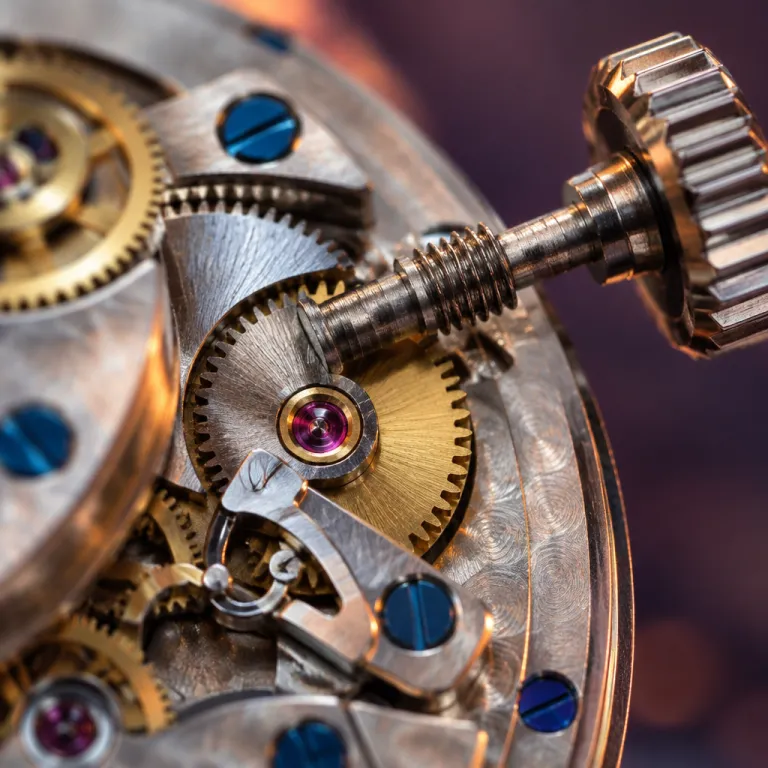
Understanding the fc-755 movement winding direction in real use
The Frederique Constant fc-755 movement is an automatic manufacture calibre whose winding direction matters for both accuracy and longevity. When you analyse the fc-755 movement winding direction, you quickly see that its bidirectional rotor architecture behaves differently from many classic ETA based designs. Any serious watch collector who rotates several watches on and off the wrist needs to know how this specific watch responds to each winder setting.
On the wrist, the rotor uses both clockwise and counter clockwise motion to maintain the power reserve, but not every external watch winder simulates this pattern correctly. Some programmable watch winders let you choose a single direction, either clockwise or counter clockwise (often abbreviated as CCW), while others alternate both directions during the day. For the fc-755 movement winding direction, a mixed pattern with balanced clockwise and CCW cycles usually keeps the mainspring in its optimal torque field without unnecessary stress.
Collectors who own several Frederique Constant watches often place this calibre in the same winder box as more conventional chronograph or three hand models, yet the required settings are not always identical. A generic winder astronomy themed unit with a dramatic gyro watch display may look impressive, but its default program can be poorly matched to the actual winding direction needs of the fc-755. Before you assign this watch to any watch winders, you should treat the winding parameters as a core item in your maintenance checklist rather than an afterthought.
Power reserve, torque curve, and why direction matters
The fc-755 movement winding direction interacts directly with the calibre’s power reserve curve and its effective amplitude on the wrist. Frederique Constant’s published specifications for the FC-755 family indicate a power reserve of approximately 38 to 42 hours, which assumes normal wrist wear or a correctly configured winder. Because this automatic movement charges in both directions, the rotor mass and bearing system are tuned to capture relatively small wrist motions throughout the day. If your watch winder only turns in one direction instead of alternating both clockwise and CCW, the watch may still run, but the power reserve can plateau below its theoretical maximum.
Think of the mainspring as a controlled energy field where torque delivery must remain stable across most of the running time. When the fc-755 movement winding direction is correctly matched to the winder program, the mainspring spends more time in the flattest part of its torque curve, which improves rate stability. This is why a detailed understanding of winding direction belongs alongside reading a power reserve indicator on a modern mechanical watch.
Many collectors assume that any automatic watch behaves like a generic ETA movement, but the fc-755 has its own rotor geometry and friction profile. If you underwind it by choosing the wrong winding direction on a basic watch winder, the watch may show weaker amplitude by the end of the day and lose seconds. Overly aggressive watch winders that ignore the total daily turns recommended by the manufacturer or by independent watchmakers can also cause unnecessary wear on the winding train, even if the direction itself is technically correct.
Comparing fc-755 behaviour with other automatic and quartz watches
When you compare the fc-755 movement winding direction to other automatic calibres, the first distinction is its bidirectional efficiency. Many older ETA based movements wind more efficiently in one direction, which makes them slightly more tolerant of simple single direction watch winders. The fc-755, by contrast, rewards a more nuanced approach where both clockwise and CCW cycles are programmed with care.
Collectors who alternate between mechanical watches and high end quartz watches often underestimate how much more sensitive an automatic rotor system can be to winder settings. A quartz watch obviously has no winding direction, so its care routine focuses on battery changes and water resistance checks rather than rotor torque. If you are building a mixed collection and choosing between mechanical pieces like the fc-755 and the models highlighted in a typical guide to top luxury quartz watches for men, you must accept that the mechanical path demands more attention to winding details.
Even within mechanical watches, a chronograph calibre with a heavy chrono module can load the rotor differently from a pure calendar movement like the fc-755. Some integrated chronograph movements respond better to higher daily turns, while the fc-755 movement winding direction and moderate turns per day are usually sufficient to keep time accurately. Treat each watch as its own entry in your maintenance log, rather than assuming that one generic winder astronomy program will suit every edition in your collection.
Setting up a watch winder for the fc-755 movement
Configuring a watch winder for the fc-755 movement winding direction starts with understanding the device’s control interface and terminology. Most quality watch winders allow you to choose both the direction and the total turns per day, often abbreviated in the manual as TPD. For the fc-755, a bidirectional mode that alternates clockwise and CCW cycles, combined with a moderate TPD range, usually keeps the power reserve comfortably full without overworking the winding system.
Some advanced watch winders include a gyro watch style cradle that rotates the watch through multiple axes, which can better simulate natural wrist motion. While this looks dramatic in a winder box with glass panels, the underlying question remains the same: does the program respect the fc-755 movement winding direction and its need for balanced rotor engagement. If the winder only offers a single direction mode, choose the one recommended by the manufacturer or by a trusted watchmaker who has tested the calibre on that specific device.
As a practical starting point, many watchmakers who have bench-tested comparable Frederique Constant automatic movements suggest a bidirectional program in the region of 650 to 800 TPD, then fine tuning based on observed rate and power reserve. Owners who keep several watches in multi slot watch winders should avoid using a one size fits all program for every position in the settings menu. Instead, treat each slot as a separate configuration where you input the correct winding direction and TPD for that particular watch. Over time, this tailored approach reduces wear on the winding train, maintains more stable timekeeping, and ensures that each edition in your collection is ready to wear at any moment of the day.
Digital tools, data fields, and tracking your winding settings
Serious collectors increasingly use digital tools to track how each watch responds to different winder programs and to the fc-755 movement winding direction in particular. A simple spreadsheet or collection management app can include a dedicated field for each watch, listing the preferred TPD, the chosen winding direction, and the observed rate performance. By logging this data over time, you build a personalised reference that is far more accurate than generic recommendations.
Some enthusiasts even treat their tracking sheet like a structured form, with a field for email reminders about service intervals and another field for checks to avoid accidental edits. While you obviously do not need an actual captcha code or a field captcha in a private document, the mindset of protecting your data is healthy. Each line in your log becomes a kind of code required entry that preserves the history of how your fc-755 and other watches have behaved on different watch winders.
When you later review this information, you can quickly see whether a change in winder astronomy settings or a new gyro watch cradle affected the power reserve or accuracy. If a particular winder box consistently leaves the fc-755 underwound, you can adjust the direction or TPD and note the new results in the appropriate field. Over several months, this disciplined approach turns anecdotal impressions into a reliable technical record that supports better decisions about both winding direction and long term maintenance.
Practical care tips for the fc-755 on and off the wrist
Daily care for a watch with the fc-755 movement starts with consistent wear or a properly configured winder that respects the correct winding direction. If you wear the watch for at least eight to ten hours a day with normal wrist motion, the automatic rotor should keep the power reserve near its upper range. On days when the watch spends more time in a drawer, a carefully programmed watch winder that alternates both clockwise and CCW cycles can bridge the gap.
When placing the watch in a winder box, make sure the cushion holds the case firmly so that the rotor can respond cleanly to each change in direction. Loose mounting can cause small shocks that, over time, may affect the winding train or the calendar mechanism that distinguishes the fc-755 from a simple three hand chrono style movement. If you notice that the watch stops overnight despite being on a winder, reassess both the winding direction and the total turns per day, then log the changes in your maintenance field for future reference.
For collectors building their first serious mechanical collection, pairing the fc-755 with a robust, configurable watch winder is often a smarter move than buying another entry level piece. A well chosen winder astronomy themed unit with programmable direction and TPD can support several watches, each with its own required field of settings. If you are still deciding which mechanical piece should anchor your collection, a clear framework for choosing a first mechanical dive watch also applies to calendar movements like the fc-755: prioritise serviceability, manufacturer support, and compatibility with common winder settings.
Key figures and technical benchmarks for winding direction and performance
Understanding the fc-755 movement winding direction also means placing it within broader industry benchmarks for automatic calibres. Many modern automatic movements target a power reserve of around 60 to 70 hours, which allows a watch to rest over a weekend without stopping, although Frederique Constant’s own documentation for the FC-755 family specifies a shorter reserve in the roughly 38 to 42 hour range. The fc-755 sits comfortably within this bracket, provided that the winding direction and total daily turns are correctly matched to the owner’s wearing habits or to the chosen watch winder program.
Independent timing tests on comparable Swiss automatic movements published by specialist watch magazines and watchmaker blogs show that amplitude often drops by 20 to 30 degrees when the mainspring falls below roughly one third of its power reserve. This is why a properly configured winder that respects the correct winding direction can have a measurable impact on rate stability, especially for watches worn only a few days each week. Collectors who track their own results in a structured data field often see that even small changes in winder settings can shift average daily rate by several seconds.
Technical guidance from movement manufacturers and watch winder brands indicates that many contemporary automatic calibres are designed for an optimal turns per day window of roughly 600 to 900, beyond which additional winding offers minimal benefit while increasing mechanical wear. For a technically sophisticated movement like the fc-755, aligning your winder program with this range and with the correct bidirectional setting is not an indulgence; it is the practical path to consistent performance and long term reliability.
Statistics on automatic movements, winding direction, and collector habits
- Industry reports from Swiss retailers and trade publications note that a significant share of clients who purchase three or more automatic watches also buy a watch winder within the next two years, showing how quickly winding direction and storage become part of serious collecting.
- Independent timing tests on modern Swiss automatic calibres published by specialist watch media indicate that maintaining the mainspring above about 40 % of its power reserve can reduce daily rate variation by a noticeable margin, which underlines the importance of correct winder settings and direction.
- Surveys and interviews with watchmakers reported in professional guild newsletters suggest that a meaningful portion of premature service visits for automatic watches is linked to inappropriate winder use, including excessive turns per day or incorrect winding direction.
- Technical specifications released by leading movement manufacturers and summarised by reputable watch winder companies show that many contemporary automatic calibres are designed for an optimal turns per day window of 600 to 900, beyond which additional winding offers minimal benefit while increasing mechanical wear.
- Collector polls on specialist forums and in enthusiast surveys suggest that owners who log their winder settings and rate results in a structured data field are more likely to report stable long term accuracy from their automatic watches.
FAQ about the fc-755 movement winding direction
Does the fc-755 movement wind in one direction or both directions ?
The fc-755 is designed as a bidirectional automatic movement, which means the rotor can wind the mainspring in both clockwise and counter clockwise directions. On a programmable watch winder, a mode that alternates both directions usually mirrors natural wrist motion more closely. This approach helps keep the power reserve near its optimal range and supports stable timekeeping.
What turns per day setting works best with the fc-755 on a winder ?
Most owners achieve reliable results with a moderate turns per day setting, typically in the mid range recommended for Swiss automatic movements. A practical starting point for the fc-755 is often around 650 to 800 TPD in bidirectional mode, based on guidance from watchmakers who service Frederique Constant calibres. The exact figure can vary by winder model, so it is wise to start with the manufacturer’s guidance and then fine tune based on observed rate performance. Logging your chosen TPD and the fc-755 movement winding direction in a tracking field helps you refine the setting over time.
Is it safe to leave the fc-755 on a watch winder all the time ?
Leaving the fc-755 on a quality watch winder is generally safe if the direction and turns per day are correctly configured. Excessive TPD or an unsuitable winding direction can cause unnecessary wear on the winding train without offering any real benefit. A balanced program that allows the movement to cycle through its normal power reserve range is usually the best compromise.
How can I tell if my winder’s direction is correct for the fc-755 ?
If the fc-755 maintains full power reserve and stable timekeeping after several days on the winder, the chosen direction and TPD are likely appropriate. Signs of an incorrect setting include the watch stopping overnight, noticeable loss of amplitude, or significant rate drift compared with wrist wear. In such cases, adjust the winding direction to a bidirectional mode if available and retest while recording the results in your maintenance log.
Do I need a special winder for the fc-755 compared with other movements ?
You do not necessarily need a special winder, but you do need one that allows control over both direction and turns per day. The fc-755 movement winding direction benefits from a bidirectional program, which many entry level winders do not offer. Choosing a unit with flexible settings lets you optimise care not only for the fc-755 but also for other automatic watches in your collection.