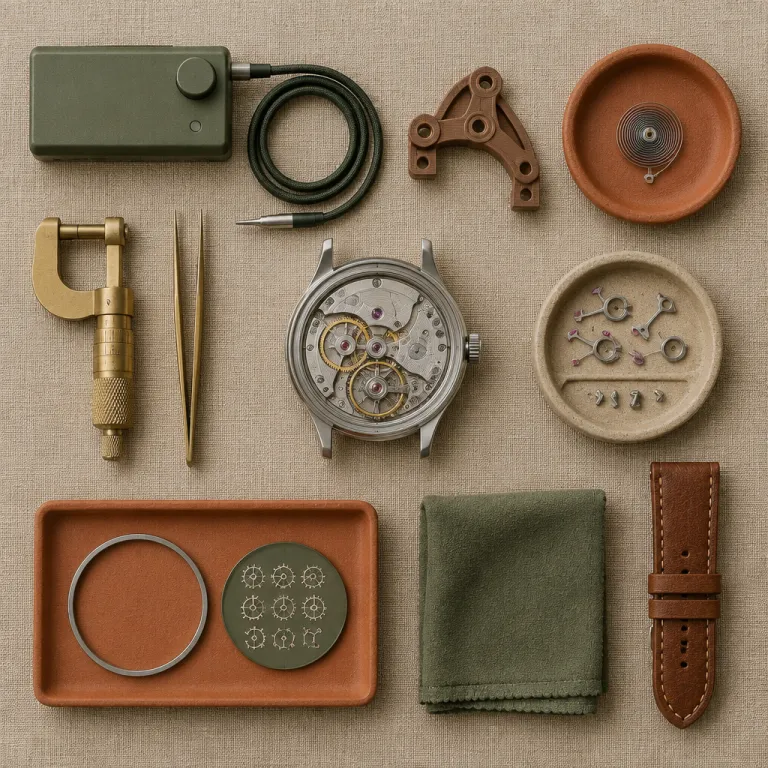

From pocket watch heritage to modern watch technology on the wrist
The story of every serious luxury watch begins with a single timekeeper and its relationship with measured time. Long before modern watch technology shaped the contemporary wristwatch, collectors relied on pocket watches as the ultimate expression of portable precision, carried close to the body and carefully worn every day. That early century culture around the pocket watch still defines how we judge mechanical wristwatches and quartz wristwatches as true timepieces rather than simple accessories.
When you hold a finely finished pocket watch in your hand, you feel the weight of a century of craft and incremental engineering improvements. The same mechanical logic now lives in compact wristwatches, where movements must fit into slimmer cases yet still drive a central second hand, calendar indications, and sometimes chiming complications with unwavering stability. This transfer of know-how from pocket watches to mechanical wristwatches is the foundation of modern watches that combine heritage aesthetics with cutting edge watch technology.
Collectors who appreciate this lineage often compare a pocket watch movement with a mechanical wristwatch calibre to understand how watch architecture evolved. The large bridges and leisurely ticking of a traditional pocket watch contrast with the tighter tolerances and higher frequencies found in contemporary mechanical wristwatches. Yet both types of movements share the same essential goal, which is to translate stored energy into consistent time display that can be trusted in daily life.
Mechanical movements versus quartz movements in luxury watch technology
At the heart of luxury watch technology lies a clear tension between mechanical movements and quartz movements, each serving different expectations of timekeeping. A mechanical wristwatch relies on a mainspring and gear train, while a quartz wristwatch uses an electronic oscillator regulated by a quartz crystal to drive the second hand with near perfect regularity. For passionate collectors, the choice between mechanical and quartz movements is less about raw accuracy and more about the emotional connection to how time is created on the wrist.
High end quartz movements, including those from Seiko and Swiss maisons, have proven that quartz wristwatch technology can reach an impressive level of refinement and finishing. Yet the vast majority of connoisseurs still gravitate toward mechanical wristwatches because the visible winding rotor, balance wheel, and hand finished bridges embody a living mechanism rather than a sealed electronic program. When you study the chronograph architecture in depth, resources such as this analysis of the column wheel and vertical clutch chronograph feel show how mechanical movements can translate engineering choices into tactile sensations on the wrist.
Modern watches often blend both worlds of technology by pairing mechanical movements with electronic testing and regulation to achieve chronometer level precision. Even brands historically associated with quartz, such as Seiko, now celebrate mechanical wristwatch lines that highlight traditional finishing alongside advanced materials. For the luxury buyer, understanding how quartz movements and mechanical calibres differ in energy use, service requirements, and long term value is essential to building a coherent collection of watches that truly reflect personal priorities.
Inside the mechanical movement mechanics that define luxury timepieces
Every serious mechanical wristwatch is a compact laboratory of physics, where winding, gear ratios, and oscillations work together to express time. The mainspring stores energy, the gear train translates that energy, and the escapement meters it out so the second hand advances with reassuring regularity. When collectors speak about watch technology with authority, they usually refer to how these movements manage friction, shock, and temperature changes inside a case often smaller than 40 millimetres.
Understanding this internal architecture transforms the way you evaluate both wristwatches and pocket watches, because you start to read bridges, wheels, and screws as a coherent mechanical language. A detailed technical breakdown such as this guide to the escapement, mainspring, and balance reveals how each component contributes to amplitude, power reserve, and long term stability. Once you grasp how movements breathe, you can judge whether a watch clock calibre has been engineered for robustness, thinness, or decorative impact, and you can decide which type of movement best suits your lifestyle.
Luxury maisons refine these mechanics with advanced materials and finishing techniques that go far beyond basic functional requirements. Silicon escapements, free sprung balances, and optimized winding systems allow mechanical wristwatches to resist magnetism and shocks that would have crippled early century pocket watch designs. For the passionate owner, this means that modern watches can be worn daily without sacrificing the poetic charm of a fully mechanical movement beating just beneath the dial.
From abraham louis breguet to contemporary watch technology programs
The lineage of mechanical watch technology owes an immense debt to Abraham Louis Breguet, whose inventions still underpin many luxury movements. His work on the tourbillon, overcoil balance spring, and shock protection systems transformed both pocket watches and early mechanical wristwatches into more reliable timekeepers. When you examine a modern wristwatch with a finely shaped balance spring or a carefully protected pivot, you are seeing the direct influence of Abraham Louis Breguet translated into contemporary engineering.
Today, formal education in watch technology has moved far beyond the traditional apprenticeship model that shaped the early century workshops. In the United States, specialized schools and each technology program teach students how to service mechanical wristwatches, regulate quartz movements, and restore historical pocket watch mechanisms to factory standards. These programs often include a requirements program that covers micromechanics, lubrication science, and even basic metallurgy, ensuring that graduates can handle both vintage pocket watches and modern watches with equal confidence.
While many collectors come from professional backgrounds far removed from horology, some choose to enroll full time in a technology program or pursue a technology certificate to deepen their understanding. Whether they arrive straight from high school or after a college degree, these students learn how to evaluate every type of movement, from a simple three hand quartz wristwatch to a grand complication mechanical wristwatch. For serious enthusiasts, even a short watch technology course can dramatically change how they assess finishing quality, movement architecture, and long term serviceability across their collection of timepieces.
Seattle, education, and the new generation of watch technology specialists
One of the most interesting developments in the United States horological landscape is the growth of specialized education hubs such as Seattle. Institutions like North Seattle College and Seattle College have become reference points for students who want a structured watch technology program rather than informal training. These schools often collaborate with industry partners to ensure that each requirements program reflects the real service needs of modern watches and historical timepieces.
In a typical full time curriculum, students progress from basic watch clock disassembly to advanced work on mechanical wristwatches and quartz movements, always under strict quality control. They learn how to service a pocket watch, regulate a quartz wristwatch, and rebuild a mechanical wristwatch calibre so that the second hand tracks time within chronometer tolerances. By the end of the technology certificate, graduates are expected to handle every type of movement, from entry level wristwatches to high complication timepieces that demand surgical precision.
Seattle has quietly become a magnet for enthusiasts who want to turn passion into profession, often arriving with only a high school diploma and a deep love for watches. Many of these students already own pocket watches or wristwatches that they have worn for years, and they bring those pieces into the workshop as personal case studies. The result is a new generation of watchmakers who understand both the emotional value of a family pocket watch and the technical requirements of servicing modern watches for demanding collectors.
How collectors evaluate modern watches, from winding feel to second hand behavior
For the seasoned enthusiast, evaluating watch technology goes far beyond reading a spec sheet or admiring a polished case. The way a crown feels during winding, the smoothness of the second hand, and the sound of the movement all reveal how carefully the calibre has been engineered. When you compare different wristwatches side by side, these subtle cues quickly separate serious mechanical wristwatches from mass market timepieces.
Hands on experience is essential, which is why many collectors seek out detailed reviews of specific models before committing to a purchase. A thorough examination of a Seiko automatic, such as this in depth look at a stainless steel mechanical wristwatch, can teach you how movement architecture, rotor design, and case construction influence both comfort and long term reliability. By paying attention to how the second hand glides, how the watch sits on the wrist, and how the movement responds to positional changes, you build a mental library that informs every future acquisition.
Serious collectors also consider how a watch will age as part of a coherent collection that may include both pocket watches and wristwatches from different eras. They ask whether the movement is widely supported, whether spare parts will remain available, and whether the watch clock design will still feel relevant decades from now. In this sense, understanding watch technology is not only about present performance but also about how each watch will carry its story through time for the next century of enthusiasts.
Key statistics and market signals in luxury watch technology
- According to the Federation of the Swiss Watch Industry, Swiss watch exports exceeded 24 billion Swiss francs in recent reporting, with mechanical watches representing the vast majority of export value compared with quartz watches, underscoring the premium placed on mechanical movements.
- Industry data from the Fondation de la Haute Horlogerie indicates that mechanical wristwatches account for more than 80 percent of the value of global luxury watch sales, even though quartz wristwatches still represent a significant share of unit volume.
- Surveys of collectors by major auction houses show that vintage pocket watches and early century mechanical wristwatches have seen steady price appreciation over the past decade, while mass produced quartz movements have remained relatively flat in secondary market value.
- Educational institutions in the United States report waitlists for full time watch technology programs, reflecting strong demand for qualified watchmakers as brands expand service centers and emphasize long term maintenance for modern watches.
- Market analyses from leading consultancies suggest that high end mechanical timepieces with in house movements command price premiums of 20 to 40 percent over comparable watches using outsourced calibres, highlighting the perceived value of proprietary watch technology.
FAQ about luxury watch technology and movement mechanics
Why do collectors still prefer mechanical watches over quartz watches ?
Collectors often prefer mechanical watches because the movements embody visible craftsmanship, complex engineering, and a direct mechanical link between stored energy and displayed time. While quartz movements are usually more accurate, they lack the intricate gear trains, balance wheels, and winding systems that make mechanical wristwatches emotionally engaging. For many enthusiasts, the slight imperfection of a mechanical movement feels more human and therefore more desirable.
Are quartz movements ever appropriate in luxury timepieces ?
High grade quartz movements absolutely have a place in luxury timepieces, especially when ultra thin cases, low maintenance, or extreme accuracy are priorities. Brands such as Seiko and several Swiss maisons produce quartz wristwatches with exceptional finishing, metal bracelets, and carefully designed dials that rival mechanical models in perceived quality. The key is to understand that quartz technology offers a different value proposition, emphasizing convenience and precision rather than mechanical poetry.
How often should a mechanical wristwatch be serviced ?
Most manufacturers recommend servicing a mechanical wristwatch approximately every five to ten years, depending on usage, water resistance, and environmental exposure. Heavy daily wear, frequent shocks, or exposure to moisture may shorten this interval, while carefully worn watches can sometimes run longer between services. Regular maintenance ensures that lubrication remains effective, that the gear train experiences minimal wear, and that the watch continues to meet its original accuracy specifications.
What is the practical difference between a pocket watch and a wristwatch movement ?
A pocket watch movement typically offers more space for larger components, which can simplify servicing and sometimes improve long term stability, while a wristwatch movement must be compact and resistant to constant motion on the wrist. Pocket watches often feature slower beat rates and larger balance wheels, whereas modern wristwatches may use higher frequencies to improve precision. For collectors, the choice between pocket watches and wristwatches is usually about wearing style and historical interest rather than pure technical superiority.
Does formal education improve a collector’s ability to choose watches ?
Formal education in watch technology, whether through a full time technology program or a shorter technology certificate, can dramatically sharpen a collector’s eye. By learning how movements are constructed, lubricated, and regulated, enthusiasts become better at judging finishing quality, serviceability, and long term reliability. Even a brief course can help you distinguish between marketing language and genuine technical substance when evaluating luxury timepieces.
References
- Fédération de l’Industrie Horlogère Suisse (FH) – annual export statistics.
- Fondation de la Haute Horlogerie – market and trend reports on mechanical and quartz watches.
- Major auction houses such as Christie’s and Phillips – published results and analyses of vintage watch sales.