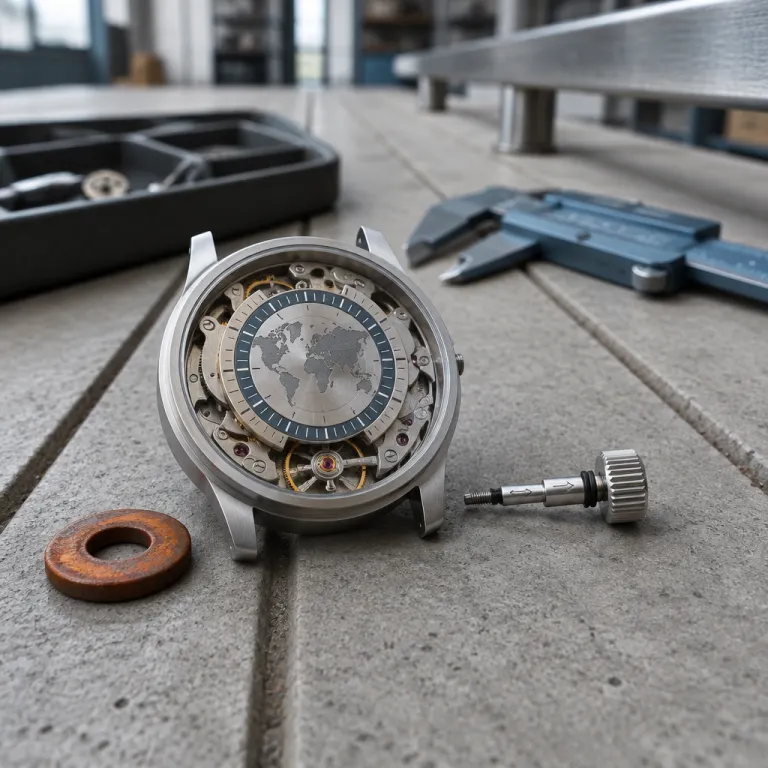
Why manufacture worldtimer winding direction matters for serious collectors
The manufacture worldtimer winding direction is not a trivial detail for a passionate watch collector. Understanding whether the automatic movement winds clockwise, counter clockwise, or in both directions directly affects how you use a watch winder and how you protect the calibre over the long term. This knowledge turns a simple automatic watch into a precisely managed instrument that respects its mechanical heart.
Every manufacture that produces a worldtimer watch defines a specific winding behavior for its rotor, and this behavior determines the ideal turns per day, or TPD, required on modern watch winders. When you know the exact winding direction and TPD, you avoid unnecessary rotor wear, preserve the power reserve, and keep complications such as a perpetual calendar or automatic moonphase correctly aligned with the real day and date. Collectors who ignore the specified rotor direction often face misaligned calendar indications, premature service needs, and frustrating resets of complex displays.
Consider a frederique constant manufacture worldtimer as an example, where the automatic calibre combines a world time display with a date counter and sometimes a subtle heart beat opening on the dial. If the rotor is designed to wind efficiently only when turning mainly clockwise on the winder, programming a counter clockwise only cycle will leave the watch under wound and the power reserve unstable. Over time, this misuse affects the beat stability of the calibre, compromises accuracy during the day, and undermines the refined automatic appeal that drew you to the piece in the first place.
How winding direction interacts with calibre architecture and power reserve
The architecture of a manufacture calibre dictates how the rotor translates motion into stored energy, and this is where winding direction becomes critical. In many automatic classics movements, the rotor winds in both clockwise and counter clockwise directions, while some high efficiency calibres use a unidirectional system that winds in only one direction to reduce friction and simplify the mechanism. Knowing which system your watch uses allows you to match the watch winder settings to the calibre rather than relying on generic assumptions.
On a frederique constant manufacture worldtimer, the automatic heart is often based on an in house calibre that shares components with other highlife heart and automatic classics models, yet the worldtimer module adds extra resistance to the gear train. This added load means that the optimal TPD and the correct rotor direction become even more important to maintain a stable power reserve across the full day and night cycle. When collectors set their watch winders correctly, they keep the mainspring in its ideal torque window, which improves amplitude, stabilizes the beat, and protects delicate complications such as a perpetual calendar or automatic moonphase from shock induced jumps.
For enthusiasts who rotate several watches, understanding the interaction between winding direction and power reserve is essential to planning wrist time and storage. A properly configured watch winder can keep a chronograph, a worldtimer, and a gmt travel watch all ready to wear, each with its own calendar settings preserved. To go deeper into how much autonomy you really gain from a full wind, resources that explain how to read a power reserve indicator, such as this guide on what 70 hours actually buys you on the wrist, help translate technical specifications into real daily usage.
Setting watch winders for worldtimers, chronographs, and calendar complications
Programming a watch winder for a manufacture worldtimer requires more nuance than simply choosing a random TPD and a generic directional mode. The first step is to confirm whether your automatic movement prefers clockwise, counter clockwise, or bidirectional winding, because this determines how efficiently the rotor will charge the mainspring during each programmed cycle. Once the manufacture worldtimer winding direction is known, you can fine tune the TPD to maintain the power reserve without overworking the bearings or the automatic heart.
Chronograph movements introduce another layer of complexity, especially when a worldtimer also integrates a chrono or full chronograph function. Some calibres are optimized so that the rotor winds more effectively when it moves in a single preferred direction, while others use a bidirectional winding system that responds equally well to clockwise and counter clockwise motion. If your watch combines a chronograph, a gmt display, and a calendar date ring, an incorrect winder setting can leave the watch partially wound, causing the beat to drop and the complications to drift out of sync with the actual day.
Collectors who also enjoy hand wound pieces often compare the tactile ritual of winding to the silent efficiency of an automatic winder. While a hand wound calibre demands daily attention, an automatic classics worldtimer on a correctly set watch winder can rest for days yet remain perfectly ready, with its limited edition dial, perpetual calendar, and automatic moonphase indications all aligned. For those who appreciate the contrast between manual and automatic energy, curated overviews of top hand wound mechanical watches, such as the one available here on hand wound mechanical icons, highlight how winding direction shapes the character of each movement type.
Frederique Constant manufacture worldtimer as a case study in directional winding
The frederique constant manufacture worldtimer offers a clear illustration of how winding direction, calibre design, and aesthetic choices converge in a modern luxury watch. In many references, the movement is an in house calibre that combines a world time ring, a date counter, and sometimes a signature heart beat aperture, all powered by an automatic rotor tuned to a specific directional pattern. Collectors who understand this manufacture worldtimer winding direction can program their watch winders to support the movement rather than stress it.
Within the broader frederique constant catalogue, the highlife heart and automatic classics lines share similar automatic architecture, yet each family presents different dial layouts and complications. A highlife heart model might emphasize the open heart beat display, while a worldtimer prioritizes legible city names and a clear day night indication around the dial. Despite these differences, the underlying automatic heart still depends on the correct balance between clockwise and counter clockwise rotor motion, the right TPD, and a stable power reserve to maintain an accurate beat and reliable calendar function.
Many collectors are drawn to frederique constant because the brand offers manufacture calibres, refined ladies and gents classics, and occasional limited edition worldtimers at accessible price points compared with older maisons. Whether you choose a persuasion automatic dress watch, a gmt travel piece, or a worldtimer with an automatic moonphase, the same principles apply regarding winding direction and rotor efficiency. When your watch winder respects the intended behavior of the calibre, the movement runs closer to its design ideal, and the watch rewards you with consistent accuracy and a reassuringly steady heart beat.
Balancing aesthetics and mechanics in worldtimer winding strategy
Collectors often focus first on aesthetics, such as a skeletonized dial, a heart beat opening, or a finely printed world map, yet the manufacture worldtimer winding direction quietly shapes how these visual elements behave over time. A beautifully executed worldtimer with a misaligned day night ring or a drifting date counter quickly loses its charm, no matter how refined the finishing. By aligning the watch winder settings with the intended clockwise or counter clockwise rotor motion, you preserve both the visual harmony and the mechanical integrity of the piece.
Many modern worldtimers, including some frederique constant models, integrate their world time indication with other complications such as a gmt hand, a perpetual calendar, or an automatic moonphase display. Each additional function increases the torque demand on the mainspring, which means the calibre becomes more sensitive to incorrect winding direction and inadequate TPD. When the rotor does not receive enough effective motion, the power reserve drops, the beat amplitude falls, and the calendar components may skip or stall, especially around midnight when several indications change simultaneously.
For enthusiasts who appreciate the visual drama of open worked dials, the relationship between aesthetics and mechanics becomes even more evident. An article on the art of skeleton dials in contemporary haute horlogerie, such as the one found here on skeleton dials in haute horlogerie, shows how exposing the movement highlights every nuance of the calibre, including the rotor’s directional behavior. When you can literally see the automatic heart turning clockwise and counter clockwise above the bridges, the importance of respecting the manufacture worldtimer winding direction on your watch winders becomes impossible to ignore.
Practical guidance for configuring winders for manufacture worldtimers
Setting up a watch winder for a manufacture worldtimer begins with gathering precise technical data from the manufacture, including the recommended TPD and the specified winding direction. Once you know whether the rotor is optimized for clockwise, counter clockwise, or bidirectional winding, you can choose a program that delivers enough motion to maintain the power reserve without excessive cycling. This approach protects the calibre’s bearings, keeps the beat stable, and ensures that complications such as a perpetual calendar or automatic moonphase remain synchronized with the real day and date.
Many high quality watch winders allow you to program separate slots for different watches, which is essential if your collection includes a mix of frederique constant worldtimers, automatic classics dress pieces, and sportier chronograph models. A chronograph may require a different TPD and directional pattern than a worldtimer, especially if the winding efficiency differs from the base calibre used in a simpler automatic watch. By tailoring each slot to the correct manufacture worldtimer winding direction or preferred rotor mode, you avoid under winding some pieces while overworking others, and you maintain a consistent power reserve across the collection.
For collectors who share watches with a partner, including ladies models and larger gents pieces, it is wise to document the settings for each reference. Note the calibre or calibre family, the preferred clockwise or counter clockwise mode, the TPD, and whether the movement is particularly sensitive to calendar changes around midnight. Over time, this small discipline builds a personal database of persuasion automatic behaviors, highlife heart nuances, and limited edition quirks, turning the simple act of placing a watch on a winder into a refined ritual that respects the automatic heart beating inside every case.
Key figures and technical benchmarks for worldtimer winding direction
- Many modern automatic worldtimer calibres are specified by their manufacturers in a range around 600 to 900 TPD; individual frederique constant manufacture movements should always be checked against the official technical sheet for exact values.
- Bidirectional winding systems, which accept both clockwise and counter clockwise rotor motion, are often described by movement suppliers as more efficient in typical daily wear than older unidirectional designs, although exact percentage gains depend on the specific calibre and should be confirmed with brand documentation.
- Independent watchmakers and service centers frequently note that incorrect watch winder settings, especially when TPD values exceed recommended levels for long periods, can contribute to accelerated wear on rotor bearings, even if the effect varies from one movement family to another.
- Complicated calibres that combine a worldtimer with a perpetual calendar or automatic moonphase generally require more effective winding energy to maintain full power reserve, due to the additional torque needed for calendar changes around midnight; precise figures should be taken from the relevant service manuals.
- Service data published by major Swiss manufactures indicate that movements kept consistently within their ideal power reserve window show measurably higher amplitude and more stable beat error, which translates into better daily rate performance on the wrist.
FAQ about manufacture worldtimer winding direction
How can I find the correct winding direction for my manufacture worldtimer ?
The most reliable method is to consult the official documentation from the manufacture or contact an authorized service center that knows the specific calibre. Many brands publish technical sheets that state whether the rotor winds clockwise, counter clockwise, or in both directions, along with the recommended TPD for watch winders.
Is it harmful to use the wrong winding direction on a watch winder ?
Using the wrong winding direction is usually inefficient rather than immediately damaging, because the rotor may spin without effectively charging the mainspring. Over time, however, running a movement for thousands of hours on a winder that exceeds the recommended TPD or ignores the intended rotor behavior can accelerate wear on rotor bearings and lead to more frequent servicing.
Do worldtimers with perpetual calendars need special winder settings ?
Worldtimers that integrate a perpetual calendar or automatic moonphase are more sensitive to power reserve fluctuations, because several indications may change simultaneously around midnight. For these calibres, it is especially important to respect the specified winding direction and TPD so that the mainspring remains in its optimal torque range and the calendar functions advance correctly.
Should I keep my manufacture worldtimer on a winder all the time ?
Keeping a manufacture worldtimer on a correctly programmed watch winder is convenient if you wear it frequently and want to avoid resetting complex indications. Some collectors prefer to let the watch rest fully unwound between rotations to reduce total running hours, so the choice depends on how often you wear the piece and how comfortable you are with adjusting world time and calendar displays.
Are ladies worldtimers and smaller cases affected differently by winding direction ?
Ladies worldtimers and smaller case sizes often use more compact calibres or slightly modified movements, but the principle of respecting the manufacture worldtimer winding direction remains the same. Because smaller rotors may store energy less efficiently, it becomes even more important to match the winder’s directional mode and TPD to the specific calibre to maintain a stable power reserve and accurate timekeeping.