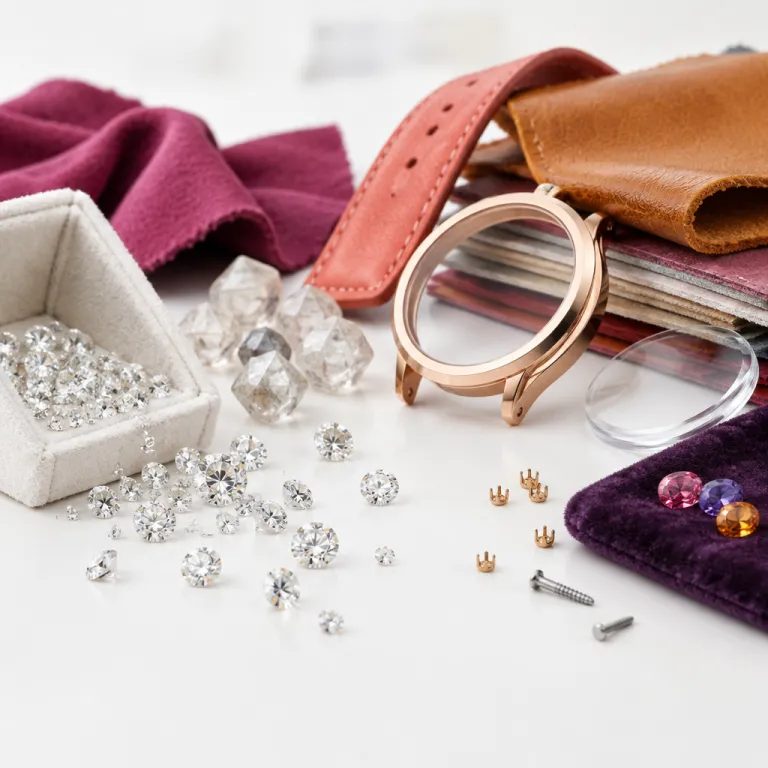

What does VVS stand for when diamonds meet haute horlogerie
Within fine watchmaking, the question of what does VVS stand for arises whenever a collector evaluates gem set bezels or indexes. Very Very Slightly Included is what VVS stands for in the diamond clarity scale, and this VVS clarity threshold defines how close a stone comes to visual perfection under magnification. When a luxury watch case or dial carries VVS diamonds, it signals that the diamonds VVS selection respects strict clarity grades that align with the expectations of serious connoisseurs, much like the standards applied to high jewelry pieces.
Understanding what VVS means starts with the four classic pillars of diamond quality, which are cut, color, clarity, and carat weight. The clarity grade specifically measures how many inclusions or blemishes a diamond contains, and VVS clarity sits just below the flawless and internally flawless grades while remaining effectively eye clean to the naked eye in normal conditions. When a watch brand specifies a VVS diamond or multiple VVS diamonds on a bezel, it is stating that any inclusion present is so small that even a trained gemologist struggles to locate it under 10x magnification, the standard used in every serious grading report.
For luxury watches passionate about gem set pieces, what VVS means in practice is a balance between extreme diamond clarity and rational price. A VVS clarity grade stone costs less than a flawless diamond of the same carat and cut, yet the visual effect on a watch case or dial remains almost identical to the eye. This is why many maisons choose VVS diamonds for pavé settings, because the diamonds VVS specification ensures a clean, bright surface without paying the premium associated with the very top clarity grades, as seen on high jewelry watches from brands such as Rolex, Patek Philippe, and Audemars Piguet.
Clarity grades, inclusions, and what VVS means on the wrist
To understand what does VVS stand for in a grading report, you must first see where it sits among all clarity grades. The Gemological Institute of America, or GIA, defines a clarity scale that runs from flawless through VVS, VS, SI, and down to I, which stands for very included stones that show obvious inclusions to the naked eye. When a watch brand highlights VVS clarity in its marketing, it is positioning its diamonds far away from very included categories and close to the top of the clarity diamond hierarchy, a point often emphasized in catalog descriptions.
Inclusions are internal features such as tiny crystals, feathers, or clouds, and each inclusion affects the clarity grade depending on its size, number, and position. A VVS diamond contains inclusions so minute that they are extremely difficult to see even under 10x magnification, which is the standard used in every serious grading report from a GIA diamond laboratory or another respected lab. On a watch bezel or dial, this means the stone appears completely eye clean, and the overall diamond clarity remains consistent across all visible surfaces, avoiding distracting dark spots or cloudy areas.
Collectors often ask whether they should choose VVS or VS when comparing gem set watches, especially when the price difference becomes significant. If you want absolute peace of mind that every stone is eye clean from any viewing angle, then you may decide to choose VVS as your preferred clarity grade for both center stones and pavé diamonds. When the diamonds VVS specification is combined with a precise cut and harmonious color, the result is a uniform halo of brilliance that elevates the entire watch case, especially when paired with refined details such as a high end two piece nylon watch strap that frames the case and emphasizes the sparkle.
Lab grown VVS diamonds versus natural stones in luxury cases
The rise of lab grown diamonds has changed how collectors interpret what does VVS stand for in modern watchmaking. A lab grown VVS diamond is chemically and optically identical to a mined stone, yet the controlled lab environment allows producers to minimize inclusions and achieve high clarity grades more consistently. For a watch case fully set with grown diamonds, this means a brand can specify VVS clarity across hundreds of stones while maintaining a more accessible price structure, a strategy already visible in several contemporary collections.
When comparing a natural VVS diamond with a lab grown VVS diamond, the key differences lie not in diamond clarity but in origin story, perceived rarity, and long term value. Natural diamonds VVS graded by a GIA diamond laboratory carry the romance of geological time, while grown diamond alternatives appeal to clients who prioritize sustainability narratives and transparent supply chains. In both cases, the clarity grade of VVS ensures that inclusions remain invisible to the naked eye, and the watch on your wrist presents a uniformly clean, bright surface that feels consistent with high luxury standards.
Some collectors now commission custom bezels using grown diamonds in VVS clarity to match the tone of contemporary designs such as a sleek stainless steel integrated bracelet watch, or a slim dress watch on leather with a discreet diamond set bezel. Others still prefer natural VVS diamonds for limited editions, where the combination of high clarity, balanced color, and precise cut supports long term collectability. Whether you choose lab grown or mined stones, the meaning of what VVS stands for remains tied to the promise of an eye clean appearance and a disciplined approach to clarity grades that can be documented in detailed grading reports.
Cut, color, carat, and how VVS clarity shapes perceived quality
Clarity alone never defines a luxury watch, so understanding what does VVS stand for requires placing it alongside cut, color, and carat. A poorly executed cut can make even a VVS diamond look lifeless, while an excellent cut allows light to return brilliantly and masks minor inclusion issues in lower clarity grades. When a maison selects VVS diamonds with a precise cut and a consistent color grade, the resulting pavé or baguette setting appears seamless and intensely bright on the wrist, similar to the effect seen on high jewelry references from Cartier or Bulgari.
Carat weight also interacts with clarity grade in a way that matters for watch design, because larger stones reveal inclusions more easily than small ones. A one carat VVS diamond used as a crown cap or bezel focal point must meet stricter clarity diamond standards than tiny pavé stones, since any inclusion would be more visible to the naked eye at that size. This is why grading report details such as clarity carat relationships and color grades become crucial when evaluating high jewelry watches or gem set engagement ring style timepieces, where a single stone often dominates the design.
Color plays a subtle but powerful role, because a near colorless VVS diamond of high quality will often look superior to a higher color grade stone with lower clarity. For watch collectors, the sweet spot often lies in pairing VVS clarity with near colorless grades and a finely tuned cut, which together create a clean, icy effect that complements polished steel, white gold, or platinum cases. The same logic applies when evaluating gem set dress watches with yellow gold bracelets, where harmonious color and clarity grades ensure that every stone enhances rather than competes with the metal tone and overall design language.
Evaluating VVS diamonds on watch cases, bezels, and dials
When you handle a gem set watch in person, the meaning of what does VVS stand for becomes tangible through direct observation. Start by examining the diamonds VVS claimed on the bezel under natural light, looking for a uniform sparkle and a clean surface free from visible inclusions. If the stones are truly VVS clarity, you should not see any inclusion with the naked eye, and the overall effect should be one of uninterrupted brilliance, similar to the appearance of stones described as flawless in auction catalogues.
Next, use a jeweler’s loupe or a small magnification device to inspect a few representative stones, ideally at 10x power. Under magnification, a genuine VVS diamond will show inclusions that are extremely difficult to locate, often appearing as tiny pinpoints or faint clouds that do not affect transparency or light return. If you notice obvious crystals, feathers, or dark spots, the clarity grade may be closer to VS or even SI, which would contradict any grading report that claims VVS clarity grades for those stones and should prompt further questions.
Serious collectors also pay attention to how VVS diamonds are set into the case and dial, because poor workmanship can undermine even the best clarity grade. Prongs should be neat and secure, with no excess metal covering the stone, and the alignment of baguette or brilliant cut stones should follow the case geometry precisely. When these details align with a trustworthy grading report from a respected lab, the watch achieves a level of quality that justifies a higher price and reinforces the value of choosing VVS clarity for both aesthetic and technical reasons, especially on limited production models.
Price, value, and when to choose VVS for watch and jewelry pieces
Understanding what does VVS stand for also means knowing when it makes financial sense in the context of luxury watches and related jewelry. Because VVS diamonds sit near the top of the clarity scale, they command a premium price over VS or SI stones of the same cut, color, and carat weight. For a fully set watch case or bracelet, this price difference can become substantial, so collectors must decide where VVS clarity truly adds value and where a slightly lower clarity grade remains visually eye clean while freeing budget for other upgrades.
For small pavé stones under 0.01 carat, many experts argue that VS clarity can appear just as eye clean as VVS to the naked eye, especially when the cut and color are well matched. In these cases, paying for VVS clarity grades may not yield a noticeable improvement in diamond clarity, and the budget could instead be allocated to a more complex movement or a higher quality case finish. On the other hand, for larger stones used as focal points or for an engagement ring style watch with a central diamond, choosing VVS clarity can significantly enhance perceived quality and long term desirability, particularly when documented in detailed paperwork.
Ultimately, the decision to choose VVS should be guided by how and where the stones are used, the reliability of the grading report, and your own tolerance for visible inclusions. If you value absolute cleanliness in every stone and want the reassurance that comes with a top tier clarity grade, then VVS diamonds on your watch bezel, lugs, or dial will align with that philosophy. If you are more focused on mechanical innovation or case material research, you may accept slightly lower clarity in exchange for a more balanced overall price, while still ensuring that every stone remains effectively eye clean in daily wear and consistent with luxury expectations.
Key figures about VVS clarity and diamond use in watches
- GIA’s published clarity scale places VVS immediately below flawless and internally flawless grades, and grading statistics from major laboratories consistently show that VVS clarity represents a relatively small share of all diamonds assessed, which underlines why VVS diamonds are positioned as a premium choice in high end watchmaking and high jewelry.
- Public auction catalogues from leading houses such as Christie’s and Sotheby’s regularly note clarity grades for gem set watches, and sale results show that pieces with documented VVS diamonds often achieve noticeable price premiums over comparable models with lower clarity, especially when accompanied by detailed grading documentation and original certificates.
- Industry briefings from large gemological laboratories and trade organizations indicate that a significant proportion of modern lab grown diamonds reach VS or better clarity, and a meaningful share achieve VVS grades, which explains the growing presence of lab grown VVS stones in contemporary luxury watch collections and custom projects.
- Surveys conducted by jewelry retailers and trade associations frequently report that many buyers cannot reliably distinguish between VVS and VS clarity with the naked eye, which reinforces the importance of education when explaining what VVS stands for in terms of real world visual impact and how it should influence purchasing decisions.
FAQ about what VVS stands for in luxury watch diamonds
What does VVS stand for in diamond clarity
VVS stands for Very Very Slightly Included, which is a high diamond clarity grade indicating that inclusions are extremely difficult to see even under 10x magnification. On a watch, VVS diamonds appear eye clean to the naked eye and contribute to a very bright, uniform look. This clarity grade sits just below flawless and internally flawless on the standard GIA scale and is widely used as a benchmark in high jewelry watchmaking.
Is VVS clarity worth the price premium on a gem set watch
VVS clarity can be worth the premium when the watch uses larger stones or when you want absolute assurance that every visible diamond is eye clean. For tiny pavé stones, VS clarity often looks similar in daily wear, so the extra price for VVS may not always translate into a noticeable visual difference. Collectors focused on long term value and top tier specifications often prioritize VVS for limited editions and high jewelry pieces, especially when supported by independent grading reports.
How can I verify that a watch really uses VVS diamonds
The most reliable way is to request a grading report or documentation from a respected lab such as GIA or another recognized gemological institute. You can also examine the stones under 10x magnification, where genuine VVS inclusions should be extremely hard to locate even for a trained eye. Reputable brands and retailers will be transparent about clarity grades and willing to explain how they source and certify their diamonds, sometimes referencing internal quality control procedures.
Are lab grown VVS diamonds as good as natural VVS stones for watches
Lab grown VVS diamonds are chemically and optically equivalent to natural stones, and they can offer excellent diamond clarity at a lower price. The main differences concern origin, perceived rarity, and how the market values each type over time. For many modern collectors, lab grown VVS stones provide an attractive balance of quality, ethics, and cost in gem set watch designs, particularly for contemporary or fashion forward models.
Should I choose VVS clarity for an engagement ring style watch
For an engagement ring inspired watch with a prominent center stone, VVS clarity is an excellent choice if your budget allows it. The higher clarity grade ensures that the main diamond remains eye clean from every angle, which is especially important for a symbolic piece worn daily. If budget is tighter, a well cut VS stone with good color can still look beautiful while freeing funds for a more sophisticated watch movement or case design, creating a balanced overall purchase.