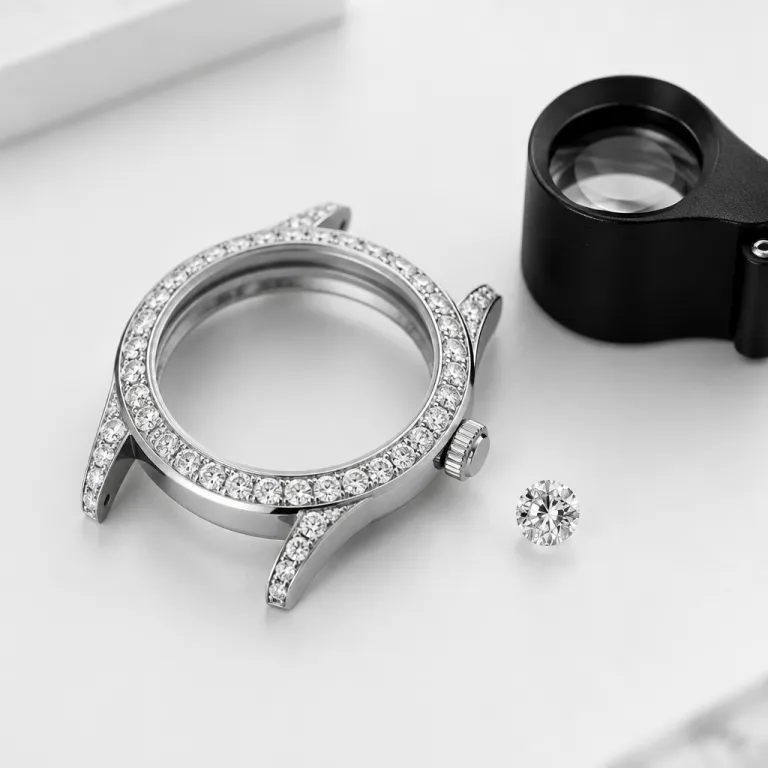

Understanding what VVS diamond clarity means on a watch bezel
When collectors ask what does VVS diamonds mean, they usually care about how a gem-set bezel will look under everyday light. In gemology, a VVS diamond is a stone with very very slight inclusions that are so small they are extremely difficult to see even under 10x magnification, as defined by the GIA clarity scale. This makes VVS diamonds especially prized when mounted on luxury watch cases, because the stones appear exceptionally clean and bright on the wrist.
On the official GIA clarity scale, VVS is a high clarity grade that sits just below internally flawless (IF) and flawless (FL), and well above grades where inclusions visible to the naked eye start to appear. These clarity grades matter because a watch bezel or case set with lower clarity diamonds can show dark inclusions between lugs or around crown guards, breaking the visual harmony of the metal and stone. When you understand what VVS clarity represents in terms of inclusion size and position, you can better judge whether the price premium for a VVS diamond-set watch case is justified.
In practice, a VVS diamond or a row of VVS diamonds on a watch bezel will show no inclusions visible to the eye even under strong boutique lighting. Under controlled magnification, VVS inclusions appear as tiny pinpoints or clouds that do not interrupt the path of light through the stone, which is why brands reserve this clarity grade for high jewelry references. For serious collectors, choosing VVS clarity rather than a noticeably lower clarity grade can be the difference between a case that looks quietly refined and one that feels slightly busy when viewed at visible magnification.
Why VVS clarity matters more on watch cases than on rings
On a wristwatch, diamonds sit on a constantly moving surface, so what does VVS diamonds mean becomes a question of how stones behave under motion and changing angles. Rings and other jewelry are usually inspected closely and held still, but a watch case sweeps through light, meaning any inclusion or very included area can flash as a dark point against polished metal. This is why many maisons specify a minimum clarity grade of VVS for bezels and lugs, even when they accept slightly lower clarity grades for other jewelry lines.
Because the eye tracks the circular motion of a rotating bezel or the curve of a gem-set case flank, inclusions near the edge of a diamond can become more noticeable than on a static pendant. When clarity grading is strict and the workshop insists on higher clarity stones, the diamonds appear as a continuous halo rather than a series of individual points with occasional visible inclusions. Collectors who choose VVS clarity for their watch cases often report that the watch feels more like a single sculpted object than a metal case with diamonds applied on top.
Case size also plays a role in how diamond clarity is perceived, especially on smaller references between 34 and 38 millimetres where the stones sit closer to the eye. On these compact luxury pieces, such as many sought-after references highlighted in guides to sizing for a smaller wrist, even minor inclusions visible under certain angles can disturb the balance between metal and stone. For this reason, brands often reserve lab-grown diamonds or natural stones with a clarity grade of VVS for these smaller, more refined cases where every carat and every cut is scrutinised.
Natural versus lab grown diamonds on luxury watch cases
As more maisons experiment with lab-grown stones, collectors now ask what does VVS diamonds mean when the diamond is grown in a laboratory rather than mined. A lab-grown VVS diamond follows the same clarity grading principles as a natural stone, meaning the inclusions are still extremely small and rarely visible even under magnification. For a watch case, the key question is whether lab-grown diamonds or natural diamonds offer the visual performance and emotional value you expect at a given price.
From a technical perspective, a lab-created diamond with VVS clarity can deliver the same visible brilliance and clean appearance as a mined stone when viewed on a bezel or dial. Under magnification, VVS inclusions in lab-grown stones may sometimes show different patterns, but they remain non-intrusive and not visible to the naked eye on the wrist. Because controlled production can yield more consistent clarity grades, some brands use lab-grown VVS diamonds to ensure uniformity across long pavé bracelet links and case sides.
Price is where the distinction becomes especially relevant for collectors comparing natural and lab-grown options in watch jewelry. Industry pricing guides and trade reports generally show that a lab-grown VVS diamond of a given carat weight costs substantially less than a mined equivalent, allowing brands to offer more extensive gem setting or larger baguette-cut stones on bezels. Some fashion-oriented models, such as certain references in the Iconic quartz collections with steel bracelets, use lab-grown stones to achieve a fully set look while maintaining an accessible price point for younger enthusiasts.
How VVS grading, cut and carat interact with watch case design
When evaluating what does VVS diamonds mean for a specific reference, you must consider clarity alongside cut and carat because these three factors shape how the case interacts with light. A small carat VVS diamond with an excellent cut can appear brighter on a bezel than a larger stone with a mediocre cut and a lower clarity grade. On watch cases, where stones are often under 0.10 carat each, precision of cut and consistent clarity grades are crucial for achieving a seamless visual line.
High horology brands often specify that diamonds used on cases must meet strict criteria for cut, colour and clarity grade, with many insisting on VVS clarity or better. This ensures that under visible magnification, such as boutique loupes or macro photography, there are no inclusions visible that break the rhythm of the gem setting. When clarity grading is combined with tight tolerances on cut proportions, the result is a bezel where each VVS diamond returns light in harmony with the polished case flanks.
Some collectors focus so heavily on carat weight that they overlook how clarity choices affect the overall impression of the watch. In reality, a ring of smaller VVS diamonds around a case can look more refined than fewer, larger stones with inclusions visible to the eye. For those who choose VVS clarity for their watch cases, the reward is a subtle but unmistakable impression of higher quality and craftsmanship every time the wrist catches the light.
Evaluating VVS diamonds on cases using magnification and the naked eye
Many enthusiasts first encounter the term when a salesperson explains what does VVS diamonds mean while handing them a loupe. Under 10x magnification, VVS inclusions appear as tiny specks or faint clouds that a trained grader may need time to locate, which is why GIA and other labs classify them as very very slight. For a watch buyer, the key is understanding how this technical clarity grade translates into what you actually see on the wrist without any magnification tools.
Viewed with the naked eye, a VVS diamond on a bezel or dial should appear completely clean, with no inclusions visible even when you rotate the watch under strong light. If you notice any dark spots or very included areas without using a loupe, the stone is unlikely to be VVS clarity and may sit in a lower clarity grade range. This is why serious collectors often ask for documentation from a respected lab such as GIA or a comparable institution when evaluating high jewelry watch pieces.
Retailers that specialise in diamonds, such as Blue Nile in the jewelry space, often provide clear explanations of what each clarity grade means and how inclusions visible under magnification affect price. While Blue Nile focuses on rings rather than watch cases, the same clarity grading principles apply when you assess VVS diamonds on a bezel or bracelet. When you combine lab reports, careful eye inspection and an understanding of visible magnification effects, you can confidently choose stones that genuinely meet the standard implied by the VVS clarity label.
VVS diamonds, luxury watch pricing and modern case materials
For collectors balancing budgets, what does VVS diamonds mean often comes down to how much of the watch price is driven by clarity. A case fully set with VVS diamonds will command a higher price than one using lower clarity grades, even if the movement and base metal are identical. This premium reflects both the relative scarcity of higher clarity stones and the additional sorting work required to match each VVS diamond across the case.
Modern case materials such as ceramic, titanium and carbon composites have changed how brands integrate diamonds into their designs. On darker materials, inclusions visible inside a stone can contrast more strongly against the case, making higher clarity grades especially desirable for a refined aesthetic. When a manufacture opts for VVS clarity on a black ceramic bezel, the diamonds appear as pure points of light rather than mixed flashes of brilliance and shadow.
Technical innovation in movements and case construction, as explored in analyses of how modern watch technology elevates mechanical mechanics, has raised expectations for every visible component, including gem setting. Collectors who choose VVS for their gem-set cases signal that they value coherence between mechanical excellence and aesthetic purity in their jewelry-grade timepieces. In this context, understanding diamond clarity, the role of each inclusion and the implications of lab-grown versus natural stones becomes essential to making informed, confident decisions.
Key figures and market data on VVS diamonds in watchmaking
- According to GIA clarity grading standards, VVS grades represent a relatively small share of all gem-quality diamonds submitted for certification, which helps explain why VVS diamond-set watches often sit in higher price tiers than models with lower clarity stones.
- Public auction results from major houses such as Christie’s and Sotheby’s show that watches with full pavé cases using VVS clarity or better frequently achieve hammer prices noticeably higher than comparable references with mixed clarity grades, highlighting the market premium for higher clarity gem setting.
- Market analyses from trade organisations and pricing services indicate that lab-grown VVS stones are typically priced significantly below mined equivalents of the same carat, cut and clarity grade, enabling brands to offer more extensive diamond coverage on cases without proportionally increasing retail prices.
- Surveys of luxury watch buyers conducted by specialist consultancies suggest that a substantial share of clients who purchase gem-set watches can correctly identify the meaning of VVS clarity, indicating that clarity education has become a significant factor in high-end sales discussions.
FAQ about VVS diamonds on luxury watch cases
What does VVS diamonds mean on a watch specification sheet ?
When a specification sheet lists VVS diamonds, it indicates that the stones used on the bezel, dial or case meet the very very slight inclusions clarity grade on the GIA scale. This means inclusions are extremely small and not visible to the naked eye, which is why VVS clarity is associated with a clean, high-end appearance on the wrist. For collectors, this label signals a higher standard of gem selection and usually a corresponding price premium.
Are VVS diamonds worth the premium on a daily wear watch ?
For a daily wear watch, VVS diamonds can be worth the premium if you are sensitive to visual details and plan to keep the piece long term. Higher clarity stones maintain a consistently clean look under varied lighting, which many enthusiasts appreciate during frequent wear. If budget is a concern, some collectors compromise by choosing VVS clarity for the bezel while accepting slightly lower clarity grades for less visible areas.
Can lab grown VVS diamonds match natural stones on a luxury case ?
Lab-grown VVS diamonds can match natural stones in terms of clarity, cut and visible brilliance when evaluated on a watch case. The main differences lie in origin, perceived rarity and long-term resale perceptions rather than in day-to-day visual performance. Many brands now use lab-grown VVS stones to offer more extensive gem setting at accessible prices while maintaining high clarity standards.
How can I check if inclusions are visible on a VVS diamond bezel ?
To check a VVS diamond bezel, first inspect the watch under strong, neutral light with the naked eye, rotating it slowly to see if any inclusions are visible without tools. Then use a 10x loupe to look for tiny pinpoints or clouds that should be difficult to locate if the stones truly meet VVS clarity. If you easily see larger or very included areas, the stones may belong to a lower clarity grade than advertised.
Does VVS clarity matter as much as cut and carat on watch cases ?
On watch cases, VVS clarity matters alongside cut and carat because all three influence how the gem setting interacts with light and metal surfaces. Excellent cut and balanced carat weights ensure strong sparkle and proportion, while VVS clarity prevents inclusions from interrupting that effect. For many collectors, the most satisfying gem-set watches combine well-executed cuts, harmonious carat sizes and consistently high clarity grades such as VVS.