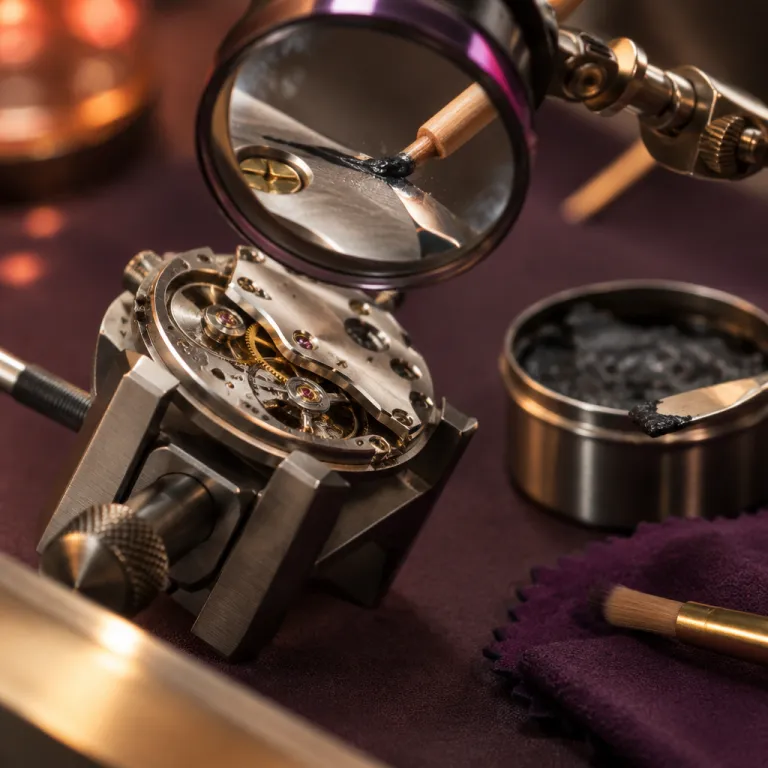
Why watch movement finishing explained starts with light, loupe and intent
Reading a watch movement through a loupe starts with controlling light. Under a neutral lamp at about 4 000 K, tilt the watch slowly and let the surface of the movement reveal how each finish reacts over time. With 10x magnification you will see which components are truly hand finished and which are only dressed for the catalog.
For serious collectors, understanding movement decoration is less about pretty patterns and more about information. Every finish on the movement plates, bridges and steel components tells you how much traditional hand work went into the watch movement and how much was mass produced by clever machines. When you learn to read these finishing techniques, you will separate haute horlogerie movements from merely high grade industrial movements in a few seconds.
Start with the loupe itself, because the wrong tool will lie to you. A 6x loupe flatters most watches, while a 10x loupe exposes the truth about polishing, anglage and black polishing on every visible component. Hold the watch steady, brace your hand against the table, and rotate the movement toward the light rather than chasing it with your wrist.
Once the lighting and loupe are set, look at the broadest surface first. Bridges with Geneva stripes, also called Côtes de Genève, should show perfectly parallel waves that break cleanly at jewel holes and screw countersinks on both the singular bridge and across all bridges as plural surfaces. If the stripes on different movement components do not align, the watch finishing is decorative rather than disciplined.
Perlage and circular graining on the base plate are another early tell. On a high grade movement, the overlapping circles are applied with consistent pressure and spacing, while on cheaper movements the pattern looks stretched, uneven or abruptly cut off around hidden components. This is where movement finishing in practice starts to feel like reading handwriting rather than admiring wallpaper.
Checklist step 1 – Tools and light: Use a 10x achromatic loupe, neutral white light around 4 000 K, and a stable hand position. Begin with overall architecture and large surfaces before diving into details.
Suggested visual aid: A macro photo showing Geneva stripes that align perfectly across two adjacent bridges, next to a second image where the stripes are misaligned and broken at jewel holes. Alt text: “Side‑by‑side macro of aligned versus misaligned Geneva stripes on watch bridges under 10x magnification.”
Anglage and bevels: where hand finishing stops the machine at the edge
Anglage, or bevelling, is the sharpest language a movement can speak. On a truly hand finished bridge, every edge between horizontal and vertical surface is broken into a gleaming bevel that runs with consistent width and a mirror finish along the entire length. Under 10x magnification, those polished bevels will flash like a blade when you roll the watch movement slowly under the light.
Machine cut bevels on mass produced movements look flat, grey and lifeless. They often show milling marks, inconsistent width and rounded transitions where a traditional hand finisher would create crisp outward and inward angles on the components. When you see a bevel that ends in a perfect internal point, you are looking at hours of hand finishing that no modern CNC can fake at scale.
Collectors who study high end movement finishing quickly learn to hunt for those internal angles. On movements from houses like A. Lange & Söhne or Patek Philippe, the anglage on movement plates and steel levers often shows both outward and inward points that remain razor sharp even after long time on the wrist. That level of finish tells you the watch will age with dignity, because the hardest details were respected from day one.
Look at the types of bevels across different types watch categories in your box. A simple three hand movement with generous anglage on every bridge can feel more honest than a complicated chronograph with lazy, rounded edges and only applied striping. When you compare several movements side by side, the difference between hand finished anglage and machine chamfering becomes impossible to unsee.
Do not forget the steel components when you evaluate bevels. Levers, springs and even the heads of blued screws can carry tiny bevels that show traditional hand work, especially on haute horlogerie pieces where every movement component is treated as visible architecture. Once you train your eye on these finishing techniques, you will never again confuse price with craft.
Checklist step 2 – Edges and anglage: Under the loupe, trace every visible edge. Look for consistent bevel width, sharp internal and external angles, and a true mirror finish without milling marks or soft shoulders.
Suggested visual aid: Side‑by‑side macro images of a hand‑finished internal angle with crisp geometry and a machine‑cut chamfer with rounded, brushed edges. Alt text: “Macro comparison of hand‑finished anglage internal angle versus machine‑cut chamfer on watch bridge.”
Black polish, flat surfaces and the hardest finish in the movement
Black polish, or poli noir, is where watch movement finishing explained becomes brutally honest. A truly black polished steel surface will read either pure black or pure white depending on the angle of light, with no visible grain, haze or distortion on the finish. Under a loupe, the surface looks almost liquid, yet every edge of the component remains sharply defined.
This black polishing is usually reserved for the most prestigious components. On high grade movements you will see it on swan neck regulators, cap plates for tourbillon cages, and sometimes on the heads of screws that are not blued screws but left in polished steel for contrast. When you rotate the watch, the transition from black to white across that surface happens instantly, without streaks or dead zones, which is the signature of obsessive hand finishing.
Mass produced movements often simulate this effect with bright polishing that looks shiny but never truly black. Under magnification, these surfaces show micro scratches, orange peel texture and uneven reflection that betray machine buffing rather than traditional hand work. Once you have seen real black polish on a movement component, the difference is as obvious as enamel versus lacquer on a dial.
Pay attention to how black polished parts interact with other finishing techniques around them. A black polished steel bridge sitting next to Geneva stripes on a German silver plate, or next to perlage on the base, creates a deliberate hierarchy of surfaces that defines haute horlogerie in practice. The best watch finishing uses these contrasts to guide your eye through the movement architecture over time, not just to fill empty space.
Even in more accessible pieces, you can still evaluate how flat surfaces are finished. While you will rarely find true black polish there, comparing these finishes to those on haute horlogerie movements sharpens your sense of what hand finished really means. Over years of collecting, this habit protects you from paying hand work prices for machine work results.
Checklist step 3 – Flat surfaces and black polish: Examine cap plates, regulators and screw heads. True poli noir flips from black to white with no haze; bright but grainy reflections signal ordinary machine polishing.
Suggested visual aid: A diagram showing a black‑polished steel cap under two light angles, illustrating the flip from deep black to bright white, next to a normally polished part that stays merely shiny. Alt text: “Illustration of true black‑polished steel versus standard bright‑polished watch component under changing light.”
Stripes, graining, guilloché and what decoration hides or reveals
Geneva stripes, or Côtes de Genève, are the most abused pattern in watch finishing. On a serious movement, these stripes are applied after the bridges are shaped, bevelled and polished, so the decorative waves never blur the crisp line of the anglage. Under a loupe, the surface of each stripe should show a fine, even grain, with no chatter marks or abrupt breaks around jewels and screws.
Perlage and circular graining on movement plates serve both aesthetic and practical roles. They trap microscopic dust and soften reflections, but they also reveal whether the finisher respected the geometry of the components over time. When the overlapping circles are applied with traditional hand pressure, each movement component looks like it belongs to a coherent landscape rather than a random pattern.
Guilloché on rotors or bridges adds another layer to watch movement finishing explained. True engine turned guilloché cuts into the metal with depth and crispness, while stamped patterns on mass produced movements look shallow and slightly blurred at the edges. Under magnification, the difference between applied guilloché and real cut guilloché is as stark as the difference between enamel and printed lacquer on a dial.
Decoration can also hide shortcuts. Heavy Geneva stripes or aggressive sandblasting sometimes mask unfinished surfaces, especially on movements where the brand wants the look of haute horlogerie without the time investment of full hand finishing. When you see stripes that run straight over tool marks or poorly defined bevels, you know the finish was applied as camouflage rather than as a final, honest layer.
Even the treatment of screw heads and countersinks tells a story. On a hand finished movement, screw slots are polished, edges are chamfered, and the countersinks around jewels and screws form perfect, polished cones that catch the light cleanly. When those details are missing, no amount of Geneva stripes or guilloché can elevate the overall watch finishing beyond competent industrial work.
For collectors who care about the full object, pairing such movement details with thoughtful external choices like a shell cordovan strap can complete the experience, and resources such as a detailed guide to a shell cordovan watch band as a connoisseur’s daily luxury show how finishing extends beyond the movement. Over time, you will judge both internal and external components with the same critical eye. That is when your collection starts to reflect your standards rather than the industry’s marketing.
Checklist step 4 – Decorative patterns: Inspect stripes, perlage and guilloché for even grain, clean terminations and respect for bevels. Ask whether decoration reveals careful work or hides shortcuts.
Suggested visual aid: Macro photos comparing hand‑applied perlage with uniform overlap to a stretched, uneven pattern that stops abruptly under a bridge. Alt text: “Macro of traditional hand‑applied perlage versus uneven, truncated circular graining on a watch base plate.”
Screws, enamel, modern limits and how to inspect a caseback honestly
Screw heads and their treatment are among the fastest tells of real hand work. Under a loupe, look for polished screw slots, chamfered edges and perfectly concentric, polished countersinks that reflect light like tiny mirrors around the blued screws or plain steel screws. On haute horlogerie movements, even the underside of the screw head and the visible threads can show careful finishing.
Color is not enough when judging blued screws in singular or plural form. True heat blued screws show a rich, even tone that shifts subtly with angle, while chemically treated screws often look flat and lifeless on the surface. When combined with black polish on steel components and well executed anglage on bridges, these details create a coherent language of hand finishing that no marketing copy can fake.
Dial side work matters too, even if you are focused on watch movement finishing explained from the back. Grand feu enamel dials, applied indices and hand finished hands reflect the same philosophy you see on the movement plates and bridges. A brand that cuts corners on enamel or applied markers rarely invests in the most demanding finishing techniques on hidden movement components.
Modern industrial finishing has become impressively good, which complicates the old hierarchy. Some mass produced movements now show clean Geneva stripes, neat perlage and decent polishing that will satisfy most owners at arm’s length. The honest limit is that true haute horlogerie still separates itself through consistency, sharp internal angles, black polishing and the obsessive treatment of every component, not just the visible ones.
When you inspect a caseback, work methodically. Start with overall architecture, then move to bridges, then to steel parts, then to screws, and finally to the interaction between all finishing techniques over time. Rotate the watch slowly under the light, keep your hand steady, and let the movement finishing explain itself through how each surface catches and releases light rather than through what the spec sheet claims.
Checklist step 5 – Screws and final assessment: Judge screw finishing, then step back and read the whole movement: consistency of techniques, hierarchy of surfaces and whether the details match the price and the brand’s claims.
Suggested visual aid: A labeled diagram of a movement viewed through a display back, with arrows pointing to bevels, perlage, Geneva stripes, black‑polished parts and screw heads as a quick inspection map. Alt text: “Annotated display‑back movement diagram showing key areas of traditional watch movement finishing.”
FAQ
How can I tell if anglage is really done by hand ?
True hand anglage shows perfectly consistent bevel width, sharp inward and outward points, and a mirror polished surface with no milling marks. Under 10x magnification, the transition between the bevel and the adjacent surface is crisp, with no rounding or soft shoulders. Machine cut chamfers usually look flatter, show tool marks and lose definition at tight internal angles.
What makes black polish different from normal polishing on movement parts ?
Black polish, or poli noir, is achieved by rubbing a perfectly flat steel surface against a tin plate with diamond paste until it reflects light in a single direction. When viewed straight on, the surface appears deep black, but it flips to bright white as you tilt it under the light. Regular polishing produces a shiny surface that still shows grain, distortion or micro scratches under magnification and never turns fully black.
Are Geneva stripes mainly decorative or do they serve a functional purpose ?
Geneva stripes are primarily decorative, but they can slightly help by trapping fine dust and softening reflections on large bridges. Their real value for collectors is as a quality indicator, because well executed stripes require careful control of pressure, spacing and alignment across multiple bridges. Poorly aligned or uneven stripes often signal that other aspects of the finishing were treated with similar haste.
Is industrial finishing always inferior to haute horlogerie hand finishing ?
Modern industrial finishing can be excellent, especially on mid range movements where CNC machines and automated brushing produce clean, repeatable results. However, haute horlogerie hand finishing still stands apart in the hardest details, such as sharp internal angles, true black polish and fully finished steel components. The gap is no longer about the presence of decoration but about the depth, consistency and difficulty of the work.
What loupe and lighting should I use to evaluate movement finishing ?
A 10x achromatic loupe is ideal for serious evaluation, because lower magnification can hide flaws while higher magnification becomes tiring and impractical. Use a neutral white light source around 4 000 K and avoid harsh spotlights that create glare and obscure surface texture. Hold the watch steady, move it slowly through the light and let each finish reveal its character as the reflections change.