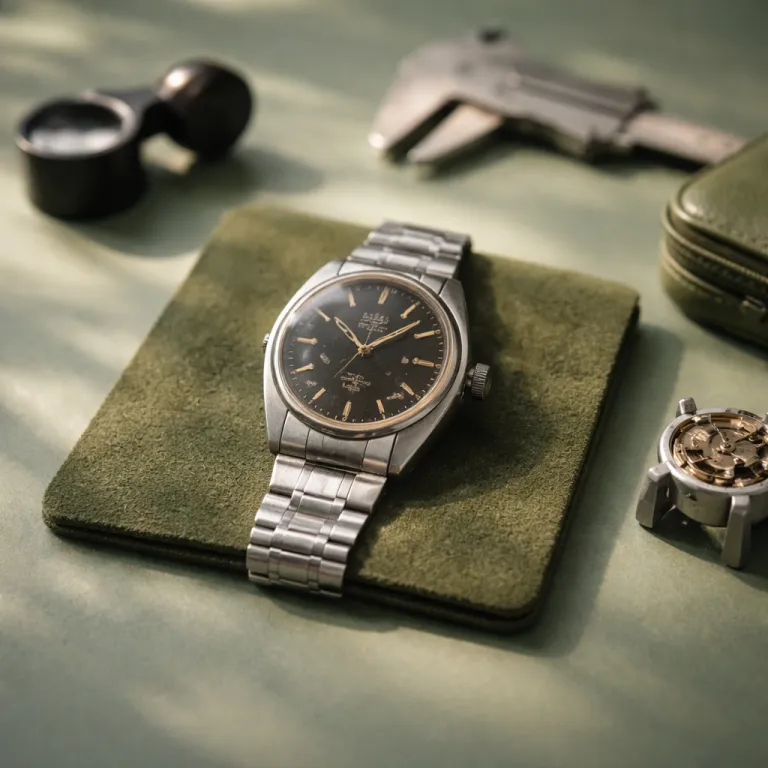
Why a serious vintage Rolex buying guide starts with risk
Vintage Rolex collecting looks straightforward from a distance, but the reality is unforgiving. The modern market for older Rolex watches is softer than the peak yet far more dangerous, because better counterfeits and savvier sellers now meet buyers with more money than time. If you want this vintage Rolex buying guide to protect capital, you must accept that the first rule of buying a vintage Rolex watch is knowing when to walk away.
Three families of Rolex watches reward deep study: the Explorer, the no-date Submariner, and the classic GMT-Master reference 1675. Each of these vintage models offers a clean dial, robust stainless steel Oyster case, and a long production run, which means enough data points to understand correct bezels, hands, and tritium aging patterns over time. When you focus your buying on these Rolex watch references, you reduce the odds of paying grail money for a franken piece that will haunt you every time you check the hour hand.
The Rolex Explorer 1016 is often called one of the purest expressions of watch design, and that reputation is deserved. Its 36 millimetre case, matte dial with 3-6-9 Arabic numerals, and simple Mercedes hands create a template that later generation field watches still chase. In a disciplined vintage Rolex buying guide, the Explorer family sits at the centre because it teaches you to read digit spacing, dial and hands length, and the subtle differences between original tritium plots and later service luminous material.
The three Rolex families every vintage investor must master
Start with the Explorer, then move to the Submariner, then the GMT; that sequence will train your eye in a logical progression. The Rolex Submariner without date, especially references like 5513 and 14060, offers a clean dial that makes it easier to judge patina, while the rotating bezel and thicker case introduce more variables to track. When you compare several vintage Rolex Submariner watches side by side, you quickly see how different generations of fonts, insert pearls, and crown guards affect both aesthetics and market value.
The GMT-Master 1675 is the next step, because it adds a fourth hand and a bi-directional bezel without becoming visually chaotic. A correct vintage Rolex GMT-Master should show coherent aging between the dial, the tritium on the hour hand, and the rest of the dial hands, with the red of the GMT hand often fading toward a softer tone over time. When you evaluate these Rolex watches, always ask whether the case lines, lug chamfers, and stainless steel bracelet stretch match the story the seller tells about pre-owned use and servicing.
Rolex Explorer references, Rolex Submariner models, and the classic Rolex GMT family also share one advantage: they are heavily documented by collectors, dealers, and auction houses. That documentation makes it easier to cross-check serial ranges, dial variants, and bezel types, which is essential when you are reading a vintage Rolex buying guide with real money at stake. If you are already drawn to coloured dials, study how blue dial watches age in these lines, because the way sunburst finishes and tritium interact can be as revealing as any engraving on the case back.
How box, papers, and service history really affect value
Box and papers used to be a nice bonus; now they are a pricing lever. For a vintage Rolex watch in the mid five-figure range, a full set with punched warranty, booklets, and period correct box can add a meaningful premium, but only when the watch itself is correct. A pristine set of documents will not rescue an over-polished case, a service dial, or mismatched hands that betray a hard life and careless servicing.
Think of paperwork as a provenance multiplier, not a substitute for originality. When a Rolex Explorer or Rolex Datejust comes with original chronometer certificate, matching serial, and period sales receipt, you can justify paying more because future buyers will do the same, especially in a cautious market. However, a vintage Rolex Submariner or Sea-Dweller with heavy case wear, later bezel insert, and non-original bracelet remains a compromised asset, even if the papers sit untouched in a safe.
Service history matters more than cardboard and ink, because it tells you what has been changed inside the case over time. A stamped service booklet or a modern service card from Rolex will confirm that the movement has been maintained, but it may also signal that the dial, hands, or bezel were replaced with contemporary parts that hurt collector value. When you read an auction catalogue or a listing from a dealer such as Analog Shift or Bulang and Sons, pay close attention to phrases like service dial, relumed tritium, or replaced crown, because each of these details should move the price, not just the marketing language about owned luxury provenance.
Reading dials, hands, and cases like an auction specialist
The dial is where most of the value lives, and where most of the trouble hides. On a vintage Rolex Explorer, Rolex Submariner, or Rolex GMT, the first thing you should check is whether the printing is crisp, with consistent digit shapes and clean minute tracks. Any fuzziness, misaligned text, or inconsistent spacing between letters can signal a redial, which will crush long term value no matter how sharp the case looks.
Next, study the tritium plots and the dial hands under strong, neutral light. Original tritium on a Rolex watch should show coherent aging across the hour markers, the hour hand, the minute hand, and the seconds hand, with colour that ranges from pale cream to deep pumpkin but remains consistent within the same watch. When you see bright white hands on a warm dial, or a bezel pearl that glows differently from the rest of the luminous material, you are likely looking at service parts that will require a discount or a pass.
Cases tell their own story through geometry. A healthy stainless steel Oyster case on a Rolex Submariner or Sea-Dweller should retain clear chamfers, even lug thickness, and sharp crown guards, while a rounded, overly shiny case suggests aggressive polishing that has erased original lines. When you handle enough pre-owned Rolex watches at serious dealers, specialist vintage shops, or regional auctions, you will learn to feel the difference between honest wear and cosmetic surgery, and that tactile knowledge is worth more than any online vintage Rolex buying guide.
Budget bands, reference picks, and when not to buy
At the entry level around the lower five figures, you are not buying hype, you are buying education. A clean Rolex Datejust in stainless steel with a simple silver or blue dial, or an Oyster Perpetual with stick markers, will teach you how Rolex cases age, how bracelets stretch, and how tritium behaves, without exposing you to the more complex premium structure of sports models. In this range, focus on unpolished or lightly polished cases, correct dials, and honest pre-owned history rather than chasing rare digits on the reference or serial.
Move toward the mid and upper five figures, and you can start to consider a strong Rolex Explorer 1016, a late matte dial Rolex Submariner 5513, or a well documented GMT-Master 1675. Here, the difference between a good watch and a great one often lies in small details: serif versus non-serif fonts on the bezel insert, open versus closed sixes in the date wheel, or the exact tone of the tritium on the dial and hands. At this level, a serious vintage Rolex buying guide will tell you to pay up for originality and walk away from anything with obvious service parts, because the market will punish compromise when you eventually sell.
Once you cross into six figures, you are playing in a field where a Paul Newman Rolex Daytona, a double red Sea-Dweller, or a rare model Rolex with tropical dial can swing tens of thousands based on a single line of text. If you cannot tolerate servicing surprises, or if the idea of a movement overhaul costing several thousand makes you uneasy, you should not buy vintage Rolex at this tier, no matter how strong your investment thesis feels at the time. In that case, a modern Rolex watch or another piece from the broader world of luxury watches may offer a better balance between enjoyment, reliability, and long term liquidity.
Franken watches, trusted dealers, and long term ownership
The modern franken watch is not a crude parts-bin special; it is a carefully assembled puzzle designed to pass a casual inspection. Typically, it gets three things right: the reference and serial range on the case, the general style of the dial, and the overall feel of the bezel and bracelet when you first handle it. What it almost never gets right is the deep coherence between dial, hands, case wear, and movement condition that comes from a single life lived on one wrist over time.
Trusted dealers earn their reputation by rejecting far more watches than they sell. Names like Eric Wind, Matthew Bain, Bulang and Sons, and Analog Shift have built businesses on transparency about service parts, relumes, and replaced components, which is exactly what you want when you are following a serious vintage Rolex buying guide. When you buy from such specialists, you are paying not only for the watch but also for the filtration of the wider market, where large online marketplaces and anonymous sellers may not have the same incentive to protect your downside.
Long term ownership also means planning for maintenance. A Rolex Submariner, Rolex Explorer, or Rolex Datejust that you intend to wear regularly will need periodic servicing, and you should budget both time and money for that, just as you would for any owned luxury asset. If you want to understand how thoughtful servicing can extend the life of a mechanical watch without erasing its character, study detailed guides on how to approach high quality watch repair for lasting performance, because the same philosophy applies whether you are dealing with a humble three hander or a coveted Rolex Daytona with a fragile vintage dial.
How to build a disciplined vintage Rolex strategy
A disciplined collector treats each purchase as part of a portfolio, not a trophy hunt. Start by defining your focus; maybe you concentrate on stainless steel sports models like the Rolex Submariner, Rolex Explorer, Sea-Dweller, and GMT-Master, or perhaps you prefer understated pieces such as the Oyster Perpetual and Rolex Datejust that fly under the radar. Whatever your path, write down your criteria for case condition, dial originality, and budget bands, then let those rules guide your buying instead of auction adrenaline.
Time in the market matters more than timing the market. If you buy a correct vintage Rolex at a fair price, with an original dial, coherent tritium, and a strong case, the small fluctuations of the next few years will matter less than the compounding effect of scarcity and collector knowledge over a decade. The key is to avoid permanent capital loss by steering clear of over-polished cases, incorrect bezels, and suspicious dial hands, because those flaws will not heal with time, no matter how strong the broader market for Rolex watches becomes.
Finally, remember that the most useful vintage Rolex buying guide is the one you build in your own notebook. Handle as many watches as you can, ask blunt questions, and keep records of what you saw, what you paid, and how each piece performed when you eventually sold or traded it. That lived experience, layered on top of careful study of references, calibres, and case geometry, will turn you from a nervous buyer into a confident custodian of mechanical time, and that is where both the pleasure and the profit of this generation of collecting truly lie.
Key figures for the vintage Rolex market
- Over the past decade, auction results for rare vintage Rolex sports models such as the Rolex Daytona and early Rolex Submariner references have often risen by several hundred percent, while more common references like the Rolex Datejust have tended to show steadier, lower double digit growth, based on broad patterns visible in public sale archives from major auction houses between roughly 2013 and 2023 rather than a single formal study; for example, headline Daytona results in Geneva and New York over that period illustrate how exceptional provenance and dial configuration can dramatically amplify prices.
- Experienced dealers and auction specialists frequently observe that service dials, relumed hands, or heavily polished cases can reduce the value of a vintage Rolex watch by roughly 20 to 50 percent compared with an equivalent example retaining original dial, bezel, and case geometry, a range drawn from repeated pricing behaviour in dealer inventories and auction catalogues rather than one definitive data source, and best confirmed by comparing realised prices for similar references with and without such alterations.
- Market commentary from established vintage Rolex dealers and auction catalogues suggests that full set box and papers can add somewhere between 10 and 30 percent to the price of a desirable vintage Rolex, depending on the rarity of the reference and the completeness of the documentation, though the exact premium varies from sale to sale and is most visible when you compare otherwise similar watches in the same auction season or dealer price list.
- Informal data compiled from specialist dealers and trade reports indicates that stainless steel sports Rolex watches account for the majority of vintage Rolex trading volume, often exceeding 70 percent of total transactions in a given year across major auction houses and high end pre-owned retailers, reflecting sustained collector demand for tool watches and the depth of the market for references like the Submariner, GMT-Master, Explorer, and Sea-Dweller.
- Reports from watch insurers and service providers highlight that mechanical service costs for vintage Rolex models typically represent between about 3 and 8 percent of the watch’s market value per service interval, a rule-of-thumb range that serious collectors use when estimating long term ownership costs and budgeting for maintenance, and which you can cross-check by comparing published service price lists with current asking prices for comparable references.
Frequently asked questions about buying vintage Rolex
How can I tell if a vintage Rolex dial is original?
An original vintage Rolex dial will show crisp printing, consistent fonts, and coherent aging of the tritium or luminous material across all markers and hands. Under magnification, the minute track and text should be sharp rather than fuzzy, and the colour of the lume on the dial and hands should match closely. Comparing the dial to documented examples from trusted references and specialist forums is essential before committing to a purchase.
Does box and papers always justify a higher price?
Box and papers can justify a higher price when the watch itself is correct and the documentation matches the serial and reference numbers. For a desirable reference in strong condition, a full set often commands a meaningful premium because future buyers value complete provenance. However, paperwork should never compensate for a poor case, a service dial, or mismatched hands, which can reduce long term value more than documents can increase it.
Should I service a vintage Rolex at Rolex or with an independent watchmaker?
Servicing at Rolex offers factory level quality and access to genuine parts, but the brand may replace original dials, hands, or bezels, which can hurt collector value. A skilled independent watchmaker with vintage experience can often preserve original components while restoring mechanical health, though you must choose carefully and verify their track record. Many serious collectors use Rolex for modern pieces and trusted independents for vintage watches where originality is paramount.
Are vintage Rolex watches still a good investment?
Vintage Rolex watches can be a solid store of value when you buy correct, well documented examples at fair prices, especially in stainless steel sports references with strong collector demand. The market has cooled from previous peaks, which can create better entry points, but the risk of franken watches and over restored pieces has increased. Treating each purchase as a long term holding and prioritizing originality over hype is essential if you want investment grade results.
When is it better to buy modern Rolex instead of vintage?
Modern Rolex is often the better choice if you prioritise reliability, water resistance, and predictable servicing over the charm and nuance of vintage pieces. Collectors who dislike the idea of potential hidden issues, such as past moisture damage or undocumented part changes, may sleep better with a contemporary Rolex watch bought new or nearly new. In those cases, vintage allure can be appreciated from a distance while your capital sits in a more straightforward, warranty backed asset.