Summary
Editor's rating
Value for money: where it shines and where it cuts corners
Vintage‑looking design that actually works on the wrist
Comfort: good case size, so‑so strap
Materials: where Orient saved money and where they didn’t
How tough is it really?
Accuracy, movement behavior and real‑life use
What you actually get out of the box
Pros
- Clean vintage‑style design with cream dial and blue hands that looks more expensive than the price
- In‑house automatic movement with hacking and hand‑winding and decent real‑world accuracy
- Very good value compared to fashion brands and many entry‑level alternatives in this price range
Cons
- Mineral crystal scratches more easily than sapphire, needs extra care
- Stock leather strap is stiff and shiny, feels cheaper than the watch head
- Low 30 m water resistance and no clear manufacturer warranty on this listing
Specifications
View full product page →| Brand | Orient |
| Batteries | 1 Unknown batteries required. |
| Is discontinued by manufacturer | No |
| Product Dimensions | 11.99 x 11.99 x 11.99 cm; 226.8 g |
| Date First Available | 2 Aug. 2016 |
| Manufacturer | Orient |
| ASIN | B01MTS5BFN |
| Item model number | TAC00009N0 |
A hyped dress watch under £150 – worth it or not?
I’ve seen the Orient Bambino thrown around on forums and YouTube for years as “the go-to budget dress watch”. I finally caved and picked up this Gen 2 Version 2 with the cream dial and blue hands, wore it to the office and a couple of dinners, and tried to treat it like a normal person would – not like a collector babying a safe queen. I’ve mainly worn chunky divers and G‑Shocks before, so this was a bit of a change of style for me.
Right away, it doesn’t feel like a toy. For the price I paid (a bit over £120), I expected something that would look cheap up close. That’s not the case. The dial, the domed crystal, the way the light hits the hands – it actually looks like a much pricier watch on the wrist. At the same time, a couple of things do scream “cost cutting”, especially the strap and the mineral crystal.
I used it mainly as a work watch with shirts and a blazer, plus one semi‑formal event. I also did some boring stuff with it: typing all day, carrying bags, washing hands, quick rain showers. So this isn’t a lab test – just regular daily use. Over roughly two weeks of wear, I paid attention to comfort, accuracy, how annoying the 21 mm strap size really is, and if the 30 m water resistance is a real issue or just something to remember when you’re near a sink.
Overall, it’s a good value dress watch with some compromises. If you’re coming from fashion quartz watches, it’ll feel like a big upgrade. If you already own mid‑range Swiss or higher‑end Seikos, you’ll notice where they saved money. I’ll break down what works and what doesn’t so you can decide if it fits your wrist and your habits.
Value for money: where it shines and where it cuts corners
In terms of value, this Bambino is hard to ignore. For around £110–150 depending on deals, you’re getting a proper automatic movement with hacking and hand‑winding, a good‑looking vintage‑style dial, and a watch that easily passes as something more expensive on the wrist. Compared to fashion watches in the same price range (Fossil, MVMT, etc.), it’s simply on a different level in terms of movement quality and overall watch “cred”. It feels like a real watch, not just a fashion accessory.
That said, the price point shows in a few places. The lack of official warranty on this specific listing is a clear downside. If something fails after a year, you’re probably paying for service or you just move on. The mineral crystal is another cost saving: works fine, but if they had used sapphire, this thing would be even more compelling. Also, the stock strap is a known weak link: shiny, stiff, and doesn’t match how nice the dial looks. Most people who care even a little about straps will end up spending another £20–40 on a replacement.
Compared to similarly priced Seiko 5 models, the Bambino often looks dressier and more “grown up”, while Seiko 5s lean casual or sporty. Seiko sometimes offers better lume and maybe a bit more brand recognition, but this Orient holds its own easily. Against entry‑level Swiss quartz dress watches (Tissot, etc.), the Orient wins on movement interest (automatic vs quartz) but loses on crystal material and maybe finishing in some areas.
Overall, value is strong if you understand what you’re buying: a stylish automatic dress watch with a solid movement and a few obvious shortcuts (crystal, strap, warranty). If you’re okay with swapping the strap and treating the crystal with some care, you’re getting a lot of watch for the money. If you want a worry‑free, throw‑it‑around watch, this isn’t it – you’d be better off with a quartz beater or a tough diver.
Vintage‑looking design that actually works on the wrist
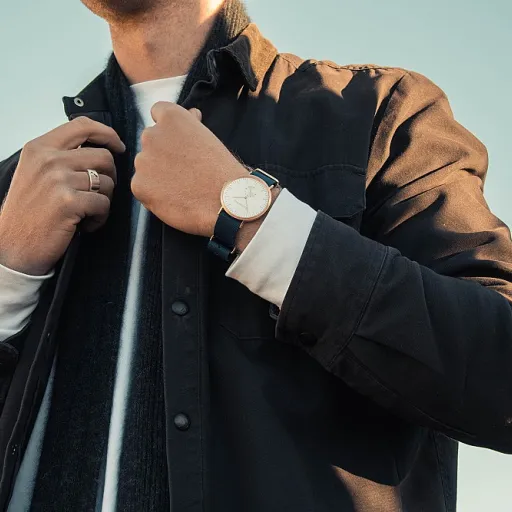
Design is where this Bambino earns its reputation. The cream (egg‑white) dial with Roman numerals and blue hands gives it a clear vintage dress watch vibe. It instantly reminded me of old Omega and Longines dress pieces I’ve seen, just without the fancy finishing. The 40.5 mm case sounds big for a dress watch, but on the wrist it looks smaller than the numbers suggest, probably because of the domed crystal and slim bezel drawing your eye to the dial rather than the case edge.
The dial itself is the best part. The cream tone isn’t flat white; it shifts a bit depending on the light, sometimes looking slightly warm, sometimes a bit cooler. The blue hands (not heat‑blued, obviously) change from nearly black to bright royal blue depending on the angle. It’s a simple layout: Roman numerals, a date window at 3, the Orient logo, and small “water resistant” text. No extra clutter, no fake chronograph subdials, just a clean face. Up close, the applied logo and markers look pretty solid for the price – not razor‑sharp, but no obvious rough edges.
The domed mineral crystal and domed dial give it a nice profile from the side. It catches reflections a lot, which looks cool but can hurt legibility in some angles under strong light. You don’t get anti‑reflective coating, so expect some glare. If you’re picky, you can technically swap the crystal for sapphire (people do it for around $40–50 plus labour), but that’s extra money and hassle. For most, the stock crystal is fine as long as you’re not smashing it into door frames every day.
Case finishing is simple: polished surfaces, nothing fancy like brushing transitions or sharp bevels. The unsigned crown is a bit of a missed opportunity – a small logo there would have helped the overall look. Still, on the wrist, the overall design looks more expensive than it is. It doesn’t scream “cheap watch” at all, especially if you change the strap. I’d say design is the main reason to buy this model: it looks like a proper dress watch and doesn’t try to be everything at once.
Comfort: good case size, so‑so strap
On my roughly 7.5–7.75 inch wrist, the 40.5 mm case sits nicely. It doesn’t look oversized and, because of the dial design, it actually wears a bit smaller than a 41 mm diver. The listed thickness is around 11.8 mm, which is fine for an automatic dress watch. It slides under a shirt cuff without a fight, especially once the strap softens a bit. Weight is about 0.5 pounds (around 225 g with box; on the wrist it feels light‑medium), so you don’t get that heavy “brick” feeling.
The main comfort issue is the stock strap. Out of the box, it’s stiff and the shiny coating doesn’t help. The first couple of times I put it on, it was annoying to bend it enough to get a snug fit, and it didn’t wrap around the wrist smoothly. After a few days, it started to break in and became more tolerable, but it still doesn’t feel like a nice soft leather strap. The buckle is simple but works fine, no sharp edges digging into the wrist.
The 21 mm lug width is a bit of an odd choice. It’s not a standard size like 20 or 22 mm, so finding third‑party straps takes a tiny bit more effort. That said, there are enough options online now that it’s not a deal‑breaker. I tried a 22 mm leather strap squeezed in – it worked but looked cramped. A proper 21 mm aftermarket strap makes a big difference both in comfort and looks. If you’re sensitive to stiff straps, I’d almost budget in an extra strap from day one.
Day‑to‑day, once the strap softened a bit, I forgot I was wearing it most of the time, which is what you want. No weird hotspots, no crown digging into the wrist. As a daily office watch, comfort is absolutely fine, but the strap holds it back out of the box. Swap that, and it becomes a very easy watch to wear all day.
Materials: where Orient saved money and where they didn’t
On paper, the materials are pretty standard for this price: stainless steel case, mineral crystal, leather strap, automatic movement. Nothing crazy, but also not bottom‑of‑the‑barrel. The stainless steel case feels solid in hand, no rattling or sharp edges. The polishing is decent – not mirror‑perfect, but you’re not paying luxury money here. The case back is closed (no display window on this version), which is a bit of a shame if you like seeing the movement, but it also keeps costs down.
The mineral crystal is the big compromise. It looks good and the dome adds character, but mineral will scratch easier than sapphire. I’ve worn it carefully for a couple of weeks and didn’t pick up any marks, but I was very aware of it – I avoided knocking it on metal door handles and kept it away from zips. If you’re rough with your watches or just don’t want to think about it, that’s a limitation. For the price, though, mineral is expected. The fact that there’s a known sapphire replacement option is a plus if you want to upgrade later.
The strap is officially leather, but it has a shiny, almost plasticky surface out of the box. The lining feels better than the top, but the whole thing is pretty stiff at first. After a few days of wear, it started to soften a bit, but you can still tell it’s not a high‑end strap. In short: it gets the job done but doesn’t match the dial quality. A mid‑range aftermarket strap (even a £20–30 one) instantly makes the watch feel like it jumped a price bracket.
Inside, you get Orient’s in‑house automatic movement (F6722/F6724 family), which is a plus in this segment. It offers hand‑winding and hacking, which a lot of cheaper automatics skip. It runs at 21,600 vibrations per hour, so the second hand sweep is decent, not super smooth like high‑beat movements, but fine. Overall, the materials are pretty solid for the money: the weak points are the crystal and strap, the strong point is the movement and the dial work. You’re not getting luxury components, but nothing feels like a toy either.
How tough is it really?
Durability on a dress watch like this is mostly about how it handles daily bumps and how the materials age. The stainless steel case took light use well: no obvious marks after two weeks of normal wear, just the usual fine hairlines you’d expect if you look very closely. The polished surfaces will pick up scratches faster than brushed steel, but that’s normal for this style. If you’re the type who bangs watches against desks and walls, this isn’t the best choice, but worn normally, it should last years.
The weak spot is the mineral crystal. While I didn’t get any scratches during my test period, I was consciously careful – I avoided tossing it on the table with keys or scraping it on rough surfaces. Mineral is simply more prone to scratches than sapphire. One bad contact with a metal edge or concrete wall and you can have a visible mark. On the flip side, mineral is less likely to shatter than cheap sapphire if you whack it hard, but overall, in daily use, scratch resistance is what matters more for most people.
The strap will probably be the first part to show age. Because it’s shiny and a bit stiff, creases and wear marks on the holes will show up quickly. That’s not the end of the world, since straps are consumables anyway, but it’s fair to say you shouldn’t expect this one to look great after a couple of years of regular use. The buckle seems fine and should last as long as the case.
The movement itself has a solid reputation in the community. Orient’s in‑house calibers are known to be reliable workhorses, not high‑end, but they keep running for years with minimal issues if you don’t abuse them. There’s no official warranty mentioned for this listing, which is a downside if you get a rare dud, but most users report long‑term reliability. Overall, I’d say durability is good enough for an office/dress watch, as long as you’re not expecting G‑Shock levels of abuse resistance and you accept that the crystal needs a bit of care.
Accuracy, movement behavior and real‑life use
This Bambino runs a Japanese automatic movement (Orient in‑house, F6722/F6724 type) with hacking and hand‑winding. That means you can stop the second hand to set the time precisely, and you can wind it by hand if you haven’t worn it for a couple of days. Both features are genuinely useful in daily use and not always present at this price. The crown action is smooth with just enough resistance when hand‑winding, and setting the date and time feels positive, not mushy.
In terms of accuracy, my unit was running around +8 seconds per day on the wrist, which is pretty decent for a budget automatic. Other users report something like 40 seconds per week drift, which matches what I saw. If you’re used to quartz accuracy, you’ll notice you need to adjust it now and then, but for a mechanical watch in this price range, that’s perfectly acceptable. You can also play with resting positions at night to slightly slow it down or speed it up, but I didn’t bother – I just reset it every week or so.
Power reserve is roughly a day and a half in real life. I could take it off Friday evening and it would usually still be running sometime Saturday, but dead by Sunday if I didn’t touch it. That’s normal. As long as you wear it daily, you won’t think about it. If you rotate watches a lot, you’ll be setting time and date more often, but the hacking makes that painless. The date change happens cleanly around midnight, no weird half‑jumps.
For water resistance, it’s rated at 30 m. In practice, that means splashes and maybe brief accidental wetting, but no swimming, no showers. I washed my hands with it on and got some splashes on the case; no issues at all. I wouldn’t take it near a pool on purpose. The watch is clearly designed as a dress/office piece, not a sports watch. Overall, performance is solid for a budget automatic: good enough accuracy, reliable movement, and straightforward operation. Just don’t expect dive‑watch toughness or quartz precision.
What you actually get out of the box
The unboxing is pretty basic, which is fine at this price. Mine arrived in a padded envelope with the usual Orient outer cardboard sleeve and a simple inner box. The inner box is nothing fancy – light, a bit generic – but it protects the watch well enough. One corner of the outer box was a bit creased from shipping, but the watch itself was untouched and already ticking when I opened it. So packaging is functional, not premium.
Inside, you get the watch on a cushion, a manual, and the warranty card… even though this particular listing clearly says no manufacturer warranty. That’s a bit odd: paperwork is there, but officially you’re basically relying on the seller/Amazon if something goes wrong. For a mechanical watch, that’s worth keeping in mind, because if the movement shows issues after a few months, you’re either paying a watchmaker or you’re stuck.
The watch comes on a brown leather strap with a simple buckle clasp, plus tags with the model reference (FAC00009N0 / TAC00009N0 depending on region). The strap is technically leather, but it has that shiny, almost plastic look when you first take it out. I’ve seen much worse on cheaper fashion brands, but it doesn’t match the vibe of the dial. The good news is, it’s usable out of the box – stiff, but wearable – and you can swap it later if you care about straps.
Overall, the presentation is basic but acceptable: you get what you need and nothing more. No spare strap, no fancy case, no tools. For a watch that’s all about value, I’d rather they put the money into the movement and dial, which they mostly did. Just don’t expect any luxury feel when you open the box – it’s very much a budget watch presentation.
Pros
- Clean vintage‑style design with cream dial and blue hands that looks more expensive than the price
- In‑house automatic movement with hacking and hand‑winding and decent real‑world accuracy
- Very good value compared to fashion brands and many entry‑level alternatives in this price range
Cons
- Mineral crystal scratches more easily than sapphire, needs extra care
- Stock leather strap is stiff and shiny, feels cheaper than the watch head
- Low 30 m water resistance and no clear manufacturer warranty on this listing
Conclusion
Editor's rating
After actually wearing the Orient Bambino Gen 2 Ver. 2, I get why people talk about it so much. It’s a good, honest budget dress watch with a look that punches above its price. The cream dial, Roman numerals, and blue hands give it a classic style that works well with shirts, suits, and smart‑casual outfits. The in‑house automatic movement with hacking and hand‑winding is a nice bonus at this price and performed reliably in daily use, with accuracy around +8 seconds per day for me.
It’s not perfect. The mineral crystal needs some care if you don’t want scratches, the stock strap feels cheap and stiff, and the lack of a clear manufacturer warranty on this listing is a risk. Water resistance is minimal, so it’s not a watch you wear to the pool or in the shower. But if you treat it as what it is – a dress/office watch, not a sports tool – it does the job very well.
I’d recommend this to someone who wants their first automatic dress watch, is moving up from fashion brands, or just wants something decent to wear with a suit without spending big money. If you’re already deep into mid‑range Swiss watches or you need something very tough and low‑maintenance, you might find the compromises annoying. For everyone else, especially at around the £120–150 mark, it’s good value and a solid entry into mechanical watches, as long as you’re ready to swap the strap and treat the crystal with a bit of respect.