Summary
Analysis score
Average of the criteria rated below
Value for money: solid spec, but pricing feels ambitious
Chunky diver design with original case lines
Comfort: substantial on the wrist and not for everyone
Steel, sapphire and aluminium: solid materials with a few compromises
Durability and long-term prospects
Performance as a dive watch: solid fundamentals, limited extra features
What the Cressi Sea Lion 300m brings to the table
Pros
- Swiss-made ETA 2824-2 automatic movement with sapphire crystal front and back
- 300 m water resistance, screw-down crown and unidirectional 120-click bezel suitable for diving
- Highly legible green dial with large hands and clear markers, plus distinctive case design
Cons
- Large and heavy (44 mm, ~132 g) which can feel bulky on smaller wrists
- Crown described as fiddly and hard to screw down cleanly by several buyers
- Lume and supplied rubber strap considered average for the price by some users

Specifications
View full product page →| Brand | Cressi |
A Swiss-made diver from a dive gear specialist
The Cressi Sea Lion Watch 300m Paraggi Edition is a mechanical dive watch from a brand better known for fins, masks and regulators than horology. On paper, it mixes proper Swiss watchmaking (ETA 2824-2 automatic movement, sapphire crystal, 300 m rating) with the diving background of Cressi. The result is a 44 mm unisex diver that clearly leans toward a chunky, tool-watch style rather than a dress piece. Public reviews give it about 4.5/5 from a small sample, so feedback is mostly positive but not unanimous.
What stands out immediately is the spec sheet: 300 m water resistance, screw-down crown, unidirectional bezel, luminescent markers and hands, and a transparent sapphire back – all the classic ingredients of a modern mechanical diver. The ETA 2824-2 calibre is a known Swiss workhorse, and Cressi announces a tight precision range of around -2/+2 seconds per day, which is ambitious for this movement. The watch is also marketed as 100% Swiss made, with a 2‑year manufacturer warranty.
However, several comments highlight compromises and quirks. The 44 mm diameter and roughly 132 g weight with rubber strap make it a substantial watch, and more than one buyer hints that it may be better suited to larger wrists. The crown position and handling come back regularly in the feedback: some find it original but not very intuitive, others directly call it fiddly and a weak point. There are also remarks about lume being just average and the strap not being at the same level as the head of the watch.
In my opinion, this model targets divers and enthusiasts who want a serious mechanical watch from a diving brand rather than a fashion accessory. It’s clearly not trying to compete with connected dive computers or feature-heavy instruments: no depth sensor, no logs, no smart features. It’s a classic analogue diver with a solid movement, strong water resistance and a distinctive case design. The trade-off is that you pay a fairly high price for traditional watchmaking and brand heritage, while accepting a few ergonomic and finishing compromises mentioned in the reviews.
Value for money: solid spec, but pricing feels ambitious
One of the more critical comments in the reviews concerns the price positioning. A detailed buyer explicitly states that the price is quite high compared to other watches in the same category, especially when you consider that it lacks advanced diving functions like depth measurement or dive logs. Another user, who paid around £295, says the quality is okay for that price but still decided to send the watch back mainly because of the fiddly crown and average lume, which shows that not everyone finds the overall package convincing at this cost.
On the positive side, you are paying for several strong points: a Swiss-made watch with a known ETA 2824-2 automatic movement, sapphire crystal on both sides, 300 m water resistance, and a unidirectional bezel with engraved numerals. The 2‑year warranty, the brand’s history in diving since 1946, and the watch’s mention by PADI in a ranking of professional divers (as one Italian reviewer proudly notes) also contribute to perceived value for some buyers. For people who like the idea of a diver designed by a real dive equipment company rather than a fashion label, that heritage may justify part of the premium.
However, if you compare strictly on specs, there are many divers on the market around this price with similar or better features: ceramic bezels, stronger lume, metal bracelets included, or even ISO 6425 certification clearly stated. Some microbrands and larger brands alike offer ETA or Sellita movements, sapphire crystal and 200–300 m water resistance for comparable or lower prices. On the other side, big-name Swiss brands with similar specs are often significantly more expensive, so the Sea Lion can look like a mid-range alternative that sits between microbrands and luxury brands.
In my opinion, the value proposition is decent but not outstanding. If you specifically want a Cressi-branded diver with this design, Swiss movement and 300 m rating, and you like the green Paraggi look, the watch can make sense. The positive reviews about build quality and style show that many buyers are satisfied. But if you are price-sensitive and mainly care about specs per euro or pound, you can probably find competitors with equal or better technical features for similar money, especially if the crown ergonomics and average lume worry you. This is more of a watch you buy because you like the brand, the look and the mechanical aspect, not because it destroys the competition on value.
Chunky diver design with original case lines
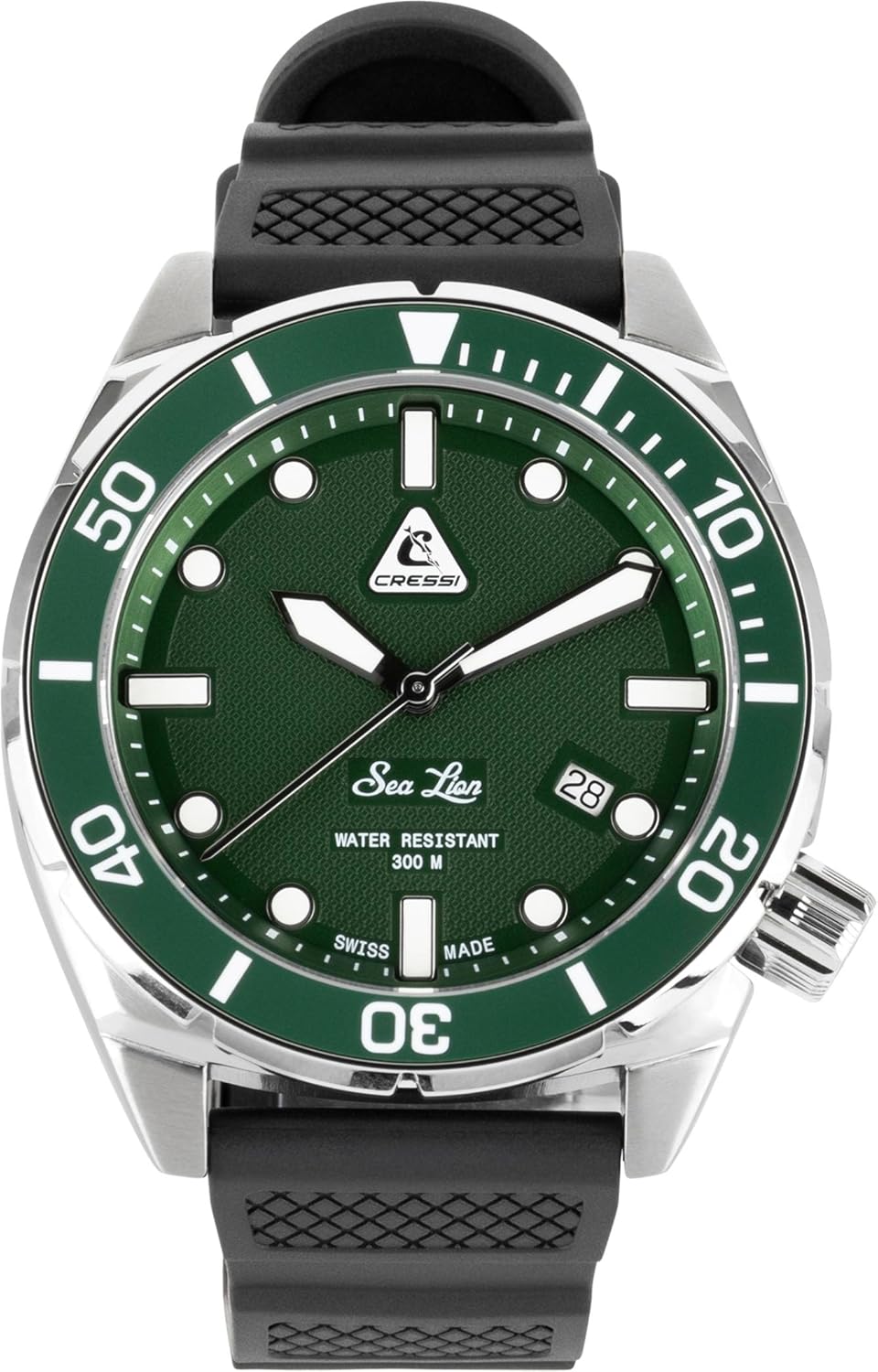
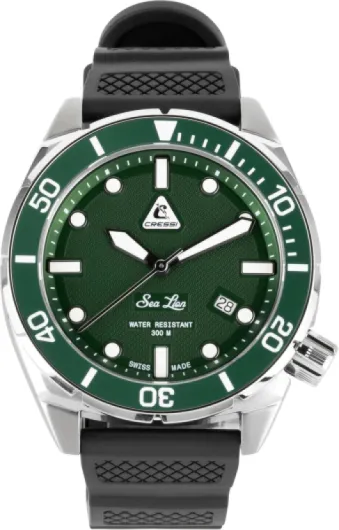
Visually, the Sea Lion Paraggi Edition goes for a bold diver look rather than a discreet everyday watch. The 44 mm case diameter, the unidirectional bezel, and the green dial with large luminous hands and markers give it a clear tool-watch identity. One buyer explicitly mentions that the case has very original lines and was even cited by PADI in 2020 among notable professional divers, which shows that the design is not just generic. The transparent sapphire back also brings a more watch-enthusiast flavour, letting you see the ETA movement at work, something not all dive watches in this range offer.
The dial itself is described as highly legible, with wide hands and clear dots and dashes instead of printed numerals. A reviewer highlights that the second hand is standard-sized and easy to distinguish at a glance from the minute hand, which is important on a diving-oriented watch where confusion between hands can be a real issue. The bezel has engraved numerals and graduations, with 120 clicks per full rotation, so you get half-minute resolution when timing. Several comments appreciate both the functional and visual aspect of this bezel, which seems to be a strong point of the design.
The overall aesthetic is classic diver with a twist: green dial, black rubber strap, steel case, and a case shape that is described as original and smooth, with angled lugs that avoid snagging on clothes or wetsuits. One review notes that, despite being unisex on paper, the size and visual presence make it feel more natural on a man’s wrist or on a woman who likes larger watches. Another points out that the colour (for the blue version) is very pleasing; by extension, the green Paraggi variant will likely appeal to those who like coloured dials without going into flashy territory.
In my opinion, this design will speak to people who enjoy robust, visible watches and don’t mind a bit of bulk. It’s not a thin dress watch that disappears under a cuff, and the feedback confirms that: the watch looks good but feels big. The transparent back, the engraved bezel, and the coloured dial give it a bit of character compared to very plain tool divers. On the downside, the originality of the crown position and the large size mean it is not the most versatile piece if you want something minimal and low-profile for the office.
Comfort: substantial on the wrist and not for everyone
Comfort is one area where comments are quite consistent: this is a substantial watch. One buyer gives the weight as around 132 g with the rubber strap, which is on the heavier side for a simple three-hand diver without bracelet. Combined with the 44 mm case diameter, this gives a strong presence on the wrist. Several reviews mention that it may suit men better or women with larger wrists, despite being marketed as unisex. One user with a 6¼-inch (about 16 cm) wrist says the third hole on the strap out of eight was already tight, which gives a rough idea of how it wears on smaller wrists.
The strap length is described precisely: about 10¼ inches (258 mm) end to end, with enough adjustment holes to cover wrists approximately from 5½ to 7¾ inches. That’s a wide range, but the perceived bulk is not just about circumference; the flatness and lug-to-lug distance of a 44 mm case also matter. Buyers underline that the lugs are rounded with an angled profile so the strap connects smoothly with the wrist and avoids snagging on clothes or wetsuits, which is a positive point for comfort in dynamic use. The exterior of the watch is also described as very smooth, with no sharp edges to catch on gear.
Where comfort becomes more divisive is the crown. Several comments point out that the crown is functional but not easy to handle. One English-speaking buyer calls it unique but something that takes time to get used to, and notes that it might not appeal to everyone. Another verified purchaser describes the crown as fiddly, hard to catch the thread when screwing it down, and worries this could cause wear issues over time. That same buyer ended up returning the watch mainly for that reason, even though they otherwise considered the quality reasonable for the price.
In my opinion, if you like lighter or smaller watches, you might quickly feel that the Sea Lion is too bulky for everyday use, especially with office attire. For diving or sports, the size is less of an issue and can even be an advantage for readability. But the crown ergonomics clearly deserve attention: if you are someone who adjusts your watch often or is very sensitive to screwing/unscrewing feel, the reported fiddliness could become annoying. It looks like a watch that will feel secure and planted on medium to large wrists, but borderline for those with small wrists who want something discreet and comfortable all day long.

Steel, sapphire and aluminium: solid materials with a few compromises
On paper, the material choices of the Cressi Sea Lion 300m are solid for a mechanical diver in this bracket. The case is stainless steel, the crystal is scratch-resistant sapphire, and the bezel is made of anti-scratch anodized aluminium with engraved numerals and markers. The caseback is also sapphire, which is less common on dive watches and adds interest for those who like to see the movement. Buyers describe the build quality as high, with one comment calling it very good quality and another saying the finish gives a premium feel.
The use of sapphire on both sides is a clear strong point. Sapphire is much more scratch-resistant than mineral glass or acrylic, so the watch face should stay clear over time, especially in everyday wear with contact against door frames, desks, or equipment. One reviewer does mention that fingerprints and smudges are quite visible on the sapphire, which is not surprising: sapphire tends to show grease more than softer materials. That means you might need to wipe it regularly if you like a perfectly clean look, but in return you should avoid most scratches in normal use.
The bezel in anodized aluminium is a more classic choice. It’s lighter than ceramic and generally cheaper to produce, but it is usually less scratch-resistant than ceramic inserts. The manufacturer describes it as anti-scratch, and the engraved numerals avoid the issue of printed paint wearing off too quickly. One buyer specifically praises the engraved bezel for both function and appearance. Still, if you compare it with higher-end divers using ceramic bezels, aluminium remains a step below in terms of long-term visual ageing, especially if you knock it against hard surfaces.
The strap is rubber, which is logical for a dive-focused watch, but not everyone is fully convinced. A French-speaking buyer notes that the watch would deserve a more robust strap better adapted to diving, suggesting that the supplied band is decent but not outstanding. Another user finds the strap stylish and practical, and highlights how the case lugs and strap connection avoid snagging. So opinions vary, but there is at least one clear voice saying the strap is the weak link in an otherwise well-built watch. In my view, the head of the watch (case, movement, crystals) is where most of the value sits, and the strap is something many enthusiasts will eventually swap for a more substantial rubber, NATO, or even a steel bracelet if compatible.
Durability and long-term prospects
Durability is one of the selling points of this watch on paper: sapphire crystal front and back, stainless steel case, screw-down crown, and 300 m water resistance. One enthusiastic buyer notes that the scratch-resistant materials keep the watch looking good even after rough use, although they do not go into specific incidents. Sapphire is a big plus for long-term clarity of the dial, and the steel case should handle the usual knocks and bumps of daily wear or gear handling. The anodized aluminium bezel, while not as hard as ceramic, is described as anti-scratch and has engraved numerals that shouldn’t fade as quickly as painted ones.
The crown, however, raises questions for durability. A verified purchaser explicitly calls it fiddly and says it is hard to catch the thread when screwing it down. Their concern is that this difficulty could cause wear on the threads over time, and they chose to return the watch largely for that reason. Other buyers mention that the crown is functional but not very easy to handle, which suggests this is not an isolated impression. Since the crown and its tube are critical for water resistance and everyday handling, any perceived weakness there is something to take seriously. It doesn’t mean the crown will fail, but it does mean that careful, gentle use is probably wise, and that some users might find it frustrating.
The strap is another point where durability is debated. One French-speaking buyer considers the watch very nice but feels it deserves a more robust strap better suited to diving, implying that the supplied rubber band might wear faster or feel less confidence-inspiring under heavy use. Others describe the strap as stylish and practical, with smooth integration to the case and no snagging on clothes or wetsuits. Rubber generally ages with exposure to UV, saltwater and sweat, so it’s realistic to expect that a future strap replacement might be part of the watch’s life cycle, which is normal for many dive watches.
Taking into account the ETA 2824-2 movement, maintenance should be relatively straightforward: most competent watchmakers know this calibre and can service it. As a mechanical watch, it will need periodic servicing every few years if you want to keep accuracy and water resistance in good shape. The 2‑year manufacturer warranty is standard and provides basic security for early defects. In my view, the core construction (steel case, sapphire, proven movement) suggests good durability, but the crown ergonomics and the average-level strap are the weak links mentioned by users. For someone ready to baby the crown a bit and eventually upgrade the strap, the long-term outlook is reasonable.

Performance as a dive watch: solid fundamentals, limited extra features
From a pure diving perspective, the Sea Lion 300m checks most of the traditional boxes on paper. It is rated water-resistant to 300 metres, has a screw-down crown, a unidirectional 60-minute bezel with 120 clicks, and a highly legible display with luminescent material on the hands and hour markers. One user notes that the bezel’s 120 clicks allow timing with a half-minute resolution, and that the numerals every 10 minutes with marks in between make it easy to read elapsed time at a glance. Several reviews also highlight that the dial is easy to read thanks to the wide hands and clear markers, which is exactly what you want on a dive watch.
Regarding the movement, the ETA 2824-2 is a well-known Swiss automatic calibre. Cressi announces a precision of about -2/+2 seconds per day, which is a very ambitious regulation for this movement and suggests careful adjustment. A buyer who monitored accuracy informally mentioned around 10 seconds deviation in one day, but also admitted that their timing might not be precise. In practice, mechanical movements usually drift more than quartz, and anyone considering this watch should accept that. The power reserve of about 40 hours means that if you leave it off your wrist for more than a day and a half, you will need to rewind and reset it, which one reviewer confirms as consistent with the manual.
Where this watch is more limited is in advanced diving features. One detailed review complains that the price is quite high considering it lacks depth measurement or dive logs. That’s not a fault in the traditional diver concept – analogue divers usually don’t have these features – but it does matter when comparing with modern dive computers and even some hybrid watches that offer more data for similar or lower prices. Another diver mentions not having used it at depth yet, so there is no detailed feedback in the comments about real deep diving performance, but the 300 m rating, screw-down crown and unidirectional bezel align with industry standards for a capable dive tool.
Overall, in my opinion, the Sea Lion’s performance is solid if you judge it as a classic mechanical diver. It should be perfectly usable for timing dives, safety stops, and surface intervals, as long as you are comfortable relying on analogue timing and follow the usual safety practices (not depending on a single instrument). Lume is described as average by at least one buyer and good enough by another after charging with a bright light, so you should not expect the strongest lume on the market. If you want metrics, alarms, decompression data and logging, this is clearly not the right tool; it’s more of a robust mechanical backup or a main instrument for those who still like the simplicity of a traditional diver’s watch.
What the Cressi Sea Lion 300m brings to the table
The Sea Lion Paraggi Edition is presented as a unisex professional diving watch, but the numbers and buyer comments suggest it is a fairly large tool watch. The case diameter is 44 mm, stainless steel, with a transparent sapphire back and a unidirectional 60-minute bezel in anodized aluminium. The watch is made in Switzerland, uses a Swiss automatic movement (ETA 2824-2) and is rated to 300 metres water resistance. It ships on a black rubber strap with a standard buckle closure, and the dial is green with a classic layout: central hours, minutes, seconds, and a date with quick set.
On the movement side, the ETA 2824-2 is a known quantity: automatic, mechanical self-winding, with manual winding possible via the crown. Cressi communicates a claimed precision around -2/+2 seconds per day, which is quite tight for this calibre and more in line with chronometer-level regulation. One buyer roughly measured around 10 seconds deviation on a first day and suspected their own timing rather than the watch, but this still shows that the watch is not a quartz-accuracy piece and will require the usual tolerance one expects from mechanical movements. The power reserve is described in the manual as roughly 40 hours, which matches what is typical for this movement.
In everyday practical terms, this means the Sea Lion should behave like any standard automatic diver: if you wear it daily, it stays wound; if you leave it aside for more than a day and a half, you’ll likely need to reset time and date. The watch is described by one owner as easy to wind and set, even if the crown handling itself divides opinions. The watch is sold with a 2‑year manufacturer warranty, which is standard in this price segment, and only one strap is included in the package. There is no metal bracelet option in the data provided, which might matter if you like the look and weight of steel bracelets on divers.
From a positioning point of view, the Sea Lion sits somewhere between pure tool diver and traditional Swiss watch. It does not offer the advanced digital dive metrics of computers or smartwatches, but instead focuses on a mechanical movement, 300 m rating, a functional bezel and strong materials (steel, sapphire). In my view, the pitch is clear: a serious analogue diver that can be used in the water and still pass as a classic sports watch on dry land, for those who prefer a mechanical solution to timing dives or surface intervals.
Pros
- Swiss-made ETA 2824-2 automatic movement with sapphire crystal front and back
- 300 m water resistance, screw-down crown and unidirectional 120-click bezel suitable for diving
- Highly legible green dial with large hands and clear markers, plus distinctive case design
Cons
- Large and heavy (44 mm, ~132 g) which can feel bulky on smaller wrists
- Crown described as fiddly and hard to screw down cleanly by several buyers
- Lume and supplied rubber strap considered average for the price by some users
Conclusion
Analysis score
The Cressi Sea Lion Watch 300m Paraggi Edition is a straightforward mechanical dive watch from a brand with real diving roots. On paper, it brings strong fundamentals: 300 m water resistance, screw-down crown, unidirectional bezel with 120 clicks, sapphire crystal front and back, and a proven Swiss ETA 2824-2 movement. Reviews generally praise the build quality, readability and overall look, and several owners clearly enjoy having a robust diver that also works as a classic sports watch on land. The distinctive case shape and green dial give it personality compared with generic divers.
It’s not without flaws. The 44 mm case and 132 g weight make it a chunky watch, better suited to medium and large wrists. The crown handling is a recurring complaint: some find it just unusual, others call it fiddly and worry about long-term wear, and one buyer even returned the watch because of it. Lume seems to be around average, and at least one comment points to the rubber strap as the weak link compared to the quality of the head. For the asking price, you don’t get advanced diving functions or standout lume, so the value is good but not outstanding in a crowded dive watch market.
In my view, this watch fits divers and enthusiasts who want a traditional Swiss-made mechanical diver from a genuine dive brand, accept a bit of bulk, and are more interested in style and mechanical charm than in digital features. If you have a small wrist, hate fiddly crowns, or want maximum spec per euro, there are probably better options. But if you like the design, the Cressi name, and the idea of a solid 300 m automatic with a visible movement, the Sea Lion 300m Paraggi Edition can be a satisfying choice.