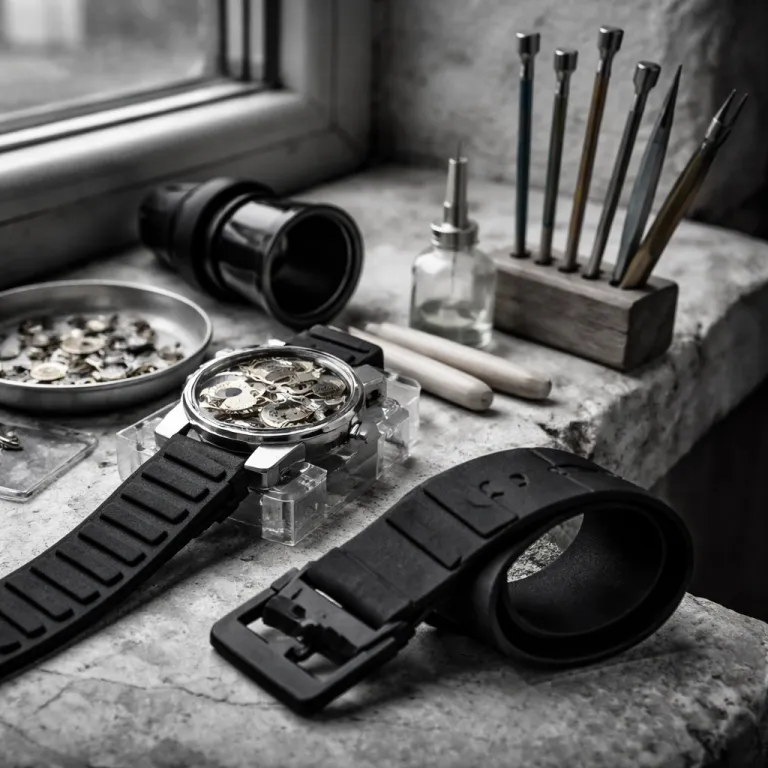
How luxury brands frame service intervals versus real world wear
Every luxury watch owner eventually asks what a realistic luxury watch service interval cost looks like. The warranty booklet from each brand suggests tidy servicing schedules, but the way your watches live on the wrist often tells a different story and creates very different service costs over time. A clear guide to how each movement behaves in the real world lets you budget for each watch service without fear or guesswork.
Rolex states in its current care guidance that many modern automatic watches can run around ten years between overhauls under normal use, yet owners often wear a Submariner or Datejust for even longer before any servicing cost appears.1 Omega and other large manufacturers publish similar long service windows for contemporary calibres with modern lubricants.2 In contrast, a high complication Patek Philippe with a perpetual calendar or split seconds chronograph may need a movement overhaul closer to three to five years, because the movement has more interacting parts and more lubrication points that age with time.3 Audemars Piguet often recommends five to seven years for a Royal Oak or Royal Oak Offshore, but the real interval depends on water resistance checks, how often the watch sees the pool, and whether the case bracelet has taken impacts.4
Across brands, the headline service cost hides a spread of smaller costs that accumulate quietly. Gasket replacement to preserve water resistance, crown and tube replacement after years of use, and light refinishing of the case bracelet all add to the final servicing cost on the invoice. In Europe and North America, surveys of authorised service centres and independent workshops suggest that a routine mechanical watch service for a three hand sports model from a mainstream luxury brand typically ranges from the equivalent of four to nine hundred US dollars, with complications and precious metal cases costing more.5 The honest way to think about luxury watch service costs is as a long term running cost of ownership, not as a surprise repair when the watch finally stops.
| Watch category | Example brands/models | Suggested interval | Indicative cost range (USD) |
|---|---|---|---|
| Modern three hand sports watch | Rolex Submariner, Omega Seamaster | 7–10 years | $400–$900 |
| High complication dress watch | Patek Philippe perpetual calendar | 3–5 years | $900–$2,500+ |
| Integrated bracelet sports watch | Audemars Piguet Royal Oak | 5–7 years | $800–$1,800 |
Reading the symptoms: when a watch needs service now and when it can wait
The most useful skill for any luxury watch owner is learning to read the symptoms that signal an urgent service versus those that simply hint at future maintenance. A modern automatic watch with a stable movement can often run slightly out of chronometer spec for years before a full service becomes necessary, especially if amplitude and power reserve remain healthy. Understanding these nuances lets you manage luxury watch service interval cost intelligently instead of blindly following a date on a card.
There are a few red flags that demand immediate watch repair regardless of brand or age. Condensation under the crystal, a sudden drop in power reserve, grinding or roughness when you wind the mechanical watch, or a rotor that feels loose inside the case all indicate that internal parts may already be wearing and that watch servicing can no longer be delayed without risking higher service costs. In these cases, the cost of prompt services is almost always lower than the eventual repair cost after water or metal debris has damaged the movement.
- Stop wearing the watch as soon as you notice severe symptoms.
- Store it dial up in a dry place to limit further damage.
- Book an inspection with a qualified watchmaker within days, not weeks.
Other signs are more benign and allow you to stretch the interval and smooth your long term service cost. A Rolex that drifts from plus two to plus eight seconds per day, or a Patek Philippe Calatrava that runs slightly fast but still winds smoothly, can usually wait until your preferred watch service window, especially if water resistance tests remain strong. When in doubt, a quick timing and pressure test by a trusted independent watchmaker costs little, protects your luxury watch, and avoids unnecessary full service work that adds cost without adding value; for more context on how a quiet movement should behave, a detailed article on why Rolex watches seem silent can be helpful.
Vintage versus modern: when factory service preserves value and when it erases it
Vintage mechanical watches live by different rules, and the luxury watch service interval cost calculus changes completely once patina and originality drive value. A modern Rolex Submariner or Omega Seamaster can usually tolerate a factory full service with new luminous material, fresh hands, and a refinished case bracelet without harming resale value too much. A gilt dial Submariner, a tropical Daytona, or a Patek Philippe Calatrava with original dial printing can lose a painful percentage of value after one over enthusiastic service watch visit.
Factory services excel at restoring water resistance, replacing worn movement parts with new components, and returning a watch to as new cosmetic condition. That is perfect for a daily wear automatic watch from a current collection, where the owner prioritises reliability and clean surfaces over collector grade originality, and where the service cost is easier to justify as part of a long term ownership plan. For vintage pieces, a sympathetic movement overhaul by an independent watchmaker who understands period correct parts, minimal polishing, and careful dial handling often protects both the watch and your eventual sale price better than a standardised brand service.
One practical strategy is to separate your watches into two mental boxes. Modern automatic watches and sports models can follow the official service costs and intervals from Rolex, Audemars Piguet, or Patek Philippe, while fragile vintage references receive tailored watch servicing focused on movement health and water resistance only. If you store several automatic watches in a winder, choose a model with gentle rotation and secure mounts, such as a lockable watch winder with quiet motor and integrated jewellery storage, so that you do not accelerate wear or add unnecessary servicing cost through constant motion.
Brand boutiques versus independents: what you really pay for in a service
When the time comes to book a watch service, the choice between a brand boutique and an independent workshop has more impact on luxury watch service interval cost than any other decision. A Rolex service at an authorised centre can easily approach the equivalent of around eight hundred US dollars for a full service on a three hand sports model in many major markets, while a skilled independent might quote less than half that servicing cost for the same reference. The difference lies in overheads, access to proprietary parts, and the level of cosmetic work included in the standard services package.
Boutique service centres offer factory training, guaranteed genuine parts, and a consistent finish on case and bracelet refinishing that many owners appreciate. They also tend to replace more components by default, from crowns and pushers to movement parts that still function but no longer meet internal tolerances, which increases both the immediate service cost and the long term reliability of the movement. Independent watchmakers, by contrast, often take a more surgical approach to watch repair, replacing only what is strictly necessary and allowing you to decline cosmetic work that would otherwise add costs without improving timekeeping.
- Use brand service while the watch is under warranty or for complex complications.
- Rely on a vetted independent for routine overhauls on simpler modern pieces.
- Prioritise experienced independents for vintage watches where originality matters.
For a modern luxury watch that you plan to keep for many years, alternating between boutique and independent watch servicing can balance cost and peace of mind. A factory overhaul every decade, supported by lighter independent maintenance in between, keeps water resistance, lubrication, and movement health under control while smoothing the overall service costs. If you own a mix of dress watches and sports models, resources such as a curated guide to top luxury dress watches for men can help you think about which pieces deserve factory level attention and which can safely live their life in the hands of a trusted local expert.
Building a ten year ownership budget for a single mechanical watch
To make sense of luxury watch service interval cost, it helps to model a full decade with one daily wear piece. Take a modern mechanical watch from a major brand, such as a Rolex Oyster Perpetual, an Audemars Piguet Royal Oak, or a Patek Philippe Aquanaut, worn five days a week in normal office and weekend conditions. Over ten years, the real costs cluster into three buckets, namely movement overhaul and repair, water resistance and case bracelet care, and incidental parts replacement.
Assume one full service in that period, either a Rolex service at an authorised centre or an equivalent overhaul at a brand boutique for another marque. That single watch service will likely account for the majority of your service cost, especially if it includes a complete movement overhaul, refinishing, and replacement of all gaskets and worn parts, and you should expect that service costs will rise gradually over the years as labour and parts pricing increase. In between, budget for a pressure test and minor maintenance every three to four years, which keeps water resistance in check and allows a watchmaker to catch early signs of wear before they turn into a major watch repair.
For automatic watches that rotate in and out of a small collection, the long term servicing cost per piece can actually fall. Each automatic watch spends less time running, which slows lubricant ageing and reduces the frequency of full services, provided you still test water resistance regularly and avoid unnecessary polishing that thins lugs and bezels. Over a decade, a realistic guide is to reserve a modest percentage of the watch purchase price for services, accept that some years will bring no cost at all, and remember that the real luxury is a watch that still feels mechanically honest after ten years, not the press release, but the wrist presence after ten years.
FAQ
How often should I service a modern Rolex or similar luxury watch ?
Most modern Rolex, Omega, and comparable luxury watch models can safely run close to ten years between full services if they are worn regularly and pass periodic water resistance tests. The official interval is often shorter, but real world experience from authorised service centres and independent watchmakers shows that a healthy movement with stable timekeeping and power reserve does not need an overhaul on a strict calendar. You should still have gaskets and water resistance checked every three to four years to avoid moisture damage that leads to higher service costs.
What are the main signs that my mechanical watch needs immediate service ?
Condensation under the crystal, a sudden loss of power reserve, grinding or roughness when winding, or a rotor that feels loose are all signs that your mechanical watch needs urgent attention. These symptoms suggest that lubrication has broken down or that parts are already wearing, and delaying service can turn a simple overhaul into an expensive repair. In such cases, stop wearing the watch and take it to a qualified watchmaker as soon as possible.
Is a factory service always better than using an independent watchmaker ?
A factory service offers guaranteed genuine parts, brand specific training, and a consistent cosmetic finish, which is ideal for modern watches still under warranty or for pieces where you want full brand documentation. A good independent watchmaker can often provide equal or better movement work at a lower cost, with more flexibility about what is replaced or polished. For vintage watches, an experienced independent is frequently the safer choice to preserve original dials, hands, and case geometry.
How does servicing affect the resale value of a luxury watch ?
For modern watches, recent service documentation from a recognised centre usually supports resale value by reassuring buyers about movement health and water resistance. For vintage pieces, heavy polishing, dial replacement, or re lumed hands during service can reduce value significantly, even if the watch runs perfectly. Keeping original parts whenever possible and requesting minimal cosmetic work is often the best strategy for collectible references.
What is a realistic ten year budget for maintaining one luxury mechanical watch ?
Over ten years, many owners will face one full service and one or two minor maintenance visits, such as water resistance tests or gasket changes. For a mainstream luxury brand, that often translates to a total servicing cost in the low four figure range, depending on currency and local labour rates. Planning for that level of expense as part of ownership makes the eventual invoice feel like a scheduled running cost rather than an unwelcome surprise.
Notes: 1–4 Based on published brand care recommendations for modern mechanical watches; 5 Aggregated estimates from price lists and informal surveys of authorised and independent service providers in major markets.