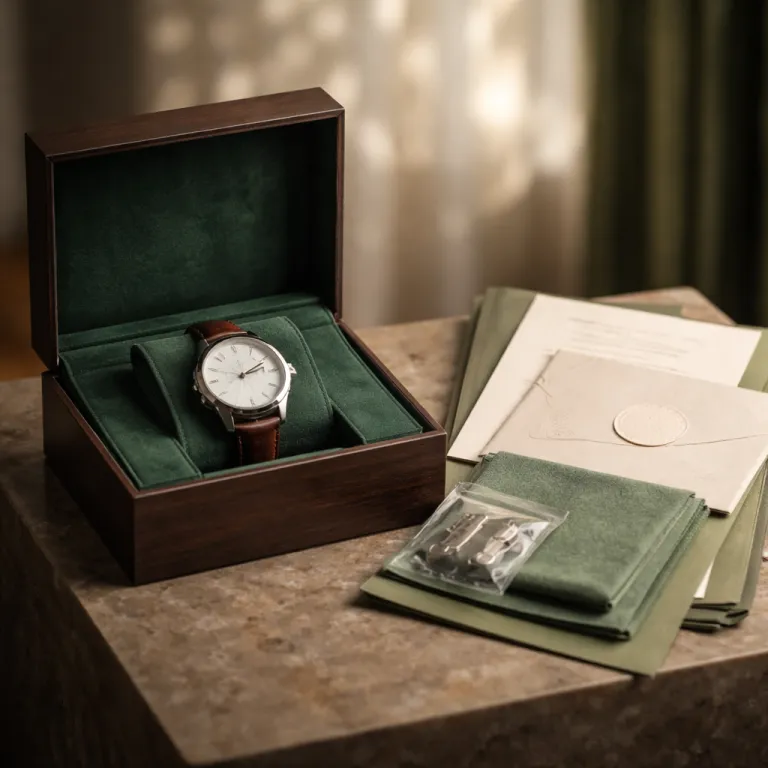
Why watch box and papers value is a financial variable, not a romantic detail
For a serious watch collector, the watch box and papers value is not a side note or a romantic flourish. When you buy a modern or vintage watch, the presence of the original box, stamped papers and a valid warranty card can shift the resale value by 20 to 40 percent. That spread defines whether your stainless steel sports piece will be easy to sell at a transparent price or linger as a compromised pre owned outlier.
On liquid references such as a Rolex watch in stainless steel, a Patek Philippe Aquanaut or an Omega watch from the Speedmaster line, auction data shows that box and papers value is consistently monetized. A full set with original box, matching serials on papers, and period correct accessories often trades at a premium that equals several years of servicing costs, which is why papers matter as much as mechanical condition for many buyers. When you buy watch models like a Rolex Submariner or a Rolex Datejust, the difference between a naked watch and a complete set can easily exceed the cost of a second neo vintage piece in steel.
For grail stainless references such as a Patek Philippe Nautilus or an Audemars Piguet Royal Oak in rose gold, the premium for a complete set can exceed 50 percent. Dealers who shop aggressively at auction will quietly pay more for watches with box papers because they know those pieces can be sold faster to end clients who understand provenance. If you plan on buying watch pieces as part of a disciplined collecting strategy, you must treat every watch box and every sheet of papers as a financial document, not a sentimental souvenir.
What a full set really means across modern, neo vintage and vintage eras
The phrase full set is thrown around in every watch shop listing, but its meaning has tightened dramatically as brands and auction houses have become more precise. For modern stainless steel sports watches from Rolex, Omega, Cartier or TAG Heuer, a full set now usually means the original box, stamped and dated warranty card, manuals, hangtags, bezel protectors and sometimes even the sales receipt. Collectors who understand watch box and papers value will pay a clear premium for this complete set because it signals low risk and strong resale potential.
Neo vintage watches from circa the late twentieth century sit in a more nuanced space, where box papers are often missing but still highly desirable. A Rolex Submariner from that era with its original box, punched papers and period correct booklets will command a higher price than the same reference without them, especially if the condition of the stainless case and bracelet is strong. When you evaluate an Omega watch, a Cartier watch or a TAG Heuer chronograph from the same period, you should weigh the presence of papers against dial originality, service history and whether the watch has been polished.
True vintage watches from circa the mid twentieth century require even more judgment about what full set can realistically mean. For a vintage Patek Philippe Calatrava or an early Rolex watch, the original box and papers are rare survivors, so their presence can transform the perceived value and liquidity of the piece. If you are buying a travel oriented piece and want to understand how a GMT watch truly works for modern travellers, you should still apply the same logic about provenance and documentation to that watch box and its papers.
Sticker theatre, original box obsession and when completeness becomes a fetish
There is a point where the pursuit of a full set drifts from rational watch box and papers value into pure theatre. Some collectors will pay a premium for a Rolex Submariner or Rolex Datejust that still carries its caseback sticker, hangtag and even the plastic bezel protector, treating these disposable items as if they were movement components. That behaviour can distort the real value of the watch, especially when the condition of the stainless steel case or bracelet is only average.
For modern pieces, the original box and accessories are replaceable to a degree, which is why auction houses now differentiate between original box and later service box in their catalogues and condition reports. A watch with box papers that were reissued or restored by the brand will usually be marked clearly, and such papers sold with the watch will not command the same premium as untouched documentation. When you see a quote in a listing that emphasizes complete set but glosses over dial condition, overpolished lugs or a stretched bracelet, you should mentally reweight the price back toward the metal and movement.
Vintage collectors know that sticker theatre can be especially misleading on pre owned pieces that have sat unworn in a safe. A watch can be sold as new old stock with box papers while still needing a full service, which adds hidden cost to the headline price. Before you raise your paddle or click to buy watch pieces at an online auction, read serious guides about navigating the auction room dynamics in luxury watch sales and remember that completeness is only one axis of value.
Brand by brand reality: how Patek, Rolex, Cartier and Omega weigh documents
Not every brand treats watch box and papers value in the same way, and the market follows those cues. Rolex has built a culture where box papers and a matching warranty card are almost mandatory for top tier resale, especially on stainless steel sports models like the Rolex Submariner and Rolex Datejust. A naked Rolex watch in good condition can still sell, but the price gap to a full set is often 20 to 30 percent and widens further on rare dials or limited runs.
Patek Philippe sits at the other end of the spectrum, where provenance is almost a religion and papers matter intensely. For a complicated Patek Philippe in rose gold or platinum, the extract from the archives, original box and complete set of booklets can be the difference between a museum grade piece and a merely expensive watch. Auction houses will often quote separate estimates for examples with original documents and those with later archive extracts, and the latter usually trade at a discount that reflects weaker confidence in the watchs early life.
Omega and Cartier occupy a middle ground where documentation is important but not always decisive, especially on mainstream stainless steel models. A Cartier watch from the Tank or Santos line with its original box and stamped papers will be easier to sell through a reputable shop, yet strong dial condition and unpolished cases still drive most of the value. When you compare an Omega watch with box papers to a similar pre owned example without them, the spread is often narrower than on Rolex, which can make these watches attractive for buyers who prioritize metal and movement over packaging.
Restored documents, replacement boxes and the auction house view of provenance
As watch box and papers value has become more visible, a secondary market for replacement boxes and even recreated papers has emerged. Auction houses and serious dealers now scrutinize every original box, warranty card and booklet to confirm that they match the watch and period, especially on high value stainless steel sports models and complicated pieces in rose gold. When papers sold with a watch are later determined to be restored or non original, the hammer price and the buyers trust both suffer.
Most major houses will accept a watch with a replacement box or a later service warranty card, but they will describe it accurately and estimate accordingly. A Rolex Submariner with a service box and modern warranty card will not be catalogued as a full set, and its price will reflect that reduced watch box and papers value even if the condition of the steel case is excellent. For Patek Philippe, the presence of an extract from the archives is helpful, yet it does not replace the original certificate, which remains the gold standard for provenance.
Collectors should understand that sympathetically replaced documents can still add comfort, but they do not erase the gap to untouched box papers. When you see a catalogue note that a complete set has later added accessories, treat that as a signal to focus even more on dial originality, movement health and case geometry. If you are weighing whether to sell a pre owned piece with partial documentation, speak to specialists who regularly handle luxury watch auctions, because they can quote realistic spreads between naked watches and those with full provenance.
The buyers heuristic: when the box and papers premium is worth paying
Every collector needs a clear framework for deciding when to pay up for watch box and papers value and when to walk away. On highly liquid stainless steel references such as a Rolex Submariner, Rolex Datejust, popular Omega watch models and core Cartier watch lines, paying a reasonable premium for a full set usually makes sense because you can recapture that value when you sell. The same logic applies to halo pieces from Patek Philippe, where a complete set is almost a prerequisite for top tier resale.
On more niche watches, especially those in rose gold or less popular complications, the premium for box papers can be less rational and more emotional. If you are buying watch models primarily to wear rather than to trade, you may be better served by a clean pre owned piece in excellent condition without its original box, provided the price reflects that reality. For many refined professionals building a focused collection, the smarter move is to allocate budget toward movement quality, dial originality and case sharpness rather than chasing every hangtag.
One useful rule is to treat documentation as a sliding percentage of the total value, not a fixed must have. When the watch itself is the main story, such as on under the radar references outside the big four, you can safely prioritize metal and mechanics over packaging, especially if you have read critical perspectives on why owning all of Rolex, Patek, AP and Cartier proves nothing in collecting terms. The real edge comes from buying honest watches at fair prices, with box and papers used as a tool rather than a fetish.
Practical tactics for negotiating, storing and insuring your documentation
Once you accept that watch box and papers value is a line item, you can negotiate more effectively. When a dealer quotes a price for a stainless steel sports watch with incomplete documentation, ask them to break out the implied value of the missing box papers and adjust the offer accordingly. On pre owned pieces where the condition is strong but the set is partial, you can often secure a meaningful discount that reflects the future resale friction.
Proper storage of your original box, warranty card and papers is not glamorous, yet it is essential to preserving that value. Keep the watch box and all documents in a dry, dark place away from humidity, and avoid stacking heavy items on top of delicate vintage boxes from circa the mid twentieth century. For high value Patek Philippe, Rolex watch or Cartier watch pieces, consider photographing the complete set and keeping digital copies of the papers in case of loss.
Insurance is another area where documentation quietly influences outcomes, because detailed papers sold with the watch make it easier to substantiate claims. When you buy watch coverage, provide your insurer with serial numbers, purchase receipts and photographs of the full set so that any future payout reflects the true watch box and papers value. In the end, provenance, completeness and condition form a triangle of trust, and the smartest collectors treat each side with the same disciplined attention they give to the movement ticking on the wrist.
Key figures on box and papers impact
- Market analyses from platforms such as TrueFacet and WatchMaestro indicate that missing box and papers reduce resale value by roughly 20 to 40 percent for mainstream luxury watches, especially stainless steel sports models. These figures are based on observed asking prices and realized sales across dealer networks and online marketplaces.
- For grail references like the Patek Philippe Nautilus 5711 or Audemars Piguet Royal Oak 15202, auction results reported by major houses show that a complete set can command premiums exceeding 50 percent over comparable naked watches in similar condition, particularly when the watch is fresh to market.
- Certified pre owned programmes from brands including Cartier and Audemars Piguet rely heavily on documented provenance, which has raised the price floor for full set examples relative to pieces without original documentation, according to brand statements and dealer pricing data.
- Vintage watches with restored or replaced documents typically trade at a noticeable discount to examples with untouched original box and papers, reflecting collector preference for unaltered provenance and the cautionary stance taken in auction catalogues.
- Across major auction houses, catalogues now systematically distinguish between original box, service box, original papers and later archive extracts, underlining how granular documentation has become in determining final hammer prices and post sale private offers.
FAQ about watch box and papers value
How much does missing box and papers really affect resale value ?
For most modern luxury watches, missing box and papers typically reduce resale value by 20 to 40 percent, with the exact impact depending on brand, reference and overall condition. Highly sought after stainless steel sports models from Rolex and Patek Philippe can see even larger spreads, especially at auction. Less hyped pieces may show a smaller discount, but buyers will still factor the absence of documentation into their offers.
Is it worth paying extra for a full set on every watch ?
Paying a premium for a full set makes the most sense on liquid, in demand references where future resale is likely, such as core Rolex, Patek Philippe, Omega and Cartier models. On niche or dressier pieces, especially in precious metals, the premium for box and papers can be less rational, so you should weigh it against dial originality and case condition. A disciplined buyer treats documentation as one variable among several, not an automatic must have.
Can replacement boxes or reissued papers restore full value ?
Replacement boxes and reissued papers can improve buyer confidence, but they rarely restore full value compared with untouched original documentation. Auction houses and serious dealers will usually describe such items clearly and adjust estimates downward to reflect weaker provenance. Collectors should view these replacements as helpful but not equivalent to original box and period correct papers.
How should I store my watch box and papers to protect their value ?
Store your original box, warranty card and papers in a dry, temperature stable environment away from direct sunlight and humidity. Avoid crushing or stacking heavy items on top of vintage boxes, which can be fragile and costly to replace. Keeping digital scans of key documents provides an extra layer of security if the physical items are ever lost or damaged.
Do box and papers matter as much for vintage watches ?
For vintage watches, original box and papers are rarer and therefore often more valuable, especially on important references from Rolex, Patek Philippe and other blue chip brands. Their presence can significantly enhance both the price and liquidity of a piece, although collectors will still prioritize originality of dial, hands and case. When documentation is missing, strong condition and a clear service history can partially offset the gap, but not eliminate it entirely.