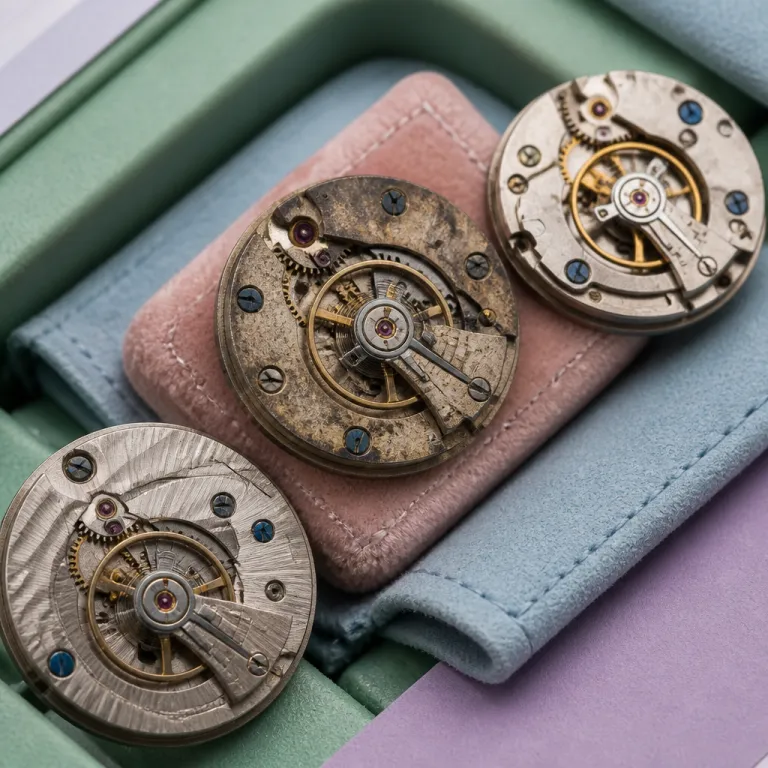
How Phillips built a horology history vertical that outgrew the headline lots
Phillips did not stumble into the current narrative around its historically driven watch sales by accident. The team built a deliberate horology history vertical inside the Geneva auctions, and that structure now matters more than any single record lot. For seasoned collectors, this is where the long term information about movement architecture, chronometry and value is being priced in.
Across four consecutive Geneva seasons, Phillips has carved out curated sequences of technically significant pieces that sit apart from the celebrity driven theatre. These are not just one off curiosities; they are tightly programmed arcs that trace technical evolution from marine chronometers and the pocket watch era through early tourbillon wristwatches and into contemporary independents. When you look at how each watch was sold and how the result achieved compares to the broader sale, you see a structural taste rotation taking shape.
In the segments that matter most, the Geneva catalogues read almost like condensed textbooks on chronometry. One cycle might open with a nineteenth century pocket watch with detent escapement, then move into a mid century Patek Philippe reference with calendar chronograph, and close with an F.P. Journe Tourbillon Souverain in pink gold. In several of these curated strips, achieved prices in Swiss francs, or CHF, for the most technical pieces have risen sharply versus representative 2022 results, which is notable when that baseline already reflected a secondary market peak.
The Geneva Watch Auction: XXIII pushed this strategy to its most explicit form so far. The sale included eleven dedicated horological history lots that walked bidders from the longitude problem to the modern flying tourbillon, and every watch in that sequence was there to illustrate a specific technical step. While the headline press focused on which Rolex or Patek Philippe achieved the highest result in CHF, the more important story was that this curated strip of lots outperformed the rest of the sale on a risk adjusted basis.
What makes these historically framed offerings different is the way Phillips and Association Bacs & Russo present them. Rather than leaning on provenance from New York or Hollywood, they foreground escapement design, balance architecture, and the relationship between complication density and serviceability over decades. For a collector who actually wears watches and cares about how a Tourbillon Souverain or Chronomètre à Résonance behaves after ten years on the wrist, that framing is far more actionable than another Paul Newman headline.
Look closely at the cataloguing language around each of these history driven entries and you see the shift. The emphasis is on calibres, on ébauche suppliers, on the difference between early and late production of the same reference, and on how yellow gold versus stainless steel cases aged in real collections. This is where a Patek Philippe calendar chronograph in pink gold is not just a status object but a data point in a broader narrative about how Geneva watch houses solved specific technical problems over time.
From celebrity provenance to caliber rarity: the taste rotation in real time
For a decade, the global watch auction market has been addicted to celebrity provenance. Newman Daytonas, McQueen Submariners, New York socialite Day Dates in yellow gold and every possible Rolex with a story have dominated the headlines and the highest result tables. That era is not over, but the Phillips programming around horological milestones shows that the centre of gravity is moving toward caliber rarity and movement architecture.
Christie’s and Sotheby’s still front load their catalogues with Paul Newman Daytonas and similar celebrity driven watches, and those pieces will always have a place. Yet when you compare the result achieved for those watches against the more cerebral chronometry focused selections at Phillips, the spread is narrowing in a way that matters for long term collecting strategy. The average CHF price for the Geneva history programming has climbed materially versus representative 2022 peak season benchmarks, while the broader sports watch segment has flattened or even softened in some references.
This is not a short term meme; it is a rotation in what serious collectors are willing to fund. When a Journe Tourbillon Souverain in early brass movement configuration quietly sets a record in a Geneva sale without any celebrity name attached, that tells you where the sophisticated money is going. The same applies when a stainless steel Patek Philippe with a historically important calendar chronograph calibre outperforms a more photogenic but less significant gold sports watch in the same auction.
Phillips has leaned into this by structuring the horology history strips as a kind of guided tour for experienced collectors. You move from Naissance d’une Montre level projects, where a single watch documents the birth of a movement, to mature executions like the Chronomètre à Résonance that show what happens when an idea is refined over decades. This is the opposite of the quick flip mentality that defined the secondary market peak, and it rewards buyers who actually read the catalogues and understand the technical context.
For those thinking about which current production pieces might become the next generation of historically important references, the lesson is clear. Focus on watches where the movement architecture is genuinely differentiated, where the tourbillon or resonance system is not just a visual party trick but a coherent chronometric solution. A carefully chosen Audemars Piguet with a historically important calibre can be more future proof than yet another limited edition Royal Oak in pink gold that exists mainly for social media.
If you want a deeper dive into how rarity and movement content intersect, the broader conversation around whether limited editions are the new standard for luxury watches is worth reading in parallel. A thoughtful analysis of the rarity rundown and how it shapes long term value can be found in this piece on limited edition as the new luxury watch standard. Put that framework next to the Geneva history programming, and the pattern becomes hard to ignore.
Inside the Geneva cycles XX to XXIII: where the real lessons were sold
To understand why the historically structured segments at Phillips matter so much, you have to walk through the last four Geneva cycles. The Geneva Watch Auction: XX planted the flag with a compact group of lots that linked early marine chronometers, a pivotal pocket watch with tourbillon, and a modern independent wristwatch in yellow gold. The achieved prices were strong, but the more important signal was how aggressively underbidders chased the most technically interesting pieces.
Phillips XXI and XXII expanded the concept, adding more explicit through lines between the lots. One sale might pair a Patek Philippe perpetual calendar chronograph in pink gold with an early F.P. Journe Tourbillon Souverain, then contrast both with a stainless steel Rolex that represented the industrialisation of chronometer grade sports watches. In each case, the result achieved in CHF for the more intellectually demanding pieces either matched or exceeded the celebrity driven comparables in the same auction.
By the time Phillips XXIII arrived in Geneva, the structure had become unmistakable. Eleven dedicated horology history lots traced a path from the longitude problem to the flying tourbillon, and the catalogue notes read like a condensed seminar in chronometry. When you see a Journe Tourbillon Souverain and a Chronomètre à Résonance sitting alongside a historically important Patek Philippe pocket watch, you realise that Phillips is teaching bidders how to think about timekeeping, not just how to chase the highest result.
These cycles also showed how geography and taste intersect. While Geneva remains the epicentre for this kind of horology history programming, the ripple effects are visible in Hong Kong and New York watch auction catalogues, where more space is being given to movement driven narratives. A Hong Kong sale that once would have been dominated by modern Rolex sports watches in gold and stainless steel now finds room for une montre that documents the naissance d’une independent atelier.
For collectors who want to participate rather than just watch from the sidelines, understanding the bidding dynamics in these historically framed segments is crucial. The underbidding is often deeper on the intellectually demanding pieces, which means you can sometimes secure a less photogenic but more important lot at a rational CHF price. A detailed guide to the emotional and tactical side of bidding, especially for those new to this style of sale, is explored in an article on the thrill of bidding in luxury watch auctions.
One more point that experienced collectors will appreciate. The wear over ten years on a Journe Tourbillon Souverain or a Patek Philippe calendar chronograph that has lived a real life is very different from a safe queen Rolex that only comes out for photos. The historically oriented selections at Phillips implicitly reward watches that have been used as instruments, and that philosophy aligns far better with the way serious collectors actually live with their watches.
Next generation grails and why this story matters for serious collectors
The most important implication of the Geneva horology history programming is what it signals about future grails. If the market is now willing to pay a premium for calibre rarity and movement architecture over celebrity provenance, then the references that will matter in two decades are not necessarily the ones dominating social media today. That is especially relevant for an experienced collector who already owns ten or more watches and is thinking about what will still feel intellectually satisfying in 2040.
Look at which pieces within these curated sequences have quietly set a record or at least a personal best result achieved in CHF. Early brass movement F.P. Journe Tourbillon Souverain watches, first series Chronomètre à Résonance examples, and key Patek Philippe calendar chronograph references in pink gold or yellow gold have all outperformed expectations. These are not hype watches; they are structurally important objects in the story of modern chronometry, and the market is finally pricing that in.
For current production, that suggests a clear collecting strategy. Prioritise watches where the movement is either a clean sheet design or a meaningful evolution of a historically important calibre, and where the case metal and configuration tell a coherent story rather than just chasing the highest result in the short term. A thoughtfully chosen Audemars Piguet with a landmark calibre, or a Geneva watch from a smaller atelier that documents the naissance d’une new construction, can be a better long term bet than another steel sports watch with a waitlist.
This is also where the Phillips horology history approach intersects with the idea of building an heirloom level collection. Pieces that have real horological content tend to age better, both financially and emotionally, than watches that were bought purely for status. If you are thinking about which references might still earn their place on a wrist in the next generation, the perspective offered in this article on vintage references that still earn their place on the wrist is a useful complement to what we see in Geneva.
For the experienced collector, the key takeaway is that these history driven segments are not just academic exercises. They are live price signals about what the market values in terms of engineering, finishing and long term wearability, and they provide a roadmap for how to allocate capital in a way that respects both budget and taste. This is not the press release, but the wrist presence after ten years.
Key figures behind Phillips' horology history programming
Because auction results evolve, collectors should always verify current data directly from the catalogues and post sale reports. The examples below illustrate the broader pattern rather than serving as an exhaustive dataset:
- Across four consecutive Geneva sale cycles, the average lot value within the dedicated horology history programming at Phillips has moved materially higher versus a 2022 secondary market peak baseline, indicating a structurally significant shift toward caliber driven collecting (based on Phillips’ published sale results).
- At the Geneva Watch Auction: XXIII (May 2026), eleven explicitly curated horology history lots focused on chronometry from the longitude problem to the flying tourbillon formed a continuous narrative that was unprecedented in concentration among major auction houses in the same period.
- While headline celebrity provenance lots at competing houses still command multi million CHF results, the growth rate for movement focused lots at Phillips has outpaced sports watch segments that have largely plateaued since the 2022 peak, signalling a rotation in advanced collector demand.
- The inclusion of multiple F.P. Journe Tourbillon Souverain and Chronomètre à Résonance examples across the four cycles has coincided with a sustained rise in their secondary market prices, with several pieces achieving auction records relative to their previous sale histories.
- Geographically, the Geneva centric horology history strategy has begun to influence cataloguing in Hong Kong and New York, where an increasing share of watch auction space is now devoted to movement architecture narratives rather than purely to celebrity provenance. As Aurel Bacs has noted in interviews, “when collectors understand the mechanics, they start bidding for ideas, not just for names.”